

Friday January 23, 2026
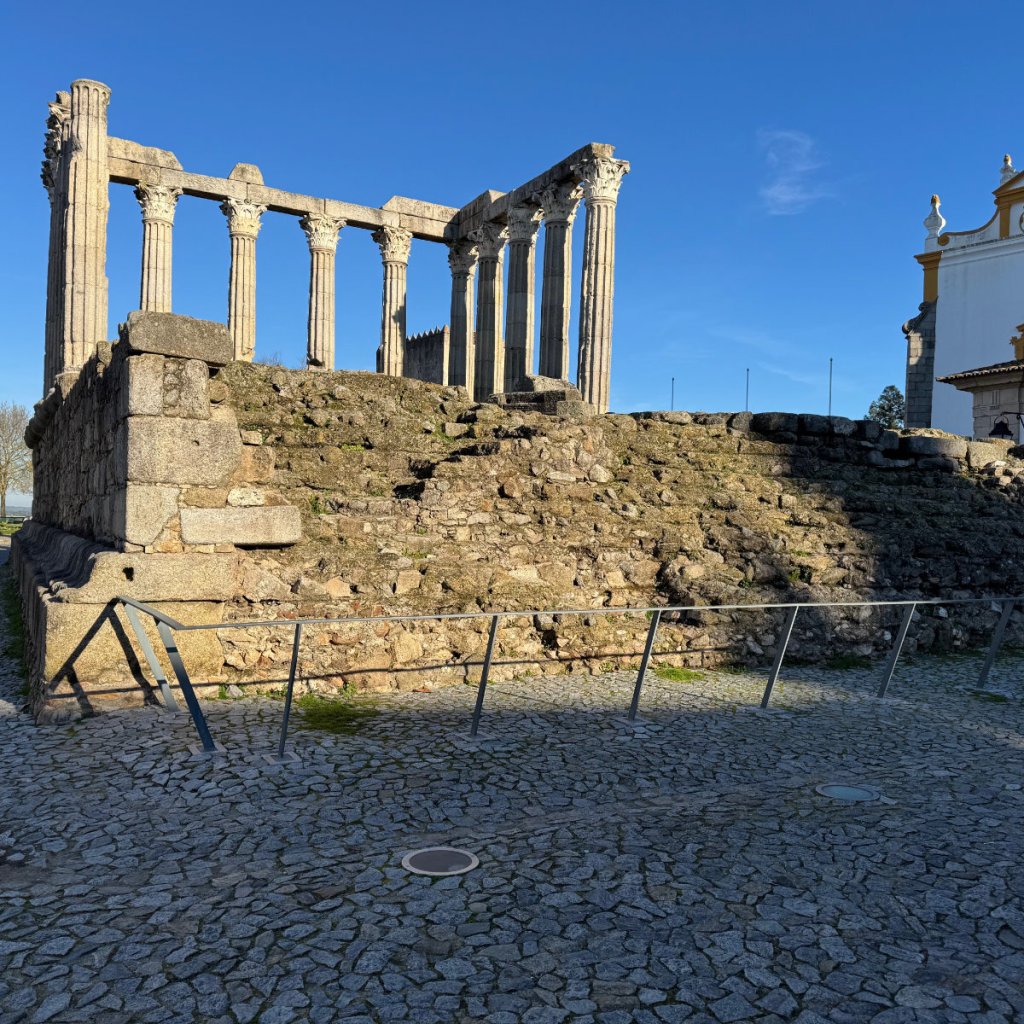
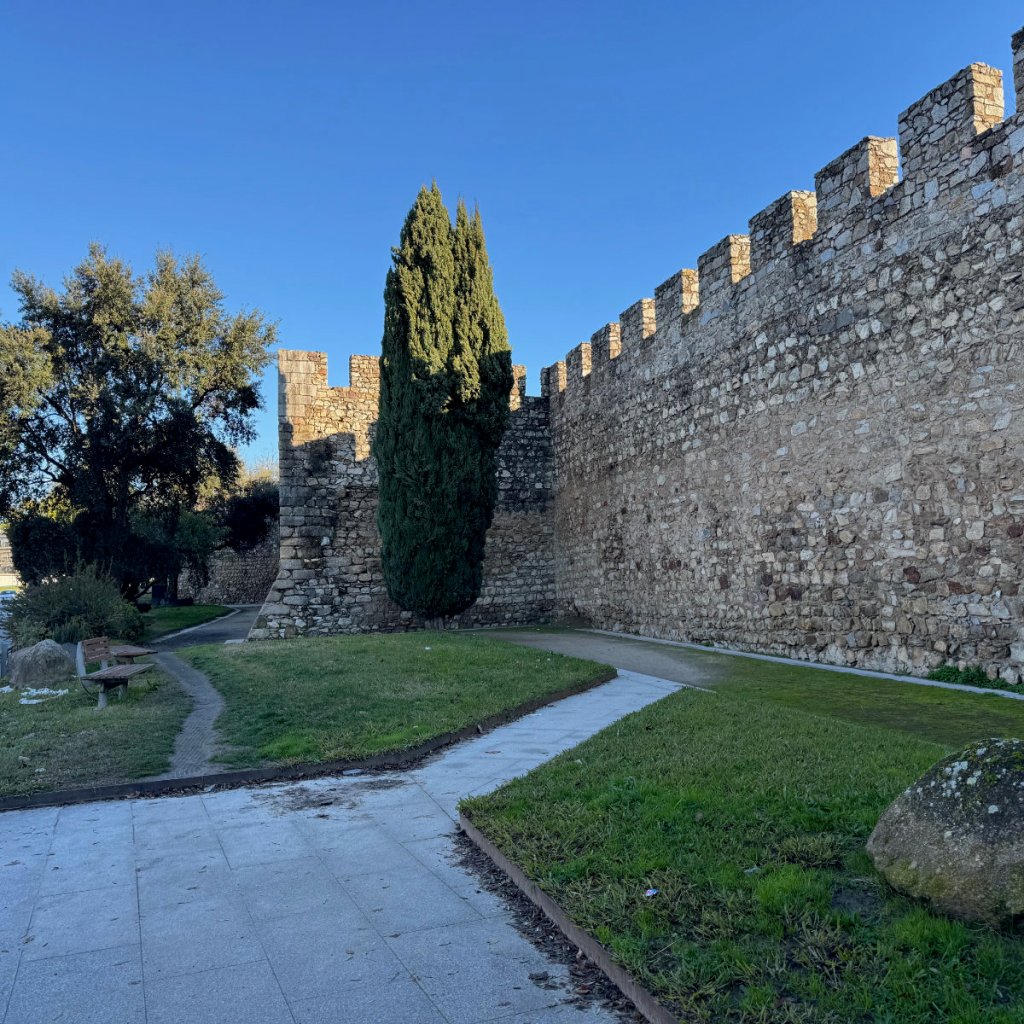
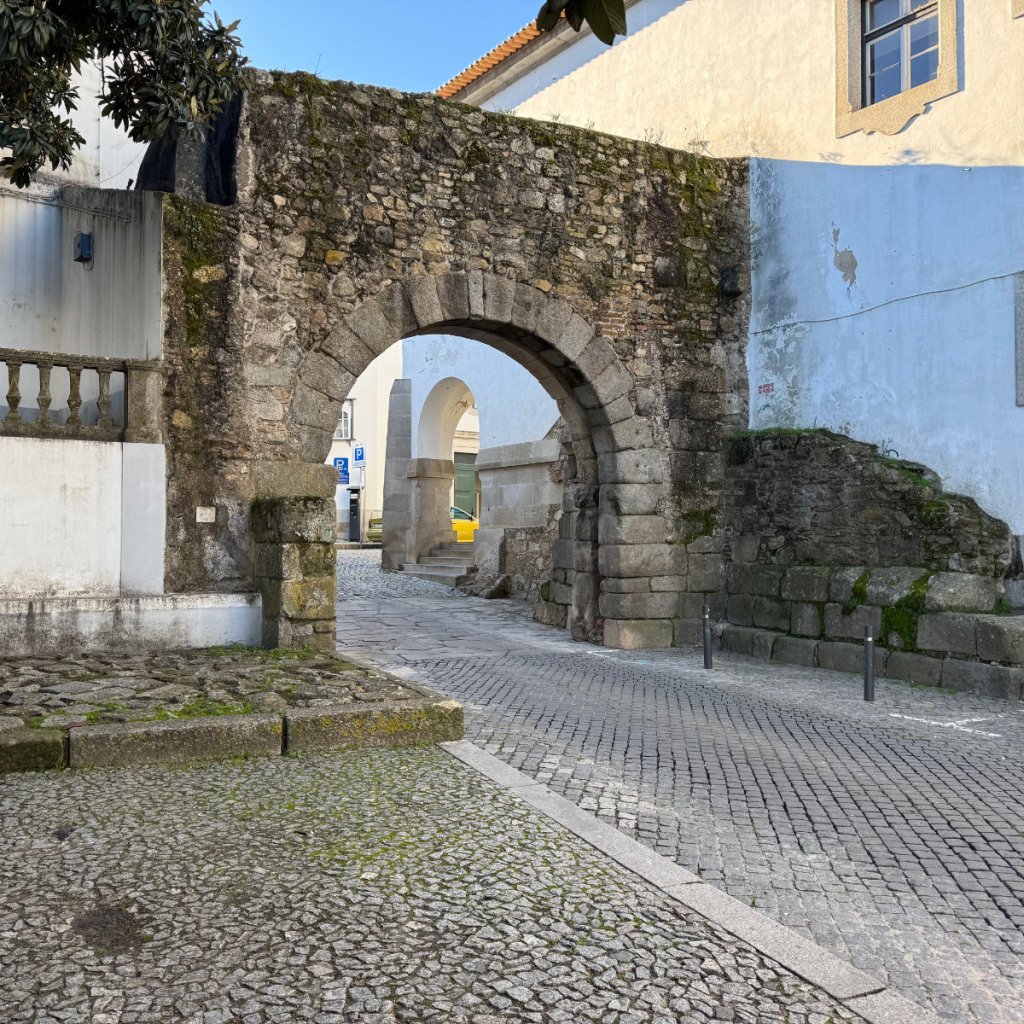
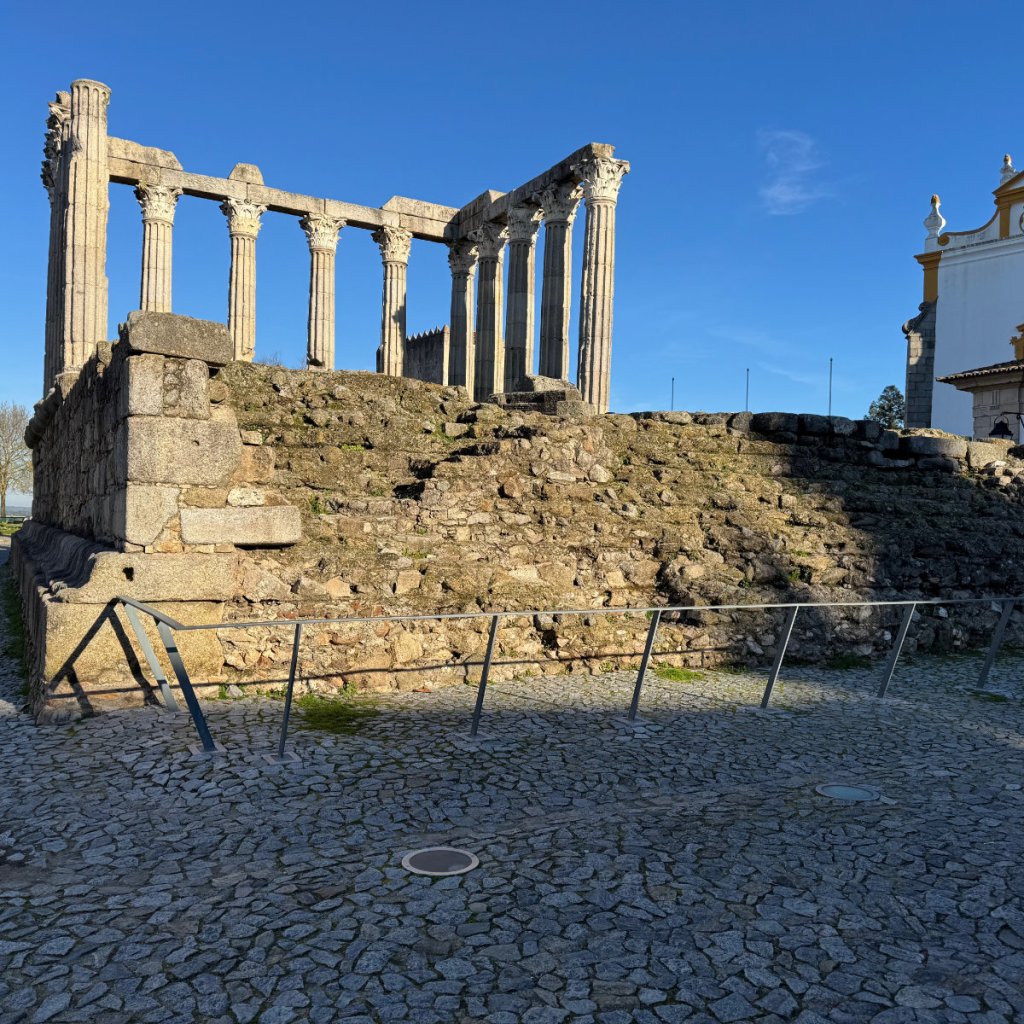
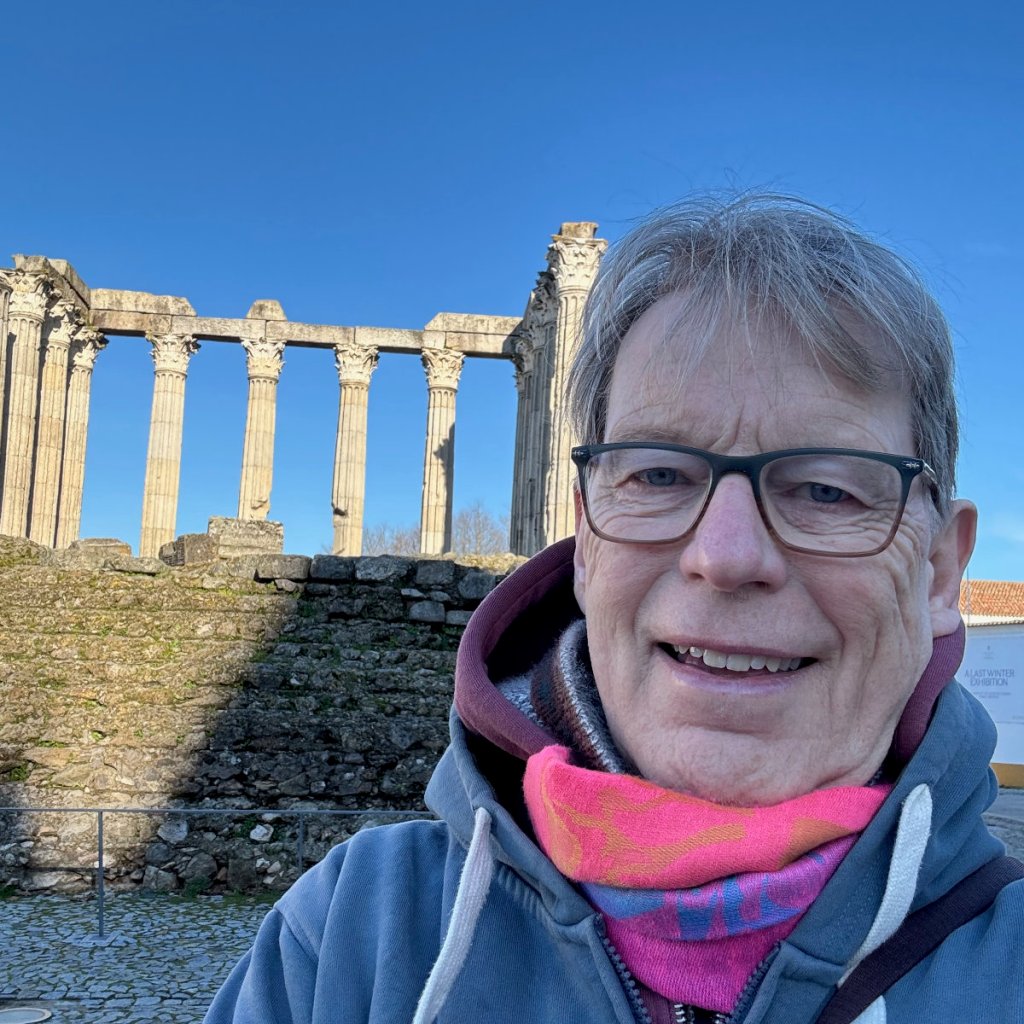
Évora was designated a UNESCO World Heritage Site in 1986 giving international recognition to its unique history and historical value. Its history dates back more than five milenia with its roots in an early Celtici settlement known as Ebora. The Old Town is partially surrounded by well preserved medieval walls and one of the best known features of the city is the Roman Temple once attributed to the worship of the Goddess Diana. However, archaeologists have changed their minds. For me, a bright Monday morning in January with brisk breeze keeping the temperatures in single digits, it was a prime opportunity to explore the place on foot. Fortunately, the museums are closed on Mondays – if i had known, I might have planned things differently. So, I focussed on whatever was on offer, churches, chapels and public buildings. Everything from rooftops to chapels of bones to Roman temples and baths and an Aqueduct. I began with the Cathedral known as the Sé de Évora but more officially, Basilica Sé de Nossa Senhora da Assunção (Basilica Cathedral of Our Lady of Assumption). It is the largest medieval cathedral in Portugal. Constructed between 1186 and 1250 CE, it is a splendid blend of gothic, romanesque and baroque architecture perched on the highest elevation point of the city. Here we go:
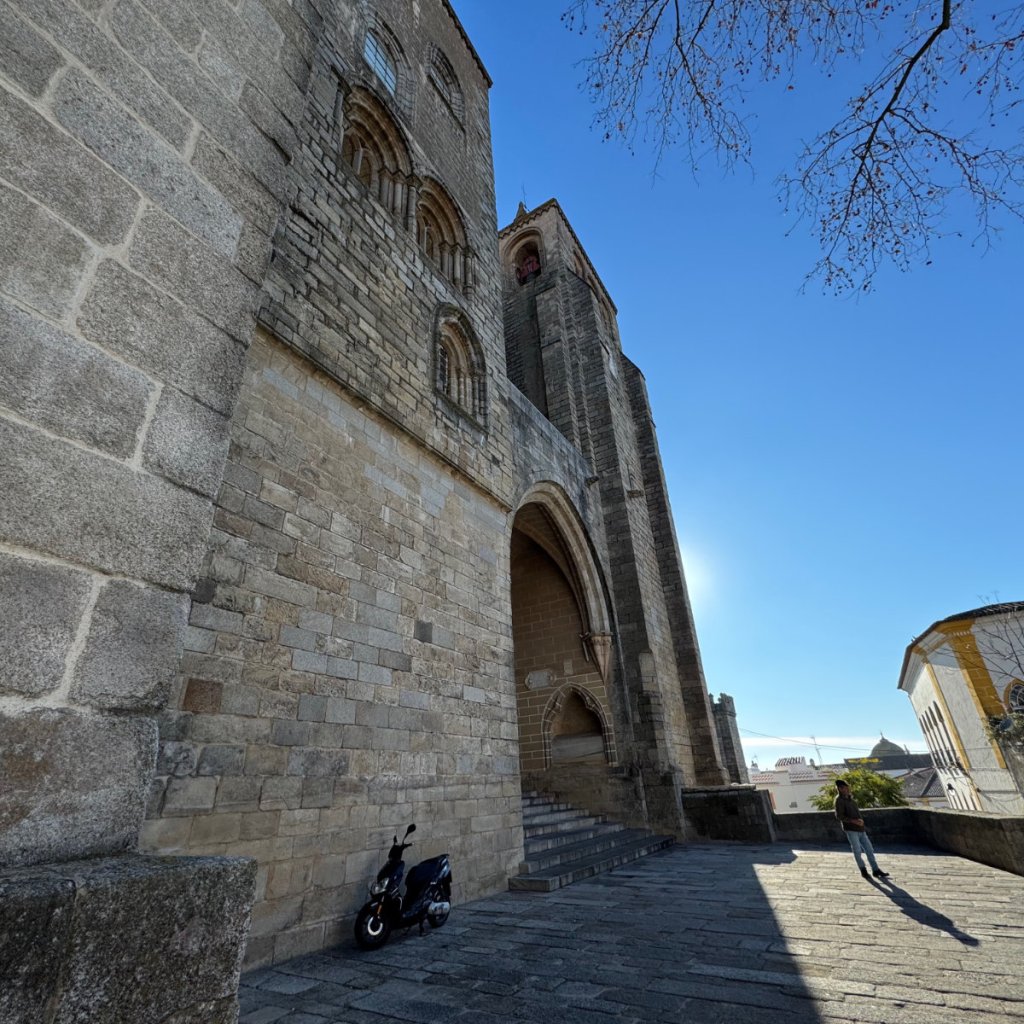
When I bought my entry ticket, the attendant instructed me to climb the stairway that led to the roof. They have a very strict order that must be followed for visits to the site: roof and galleries first, cloisters second and then the interior of the church. The narrow winding stairway to the roof has red/green light control system. First thing Monday morning there isn’t a lot of traffic but an English speaking couple were breathlessly leaving the stairway as I approached and they informed me it was well worth the climb. I took some stills that I will post here followed by a link to a video I made that is posted on YouTube. Enjoy!
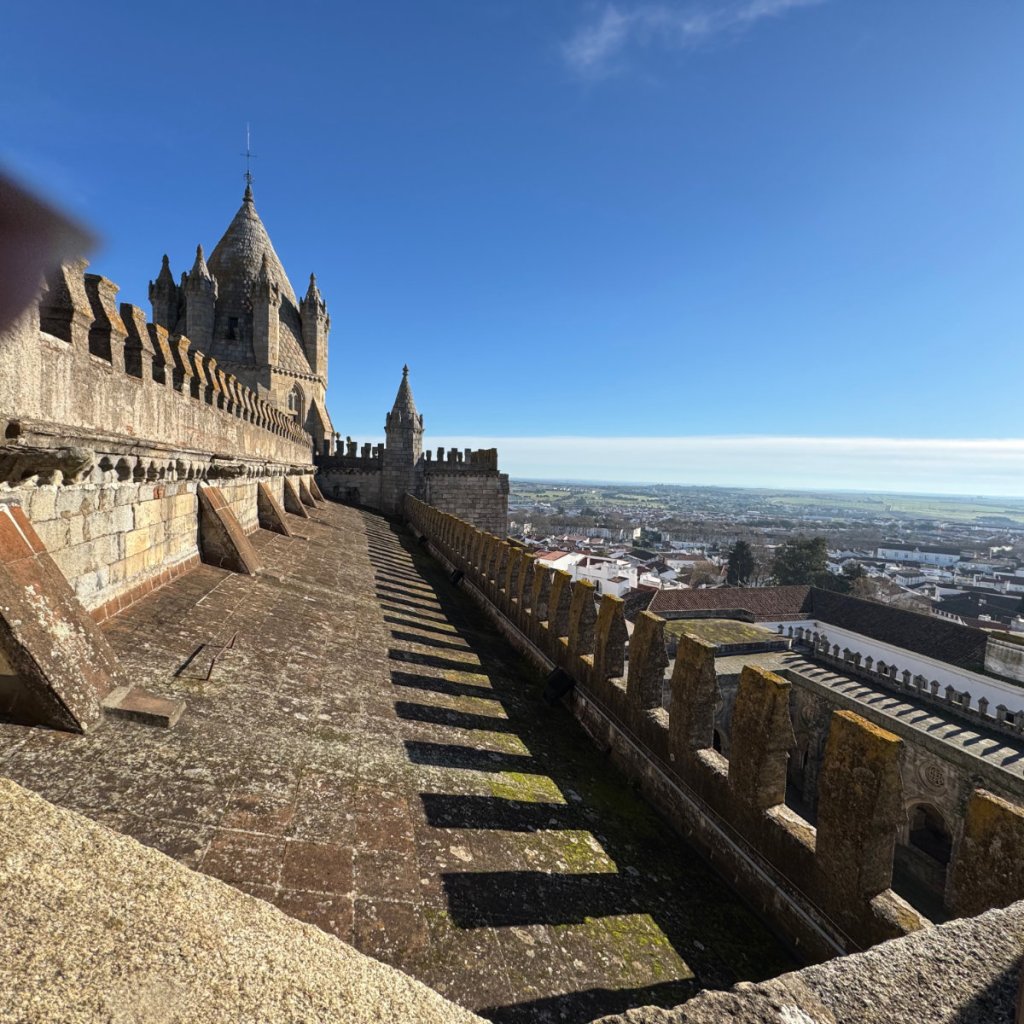
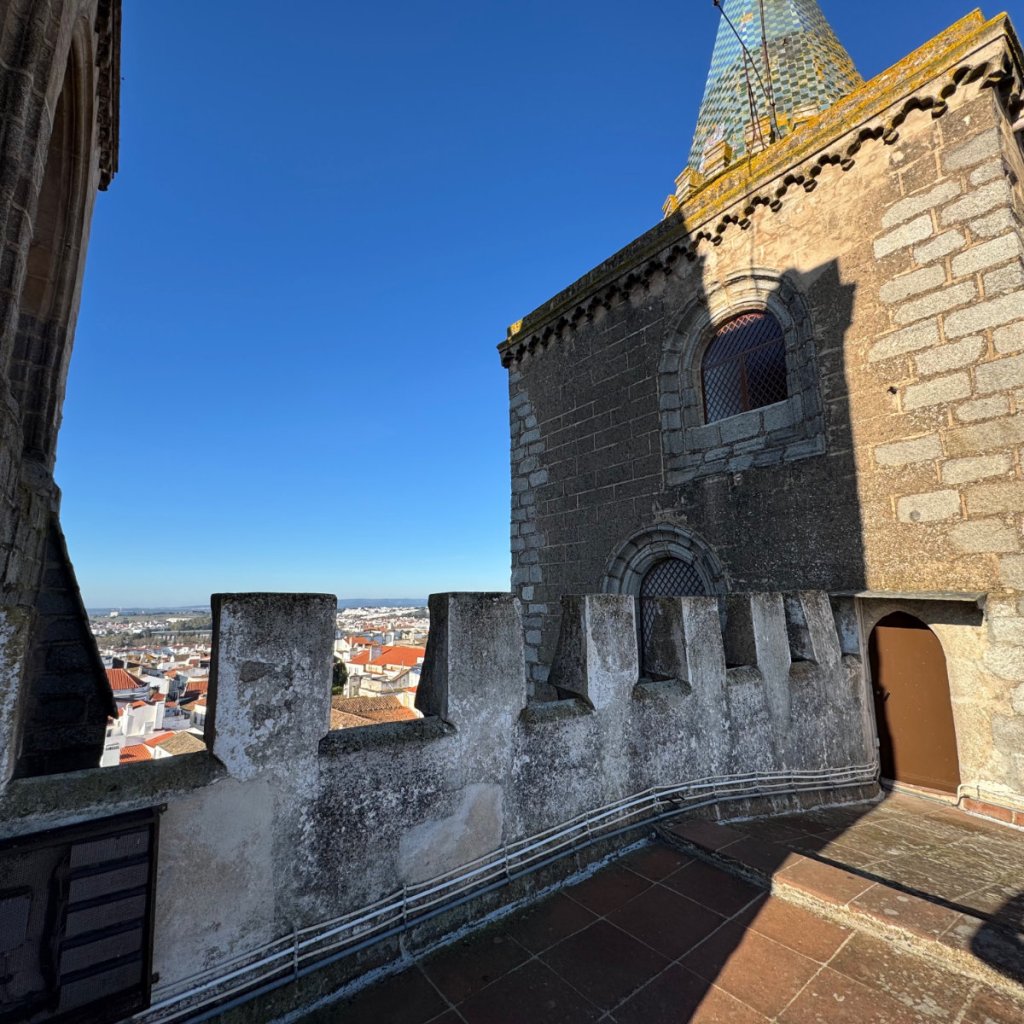
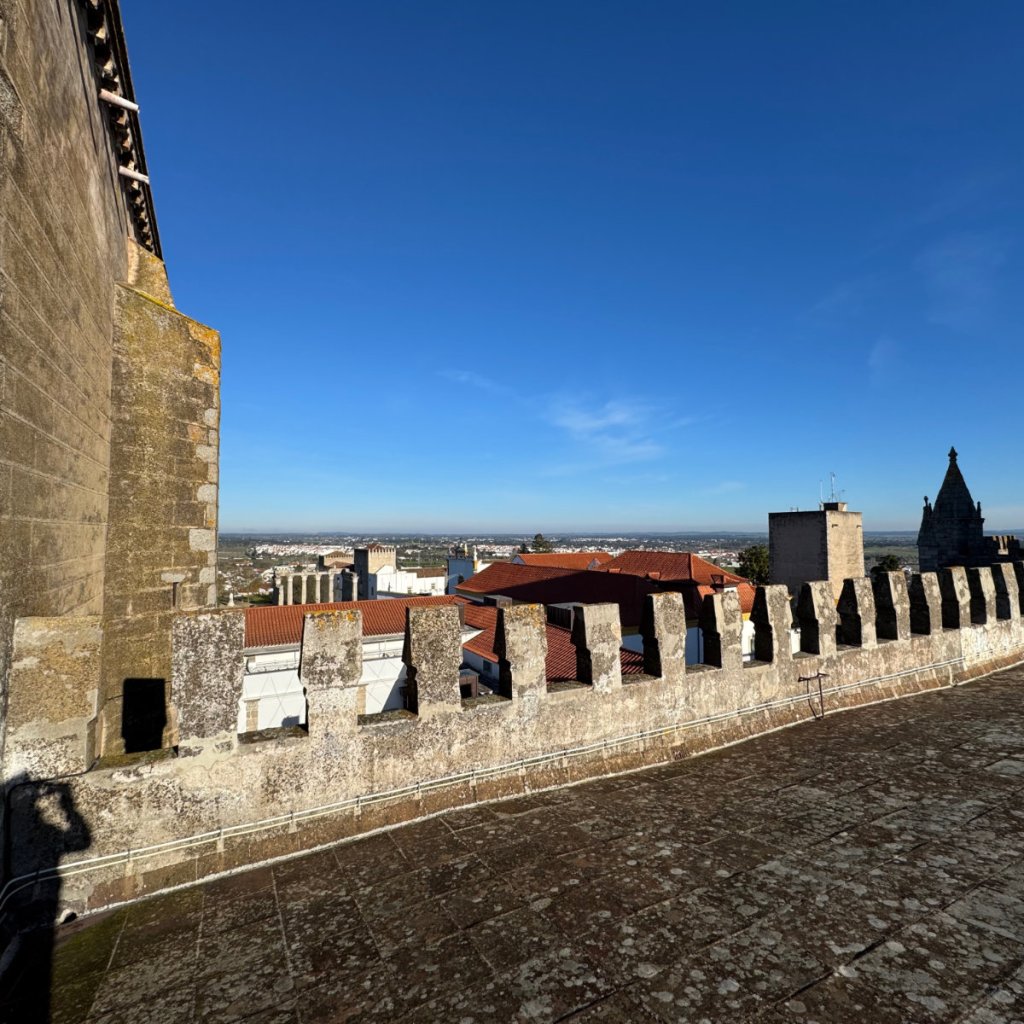
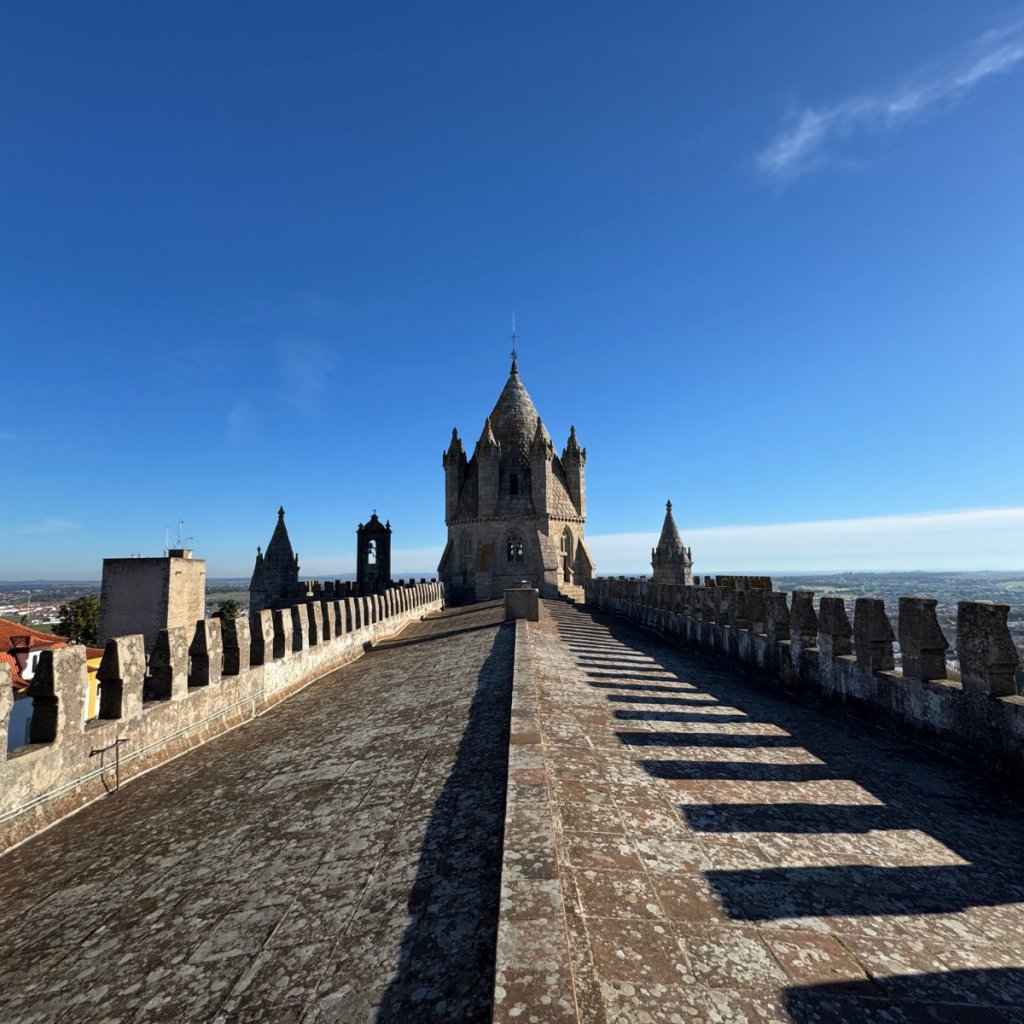
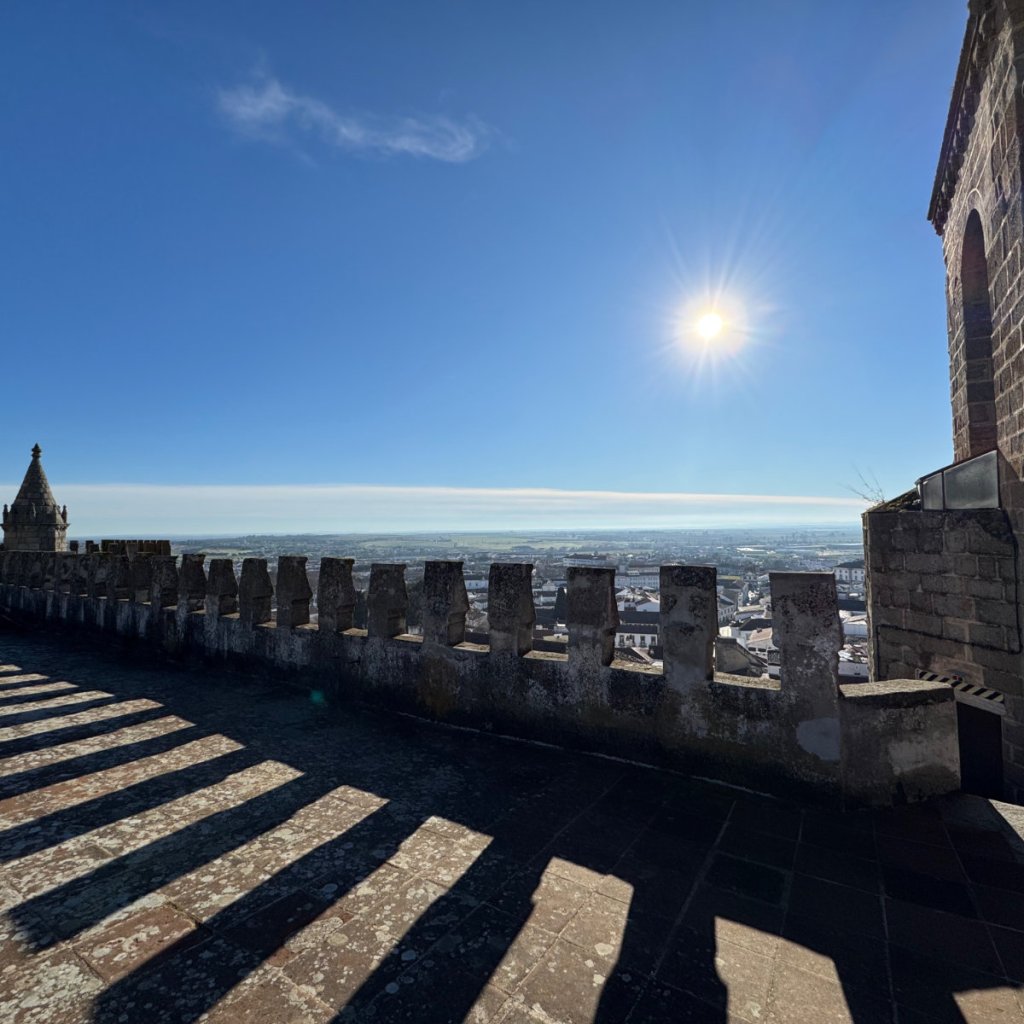
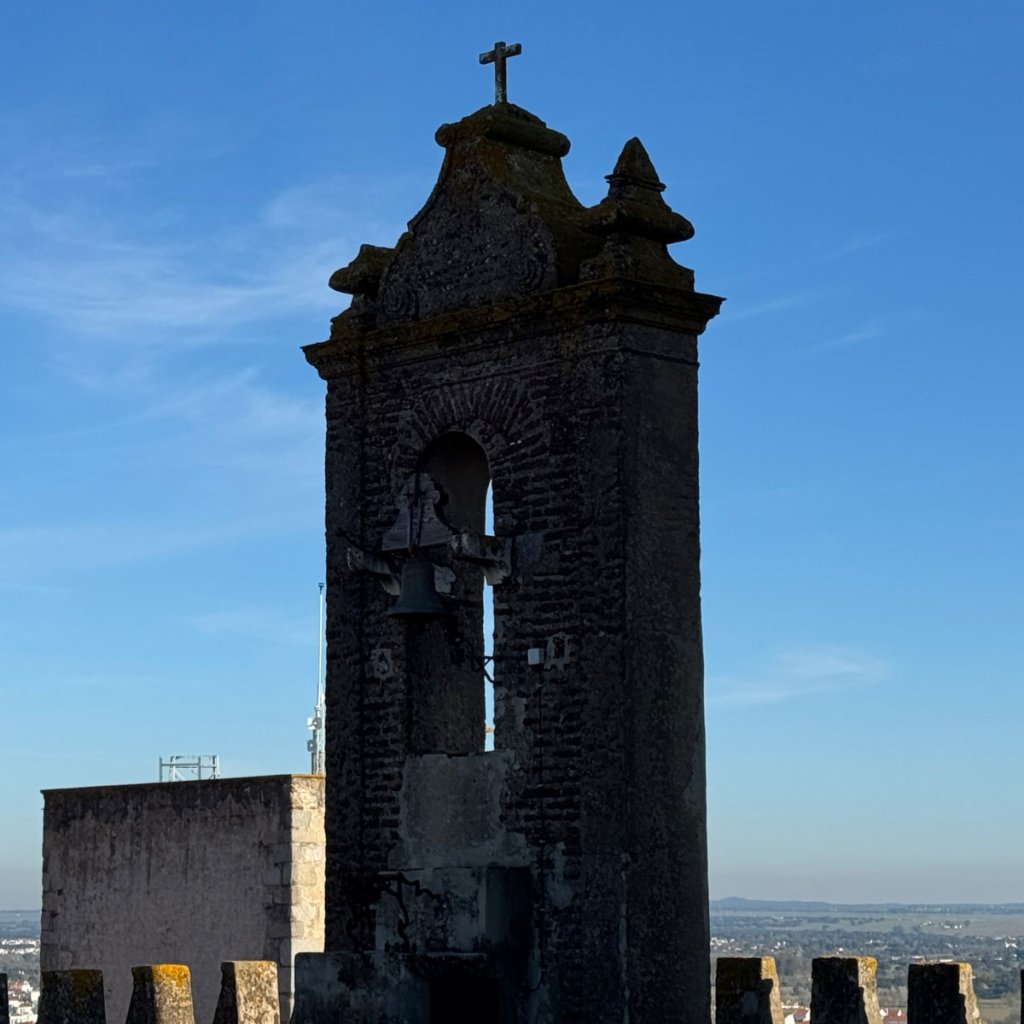
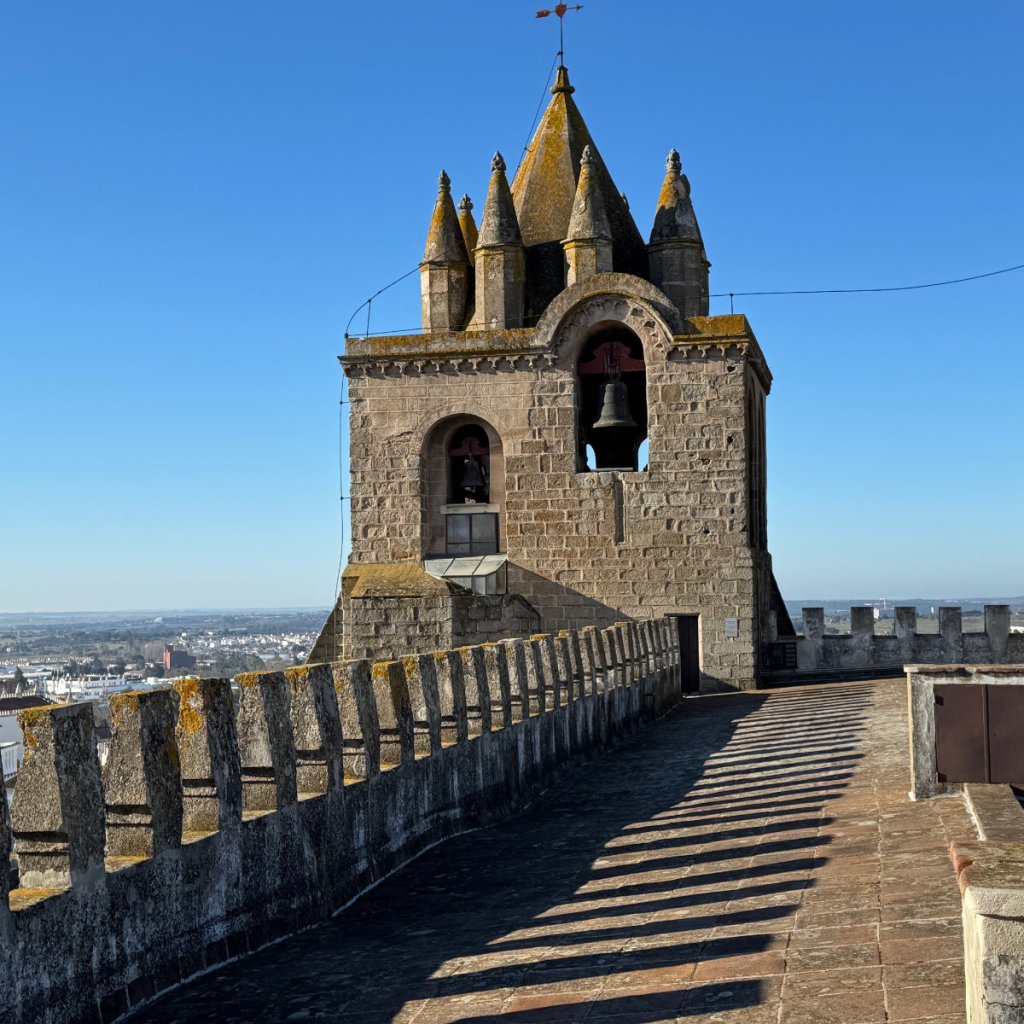
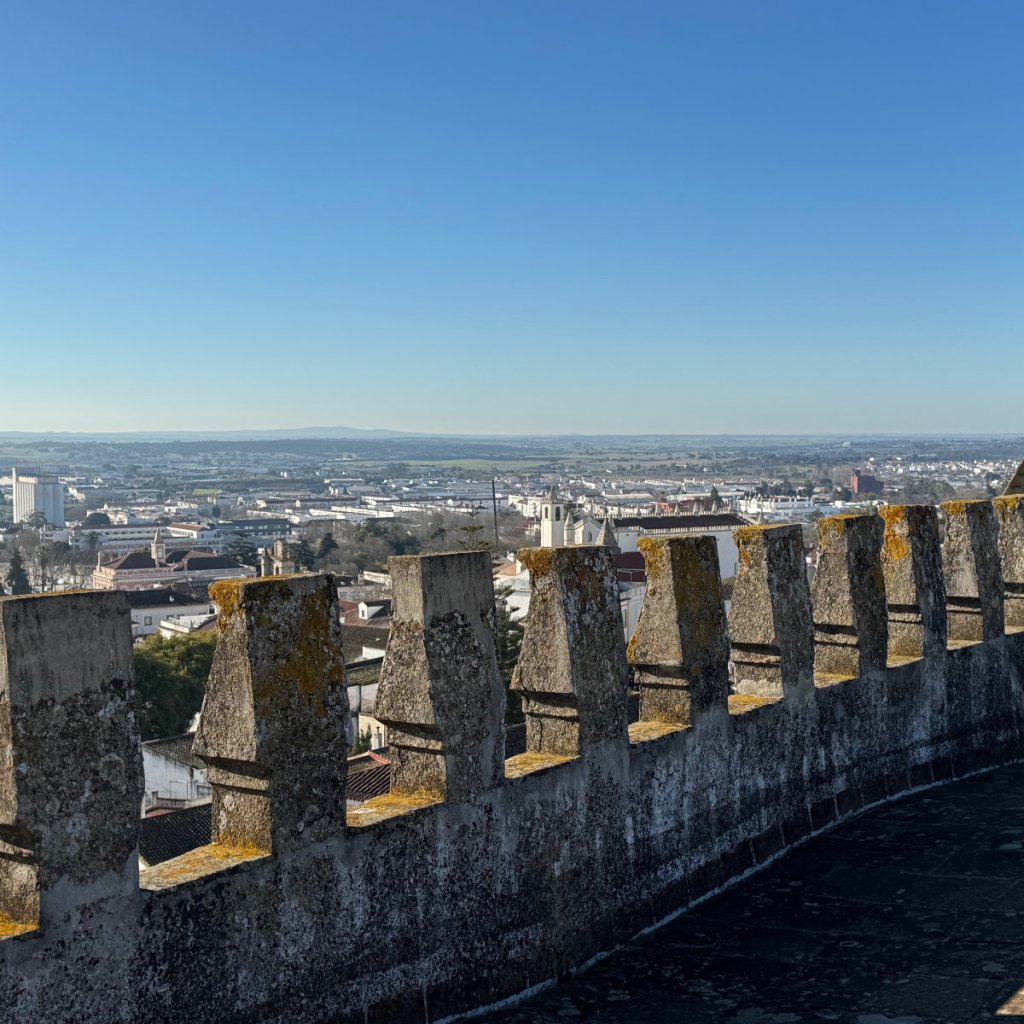
The view was incredible, the structure of the roof itself fascinating and I had so many unanswered questions! So here is the video: https://youtu.be/VegIZ4zyLTs
The galleries are home to collections of cathedral vestments, liturgical vessels, paintings and statues. Here are a few shots:
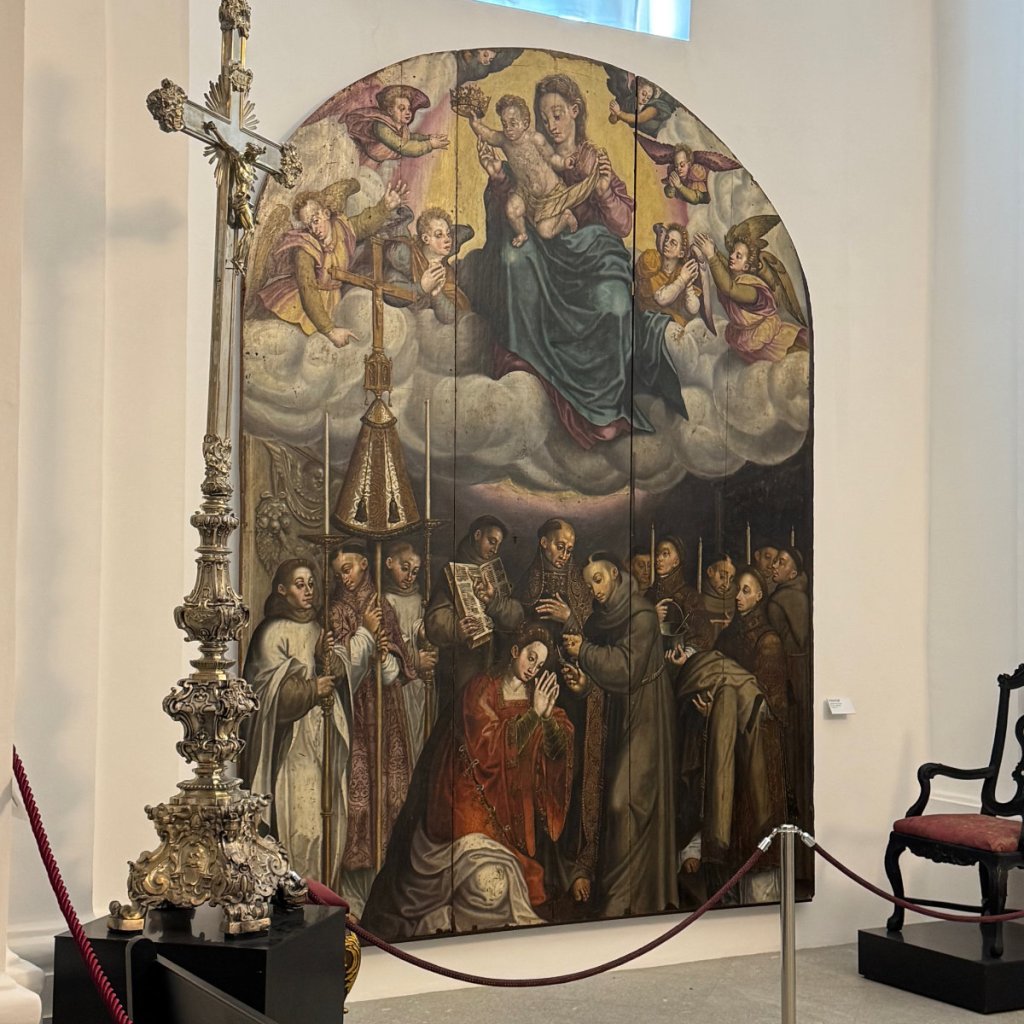
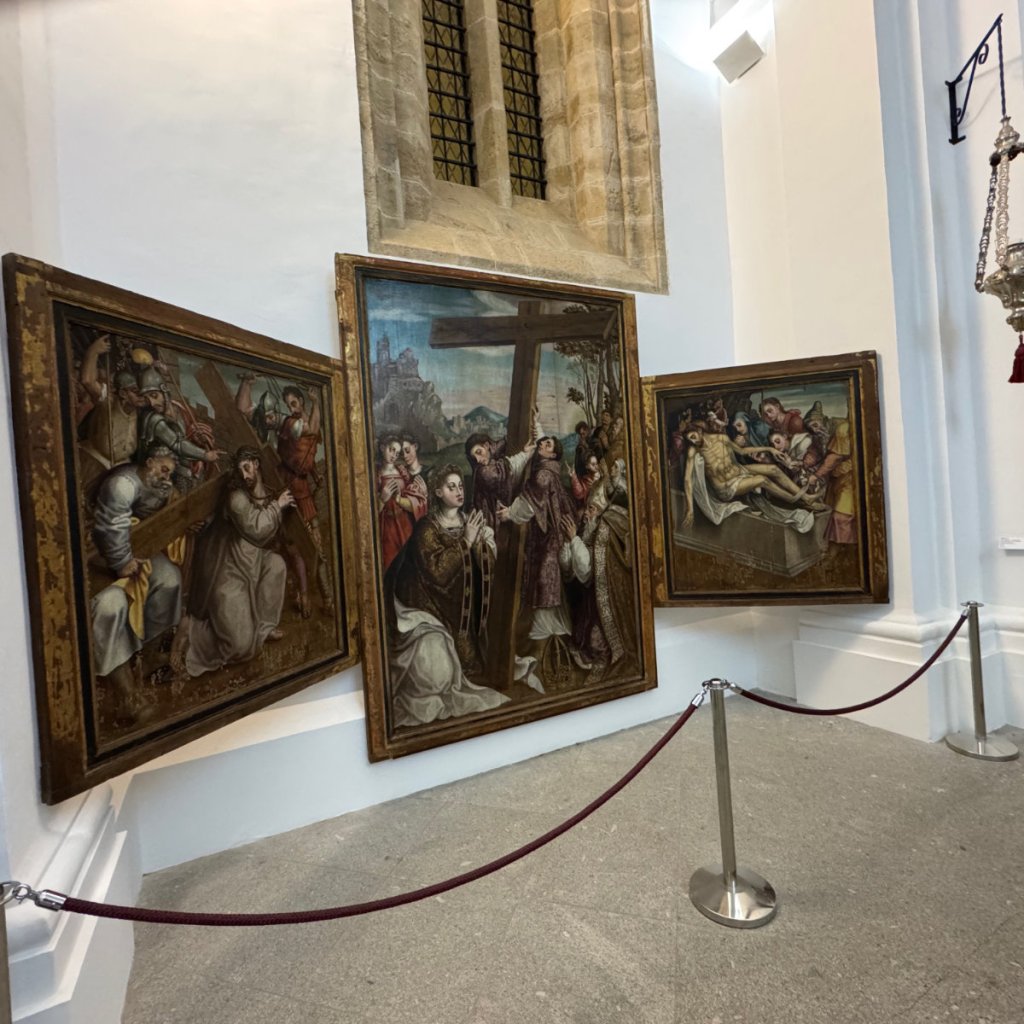
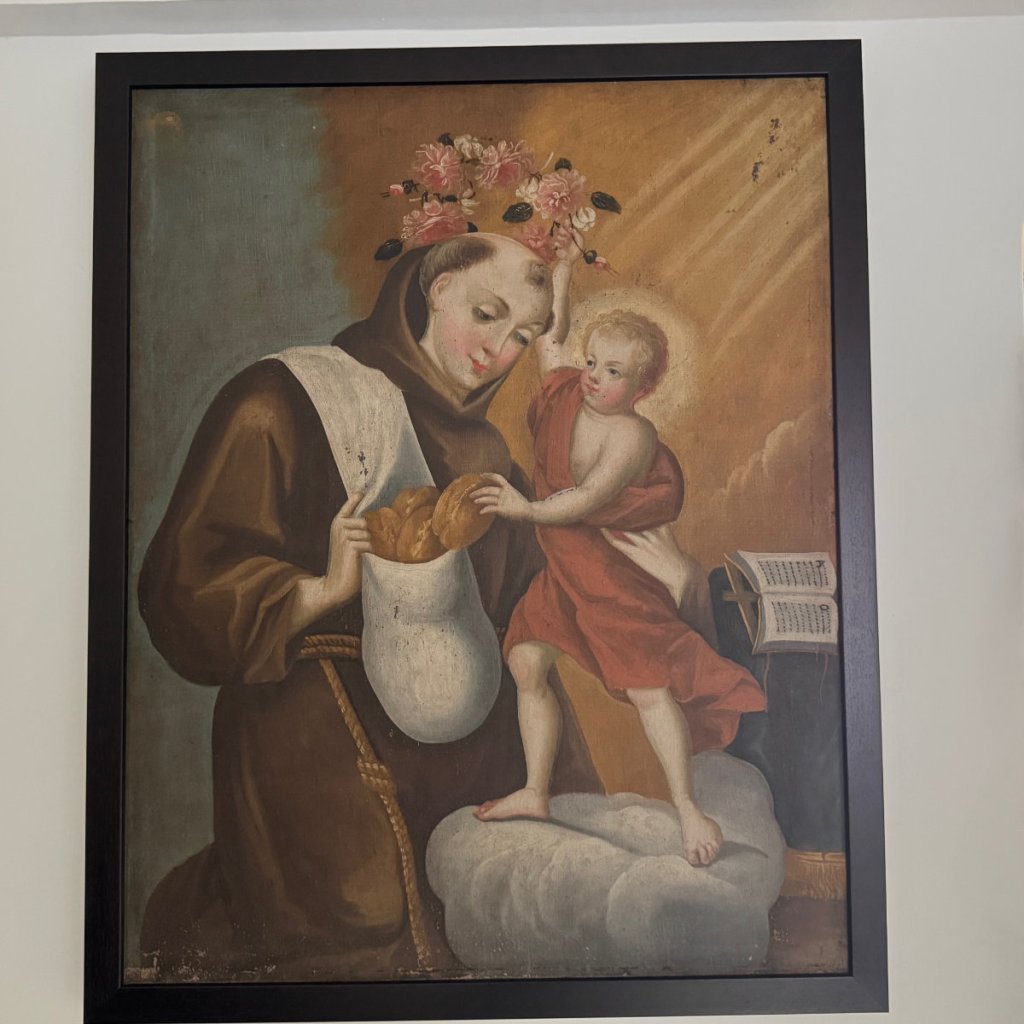
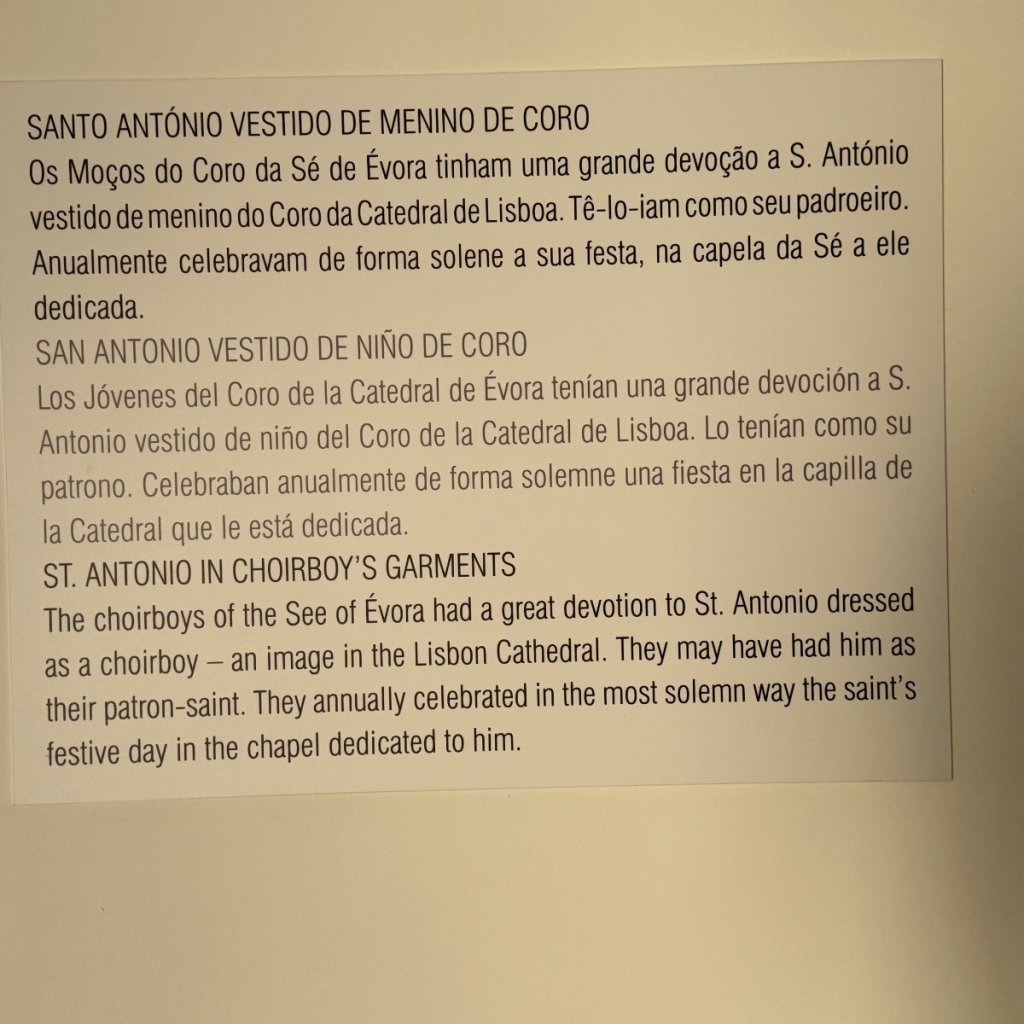
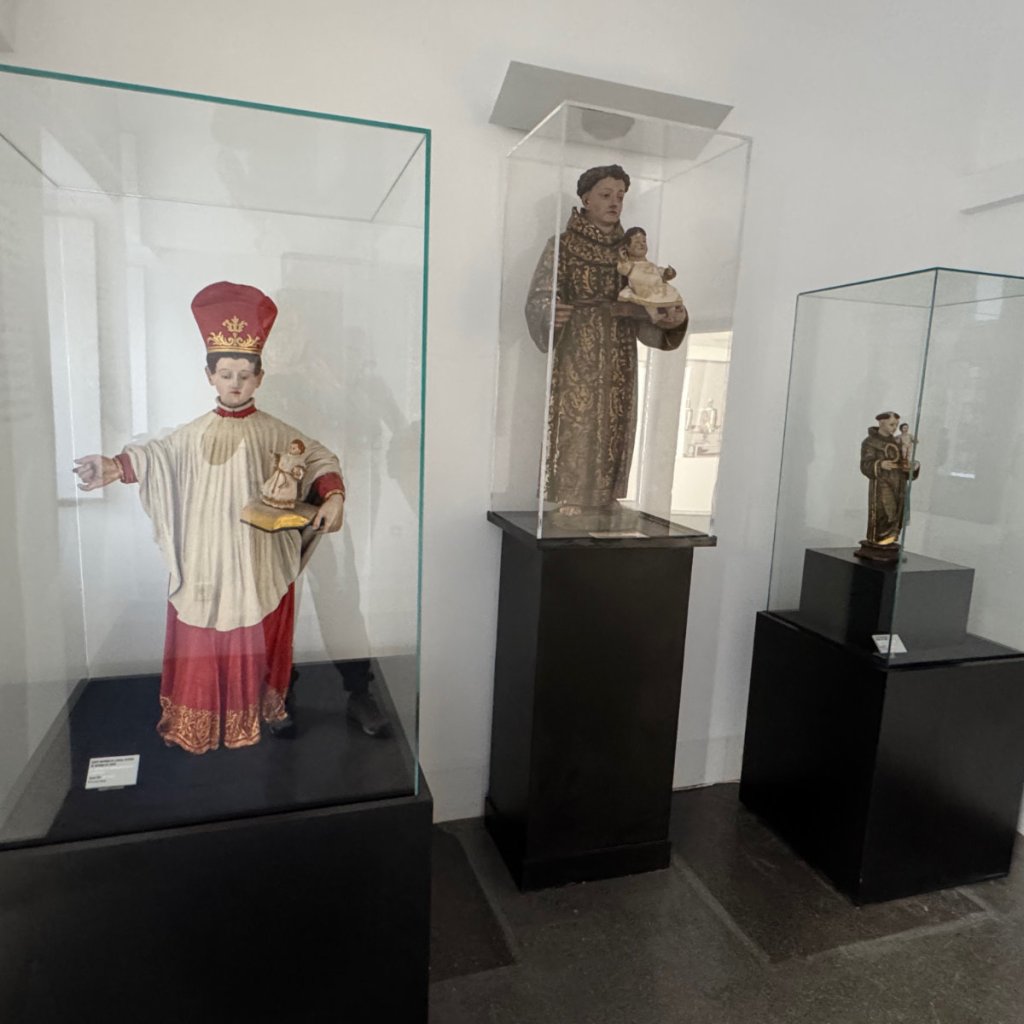
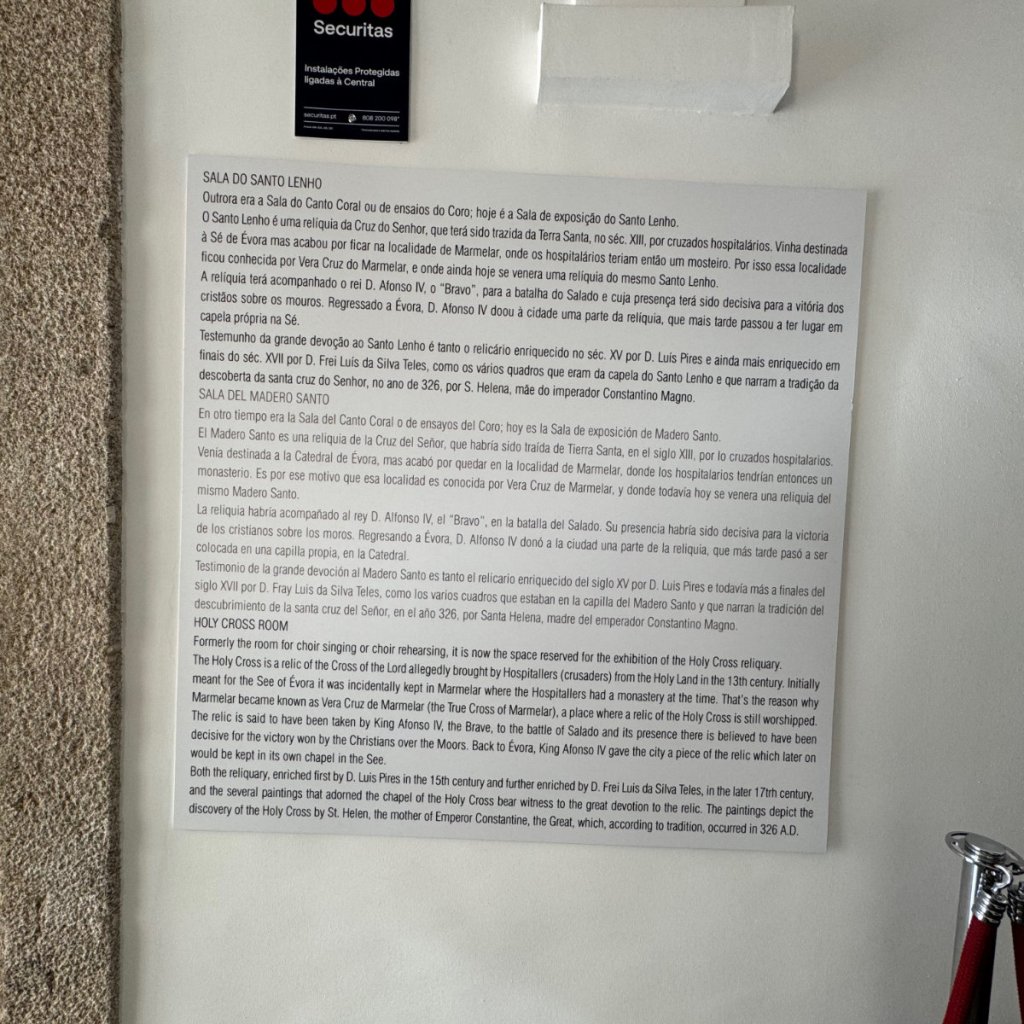
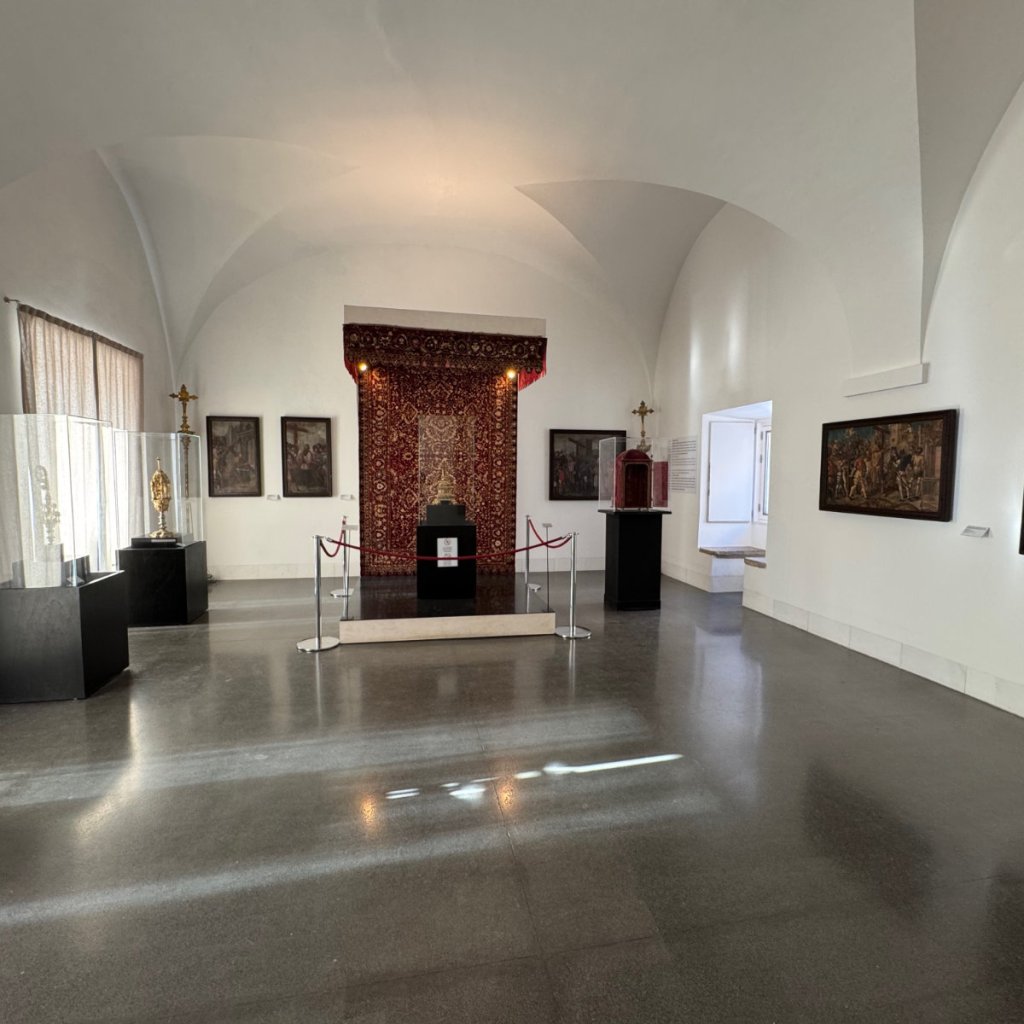
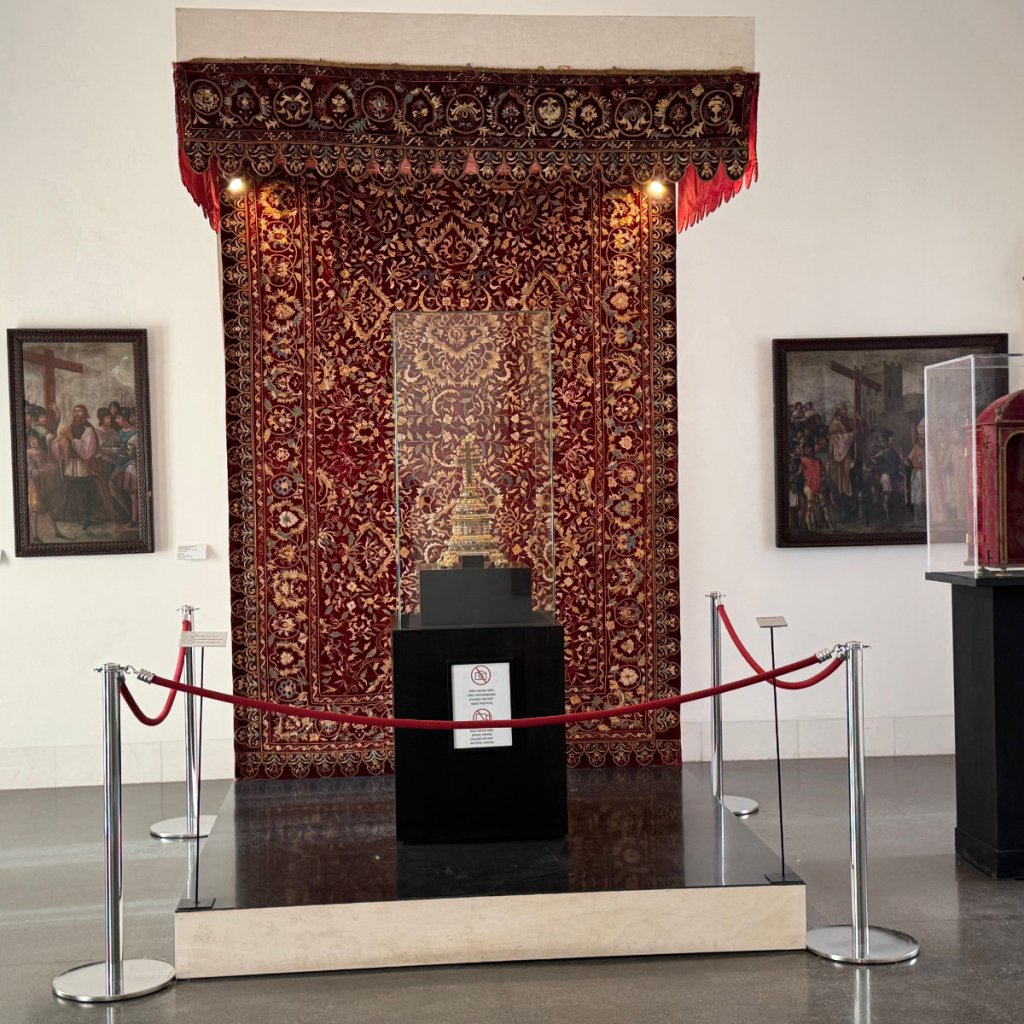
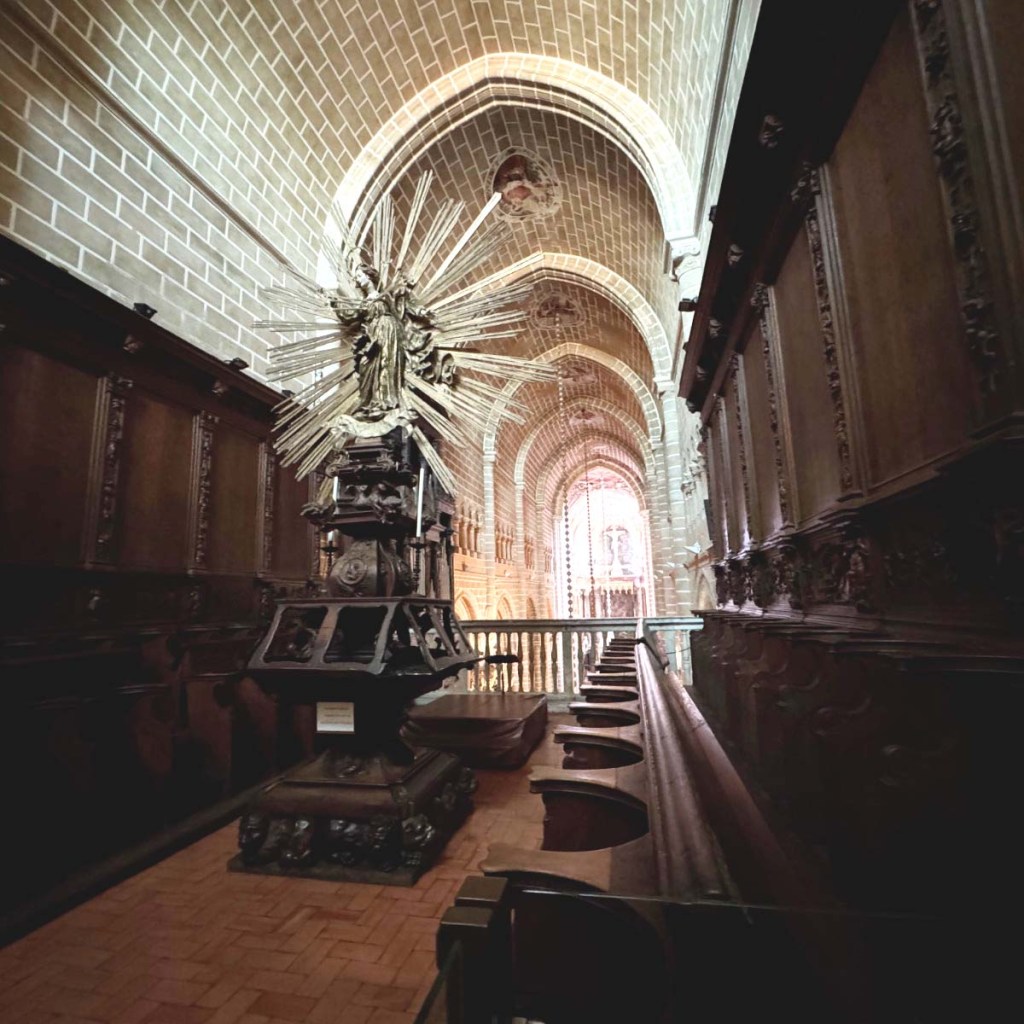
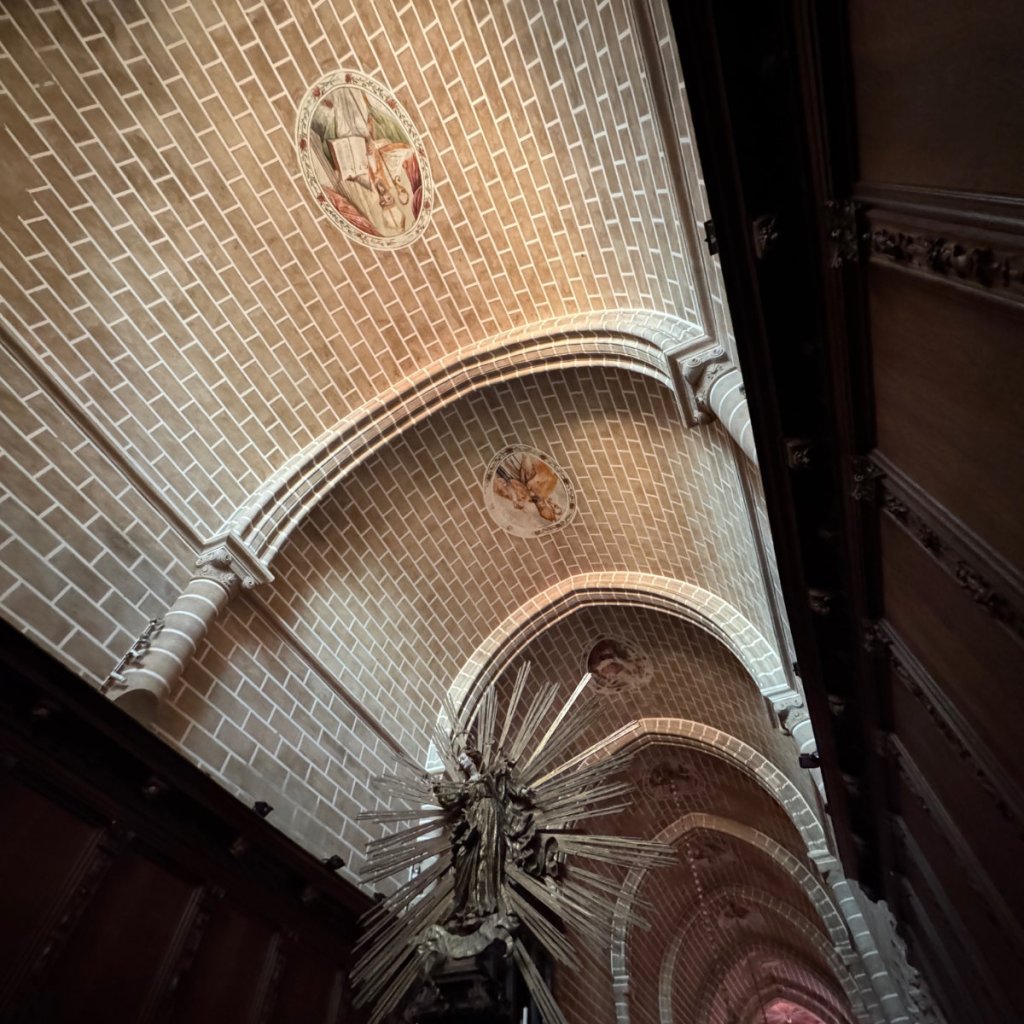
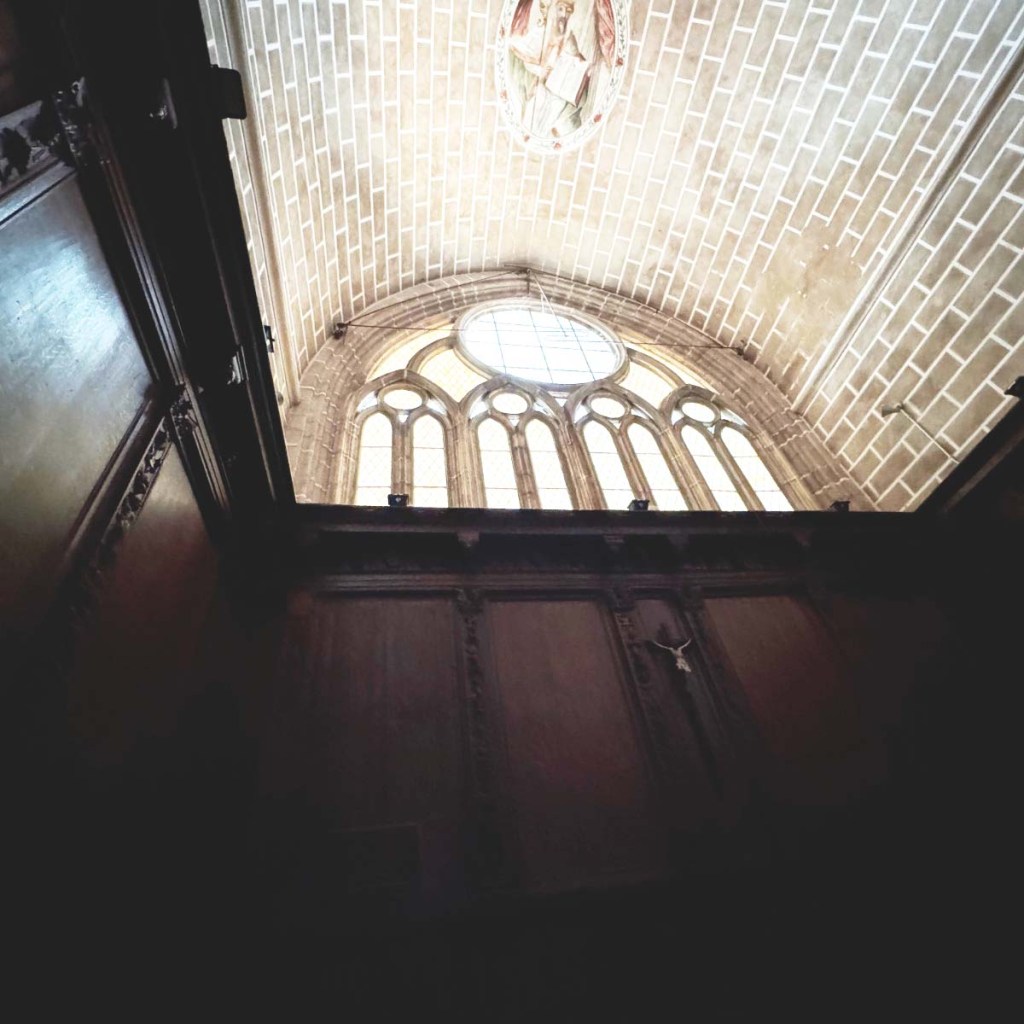
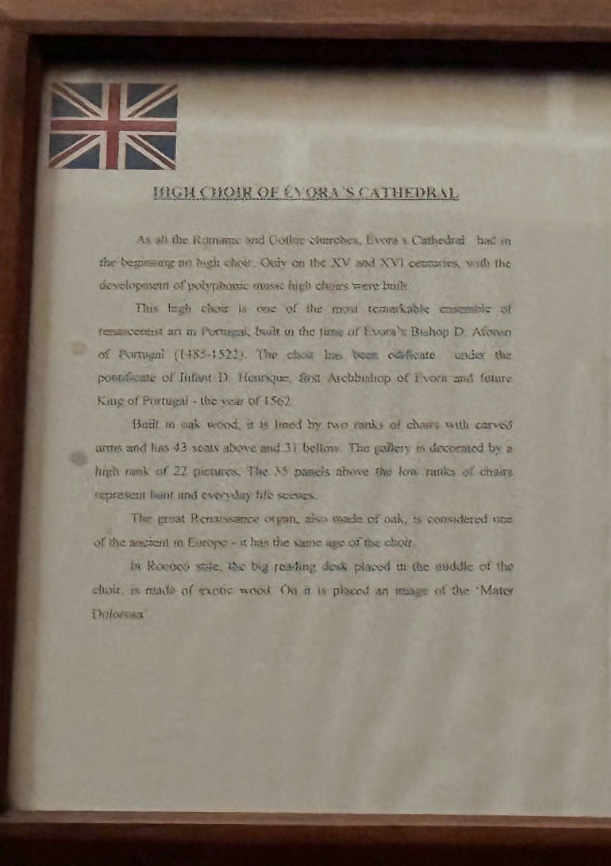
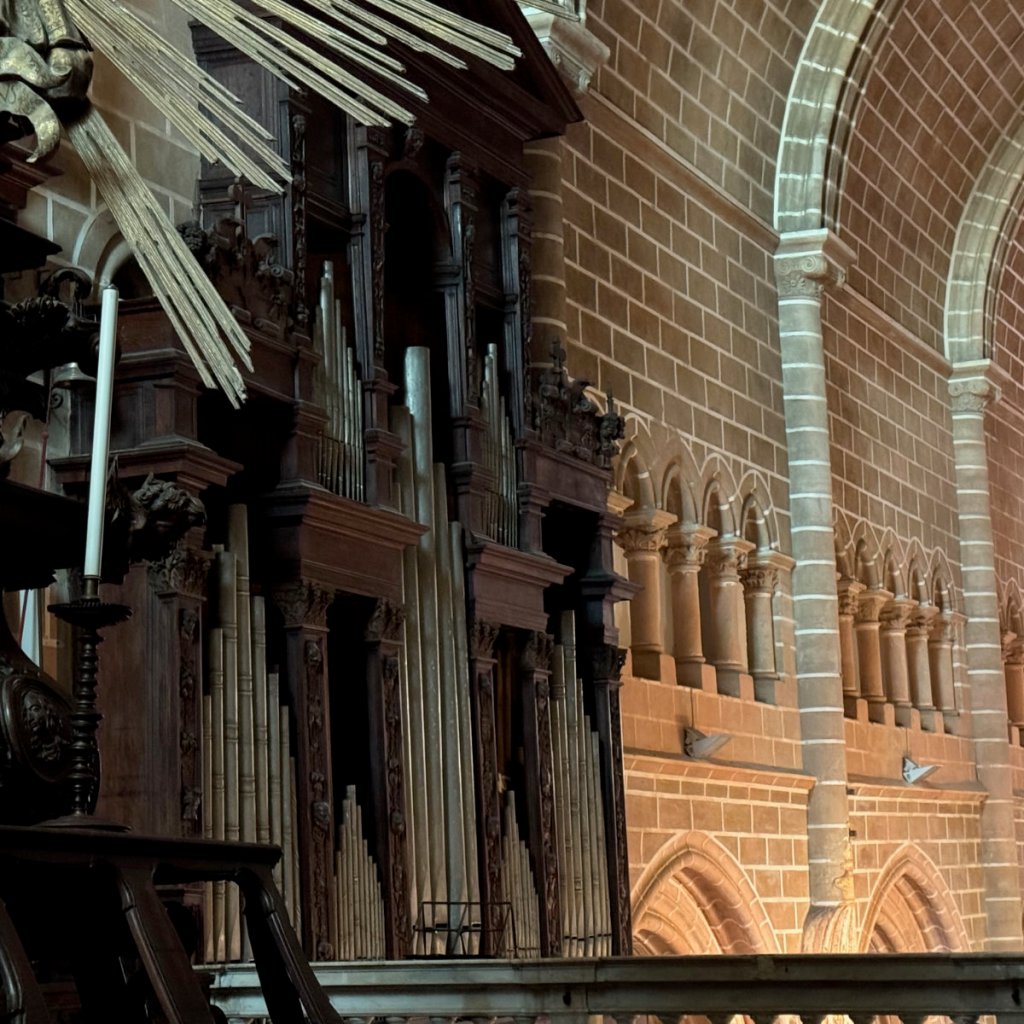
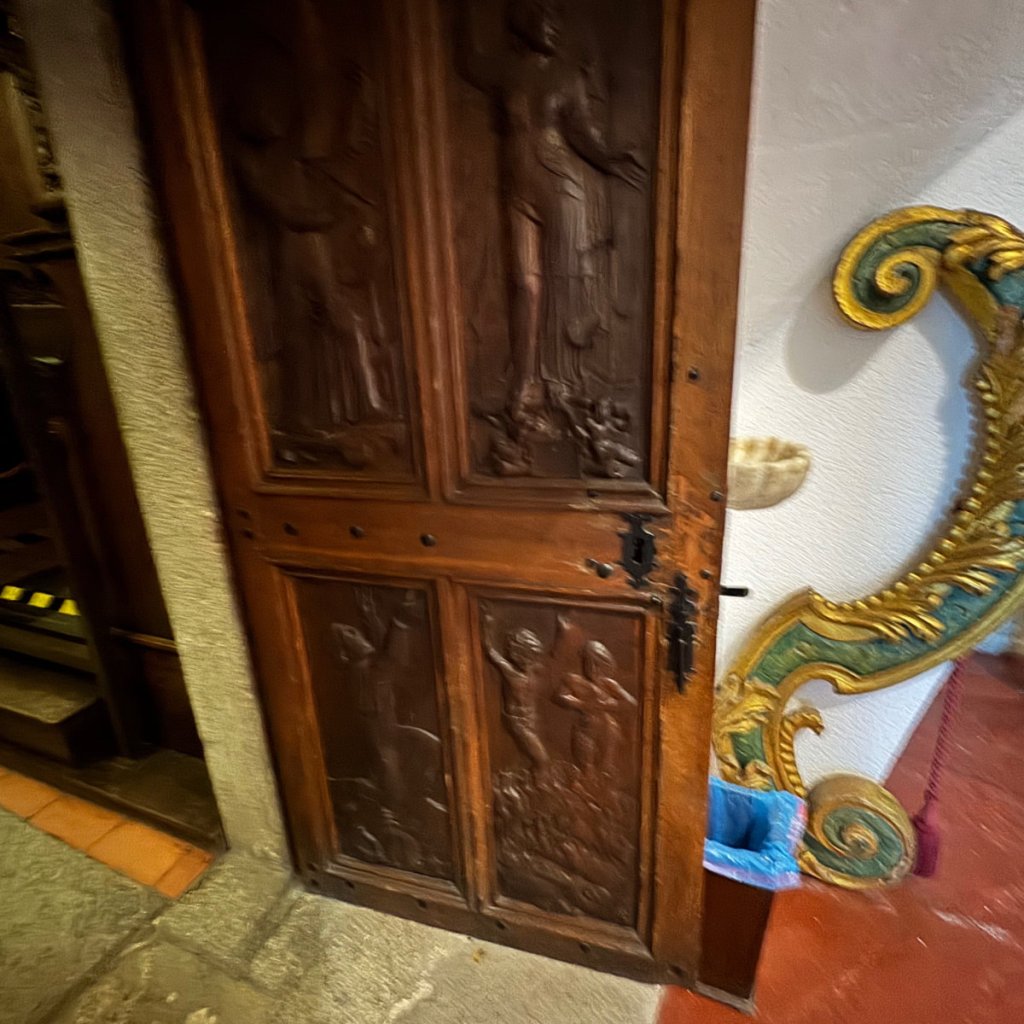
On my way down from the roof and next to the galleries is the actual choir loft of the Cathedral. It wasn’t well-lit and I didn’t want to risk using a flash. The stalls are beautifully carved and there is a fairly decent view an enormous baroque lectern that hides the pipe organ on the wall and obstructs the view of the nave.
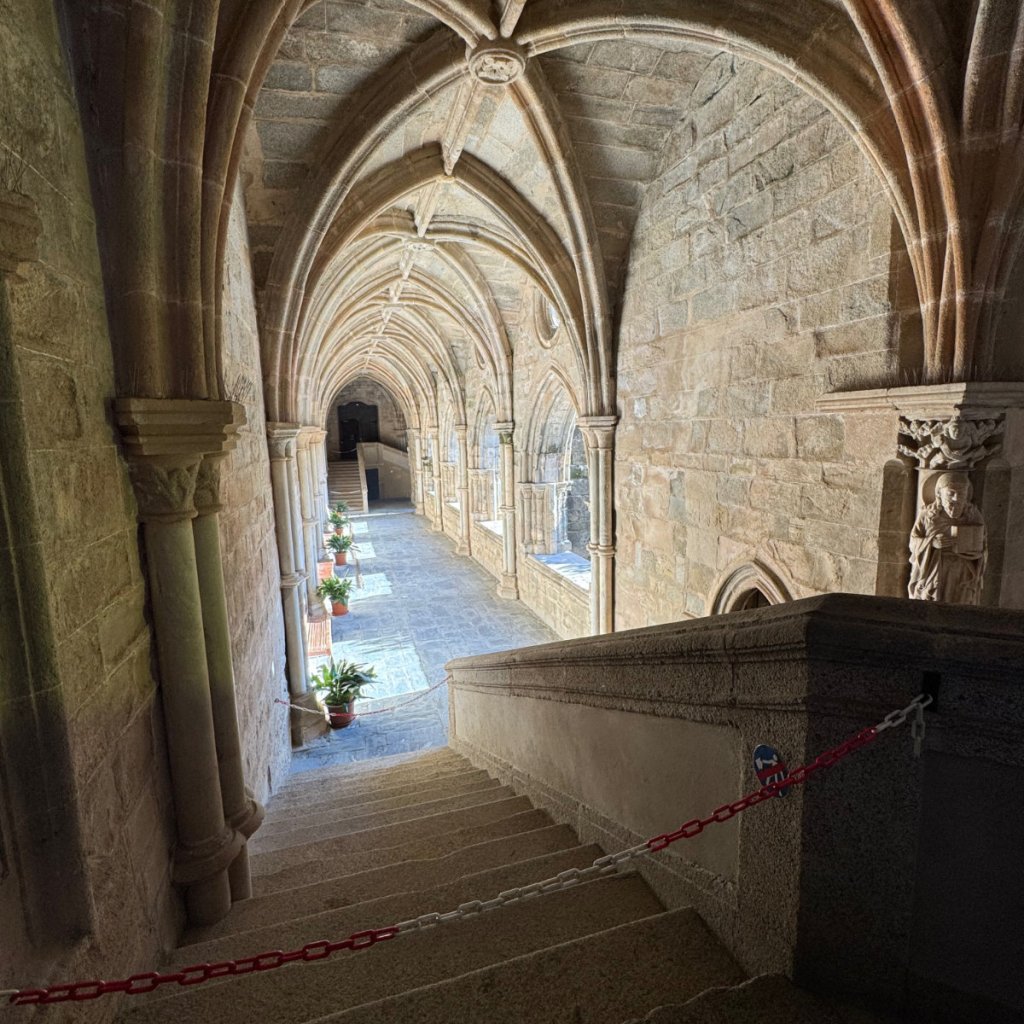
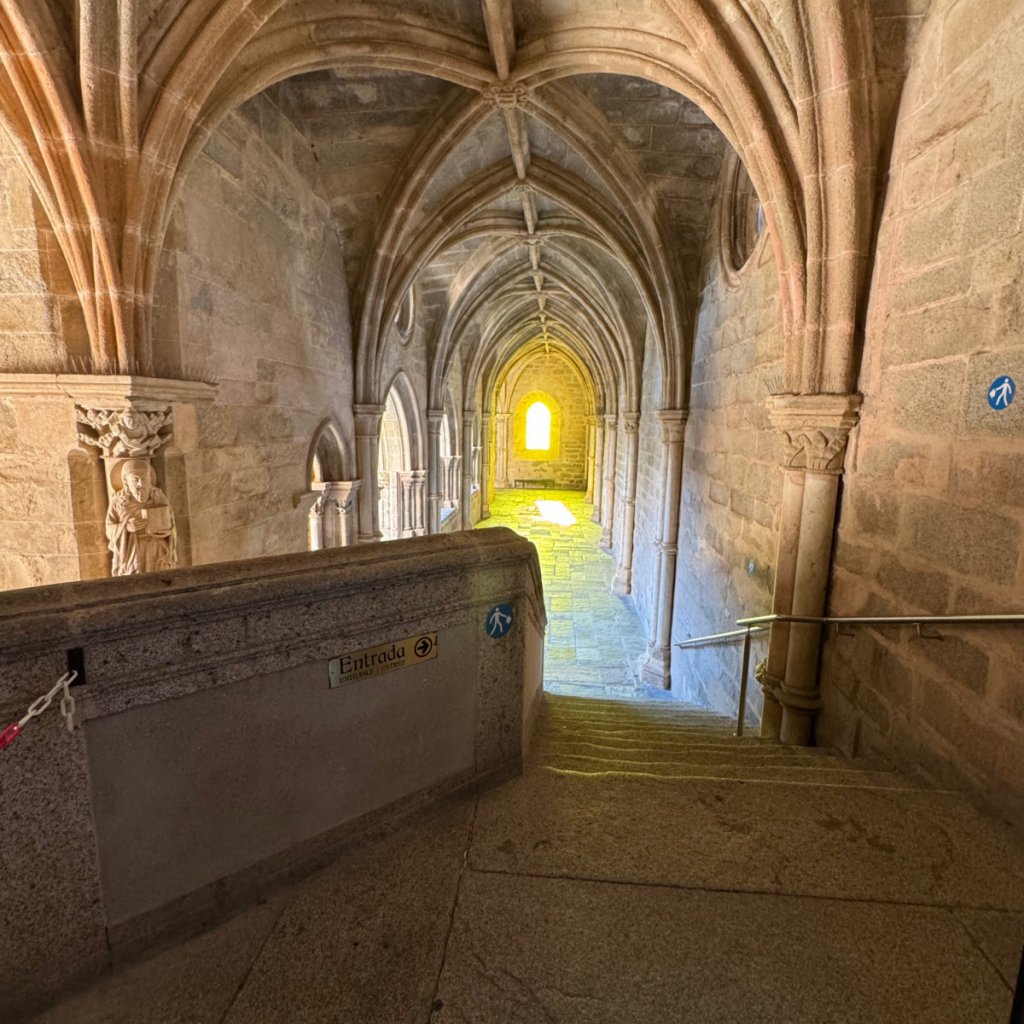
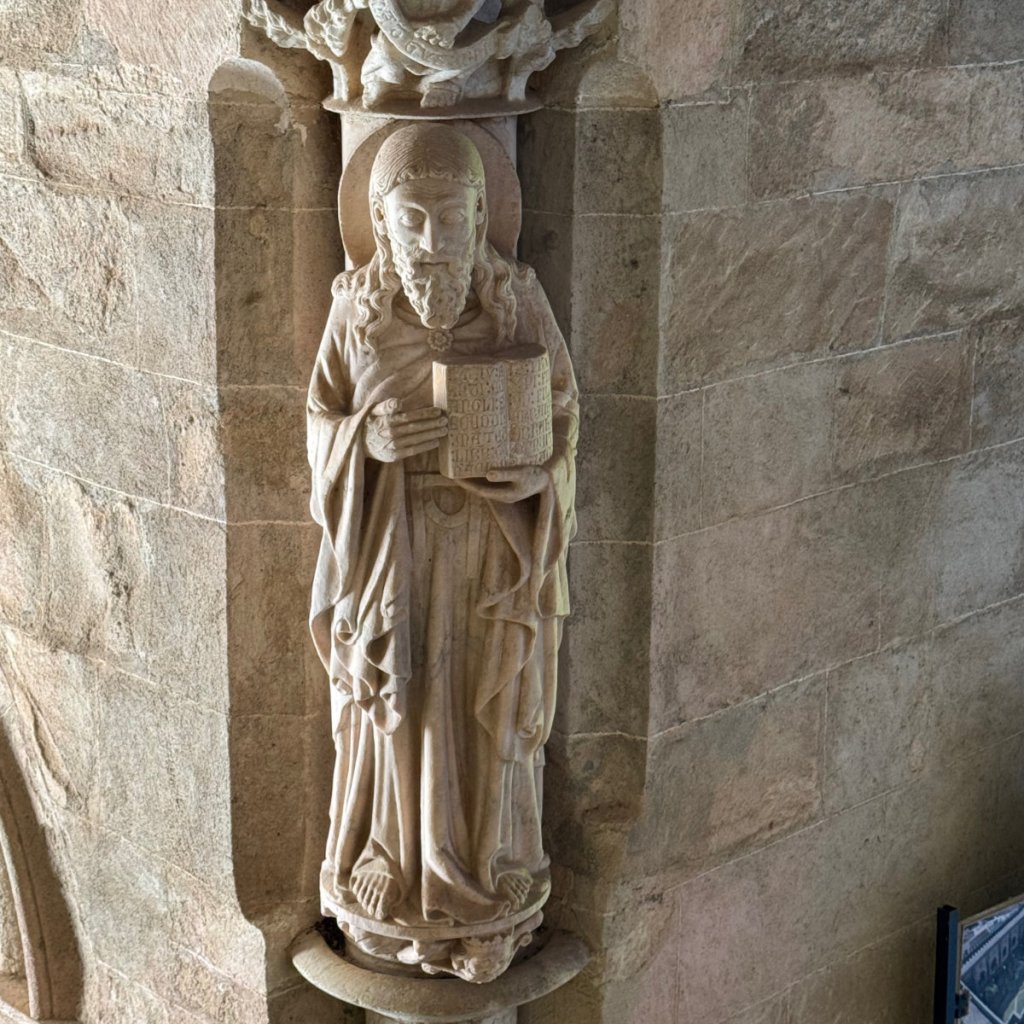
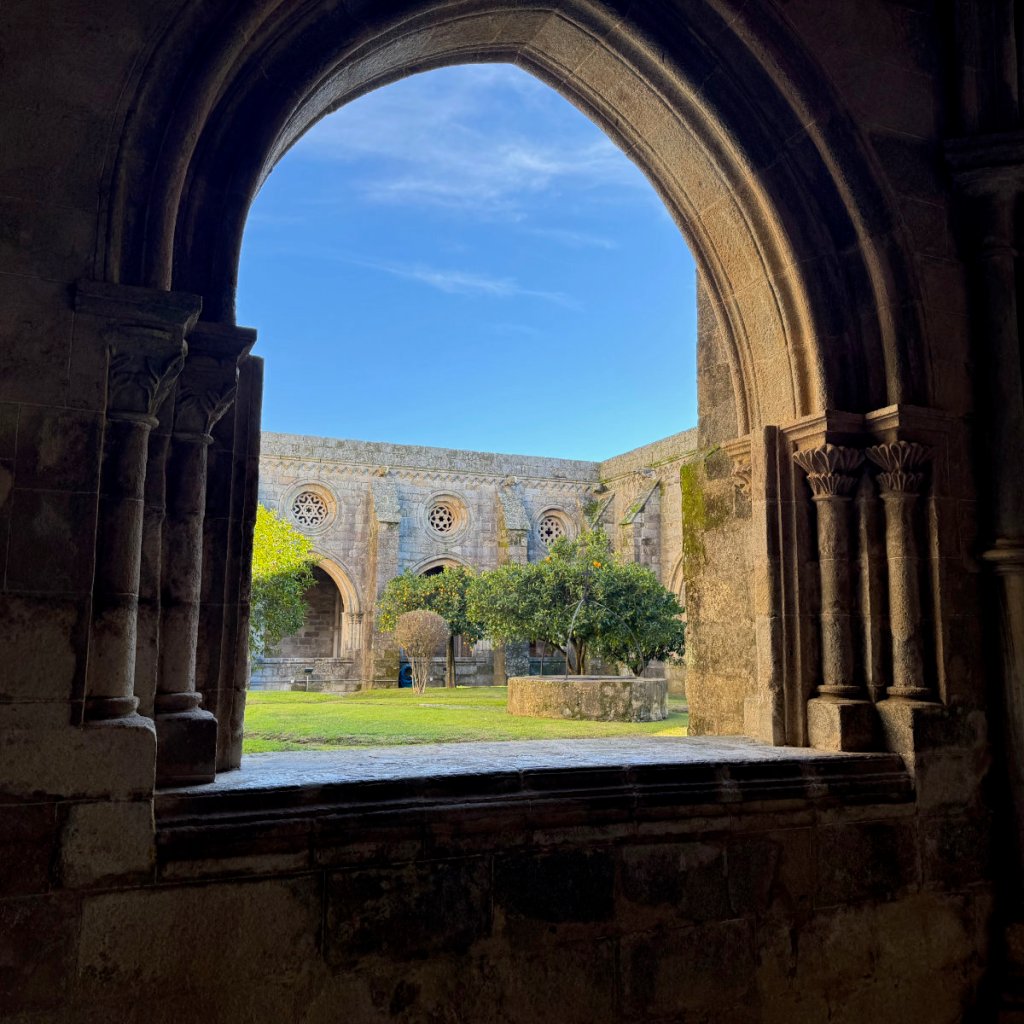
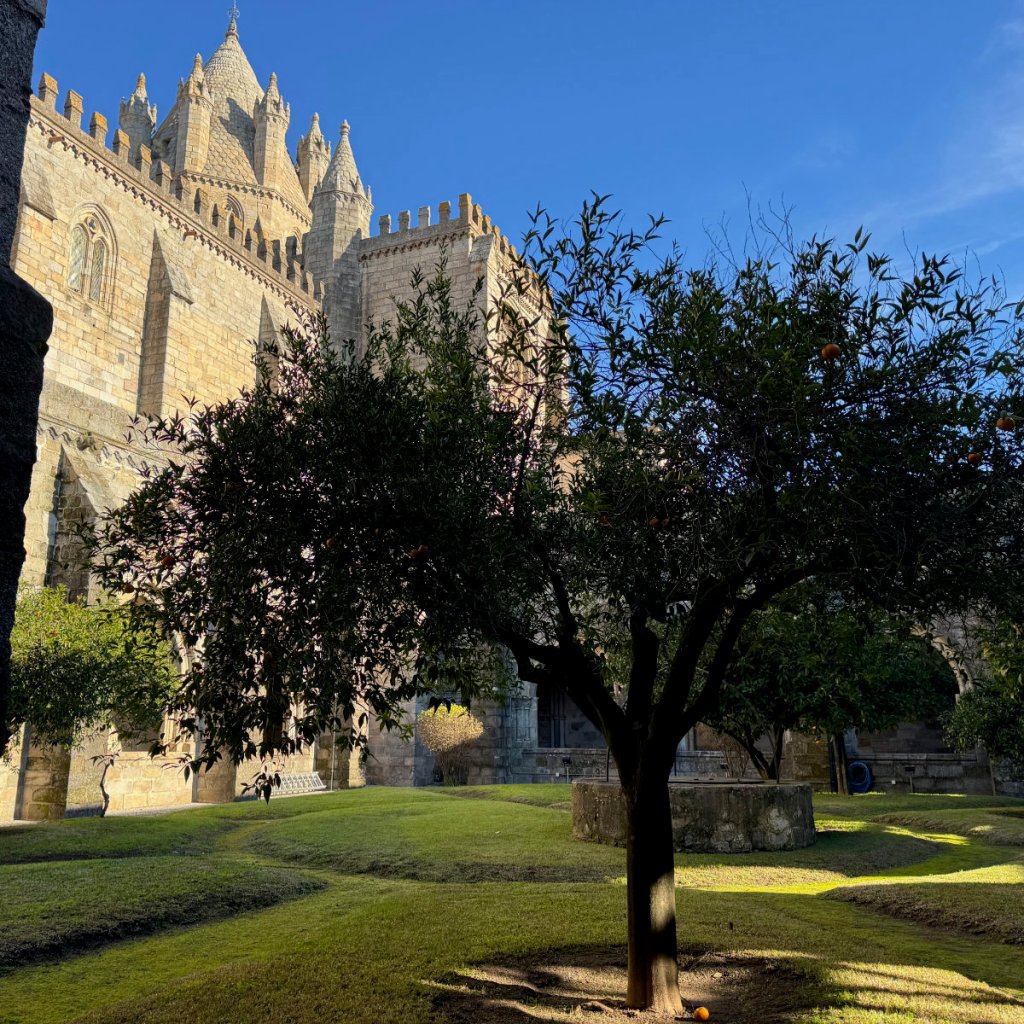
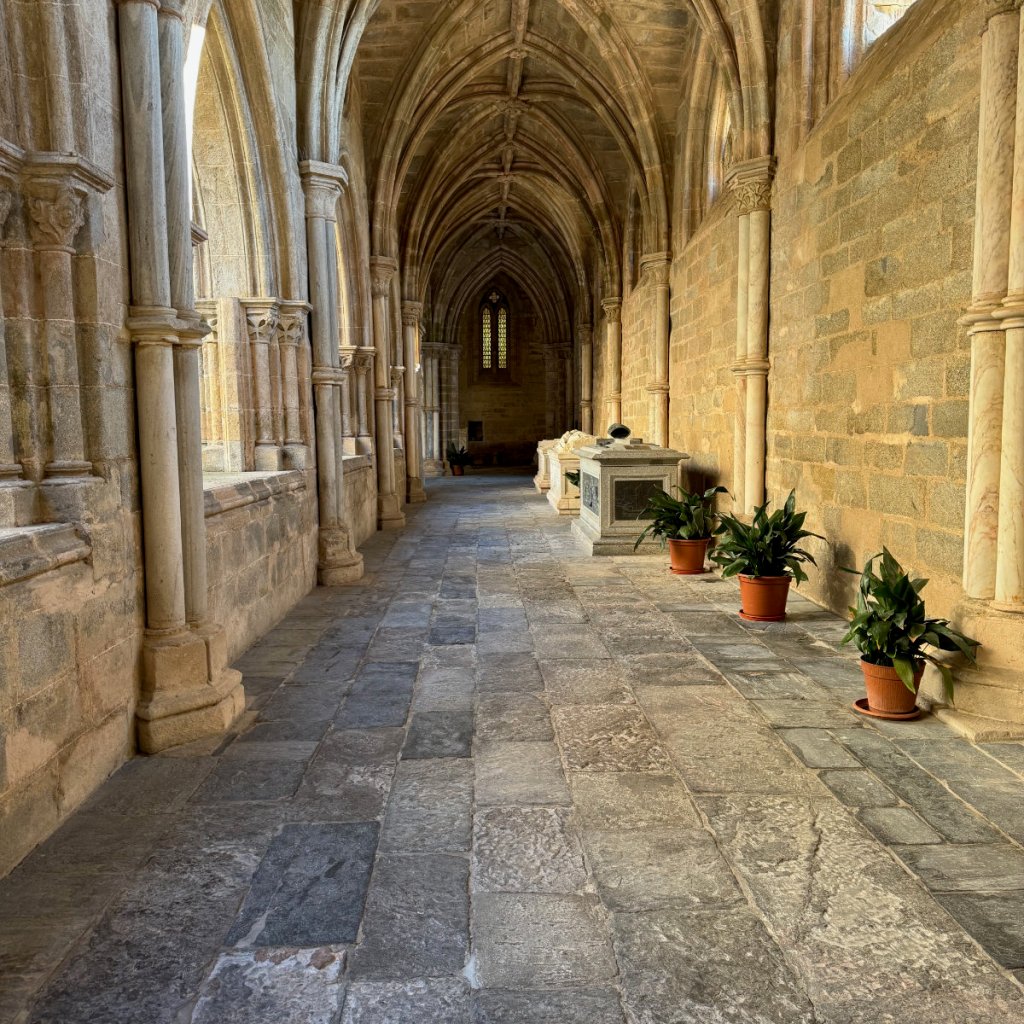
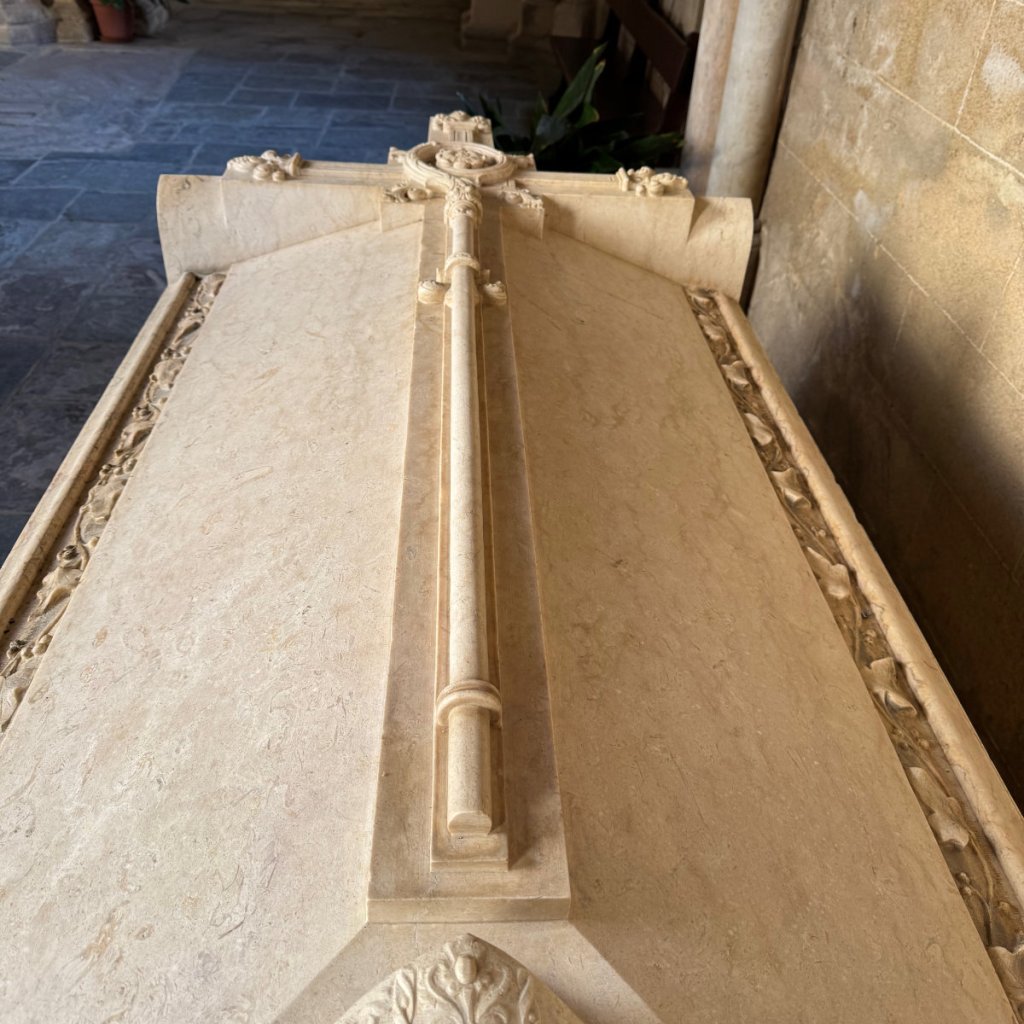
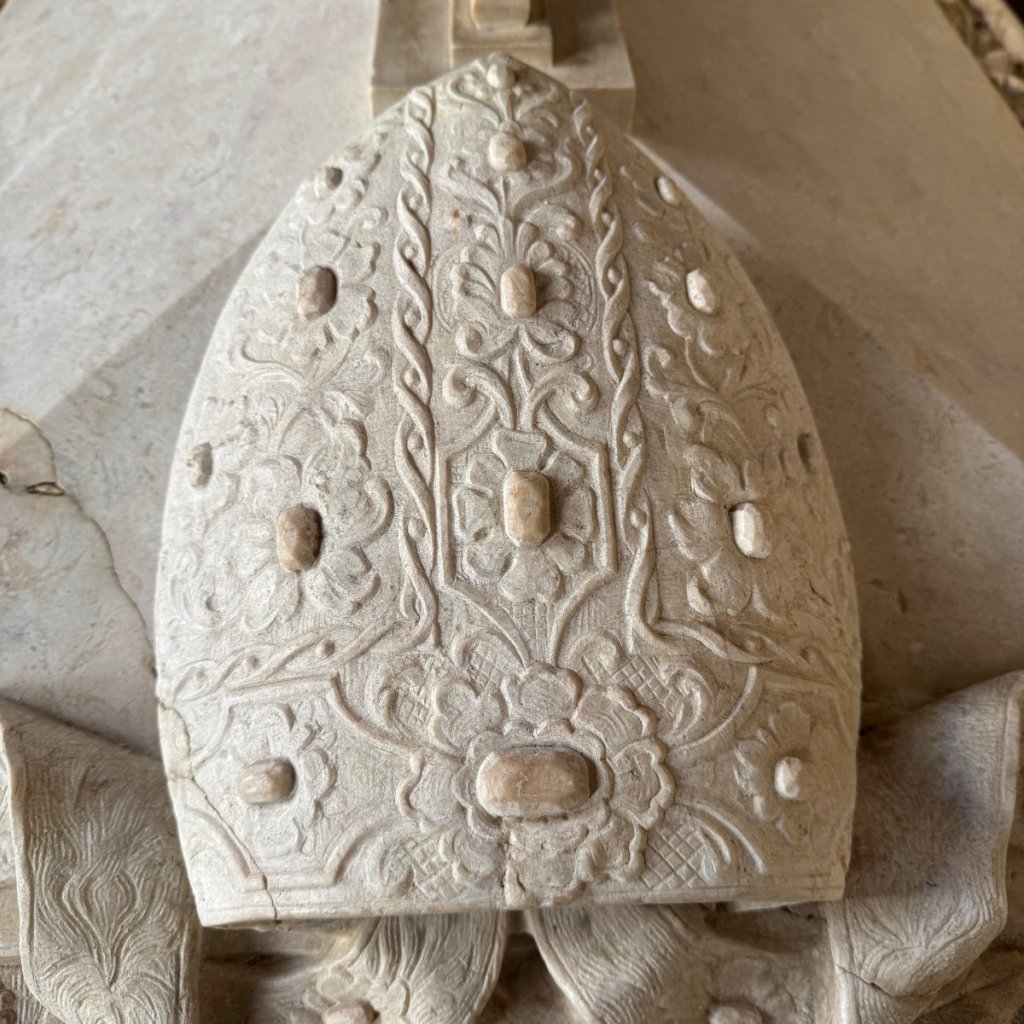
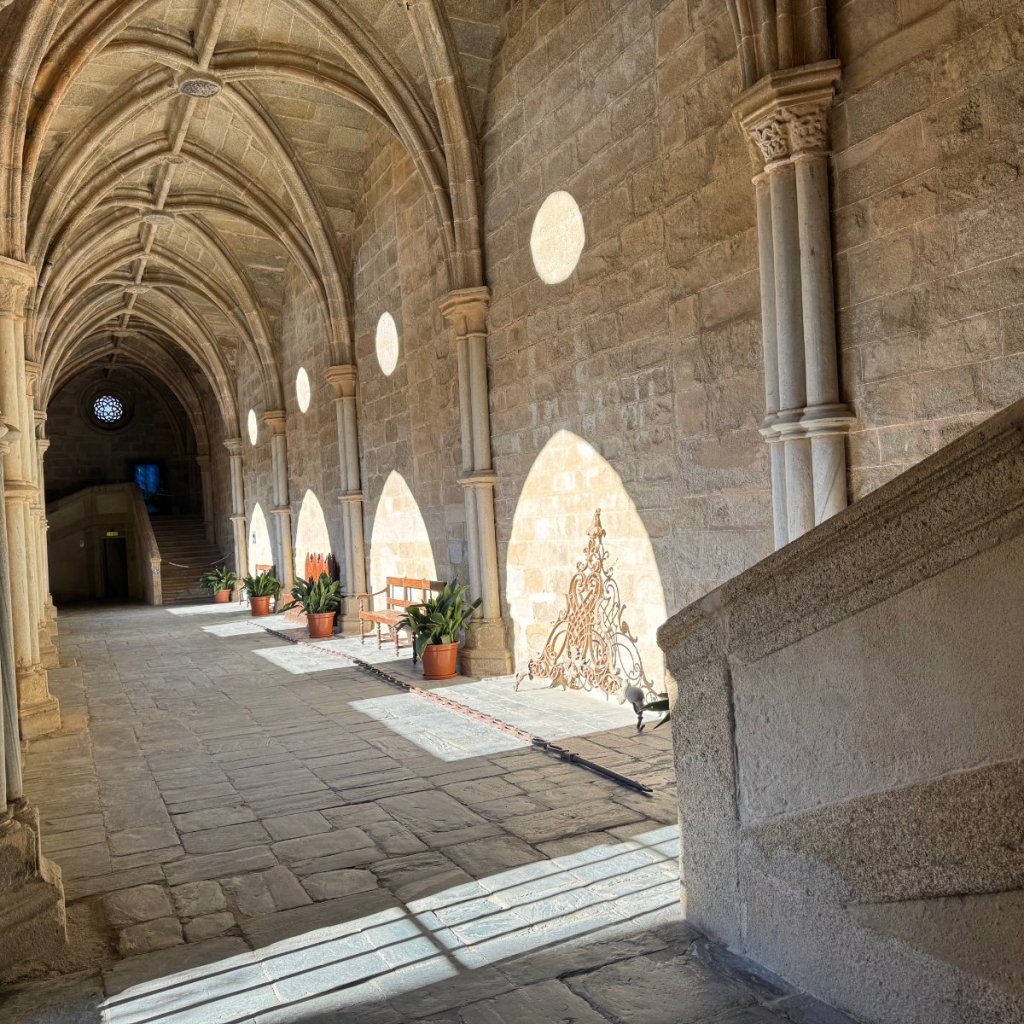
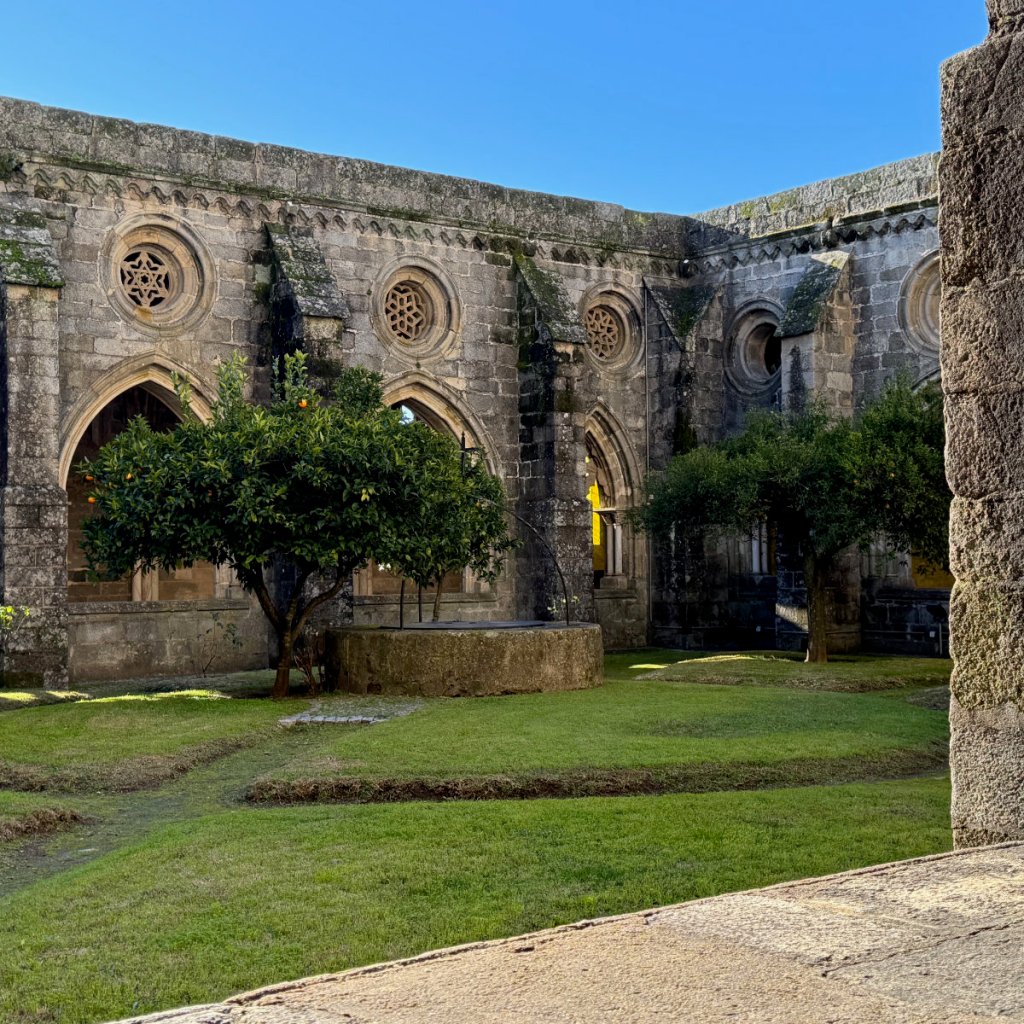
The cloisters surround an inner courtyard garden providing a place of respite and peace in the middle of a bustling city. It is also the final resting place of several bishops of Évora. In January the temperature was quite cool and I was trying to imagine what it would be like at the height of the tourist season in the blazing temperatures of the summer.

And then it was the interior of the cathedral:
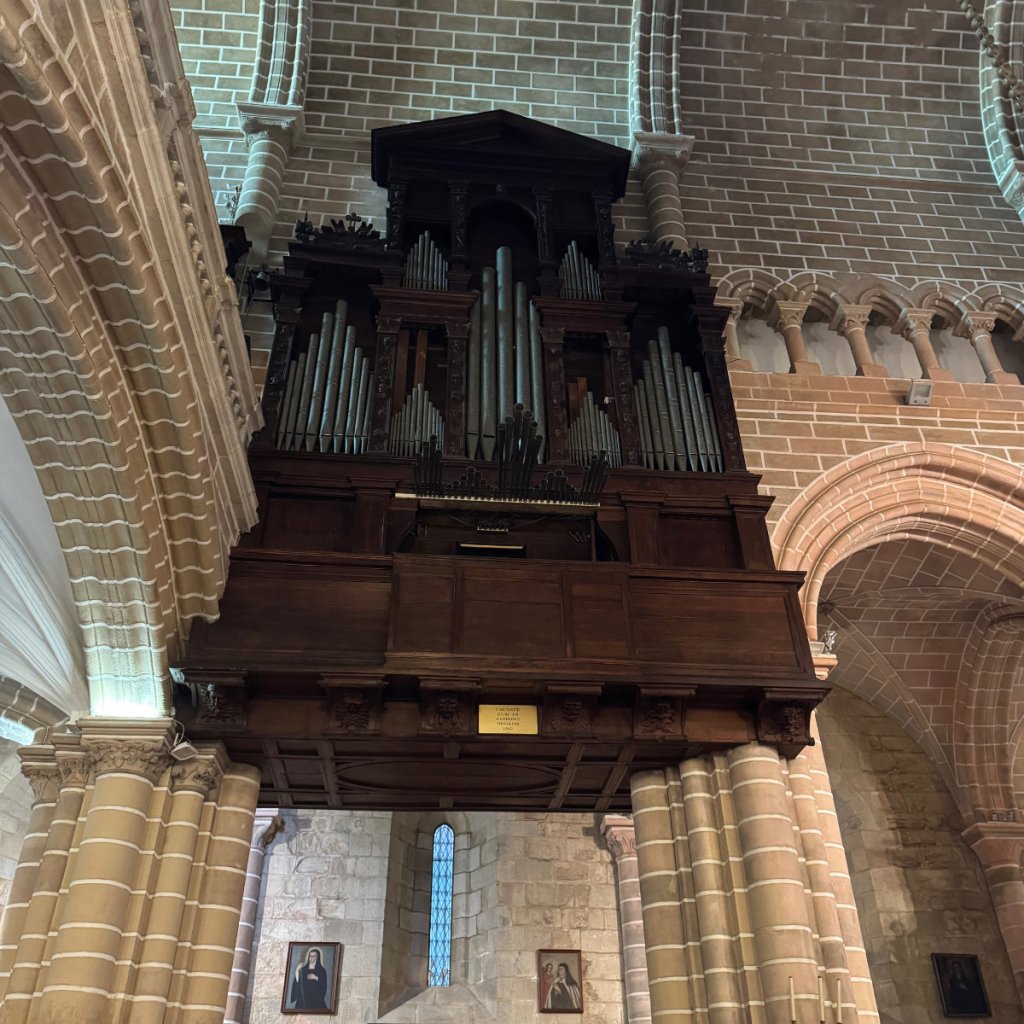
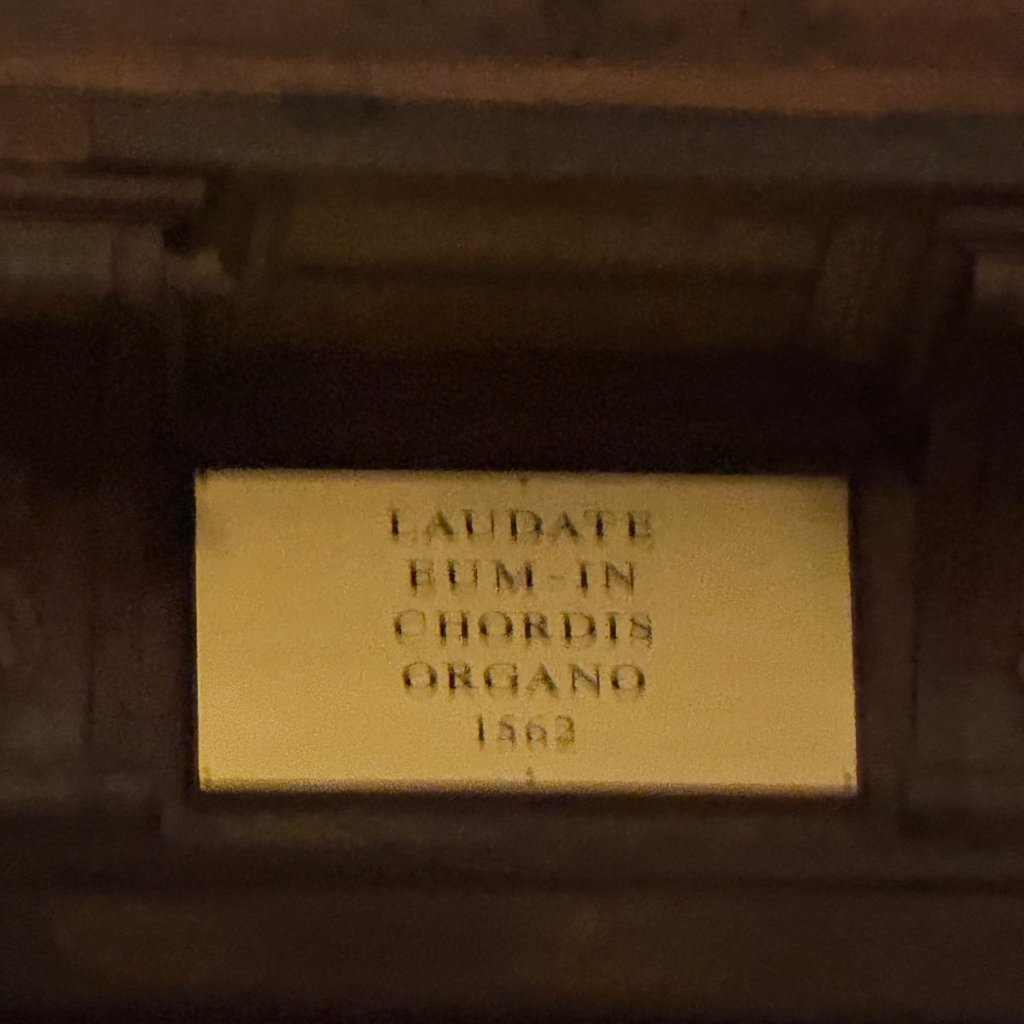
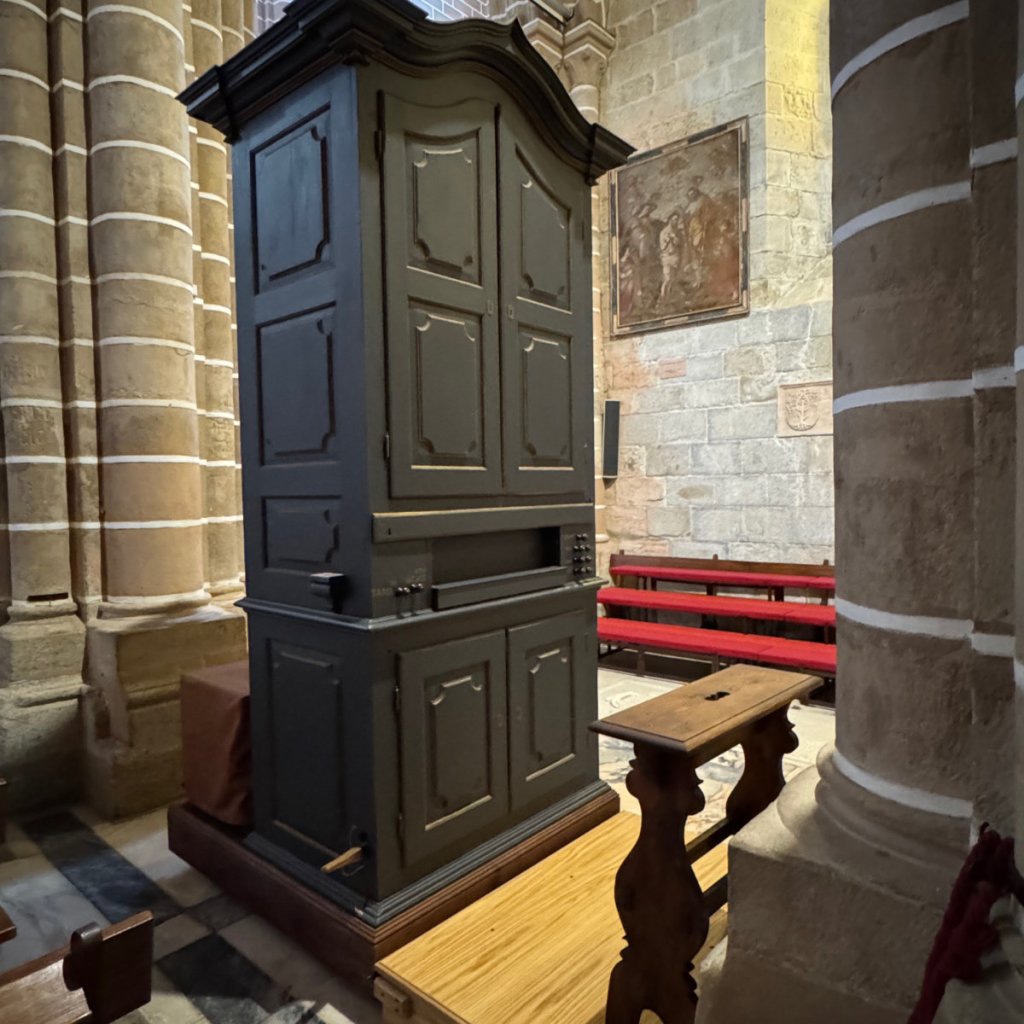
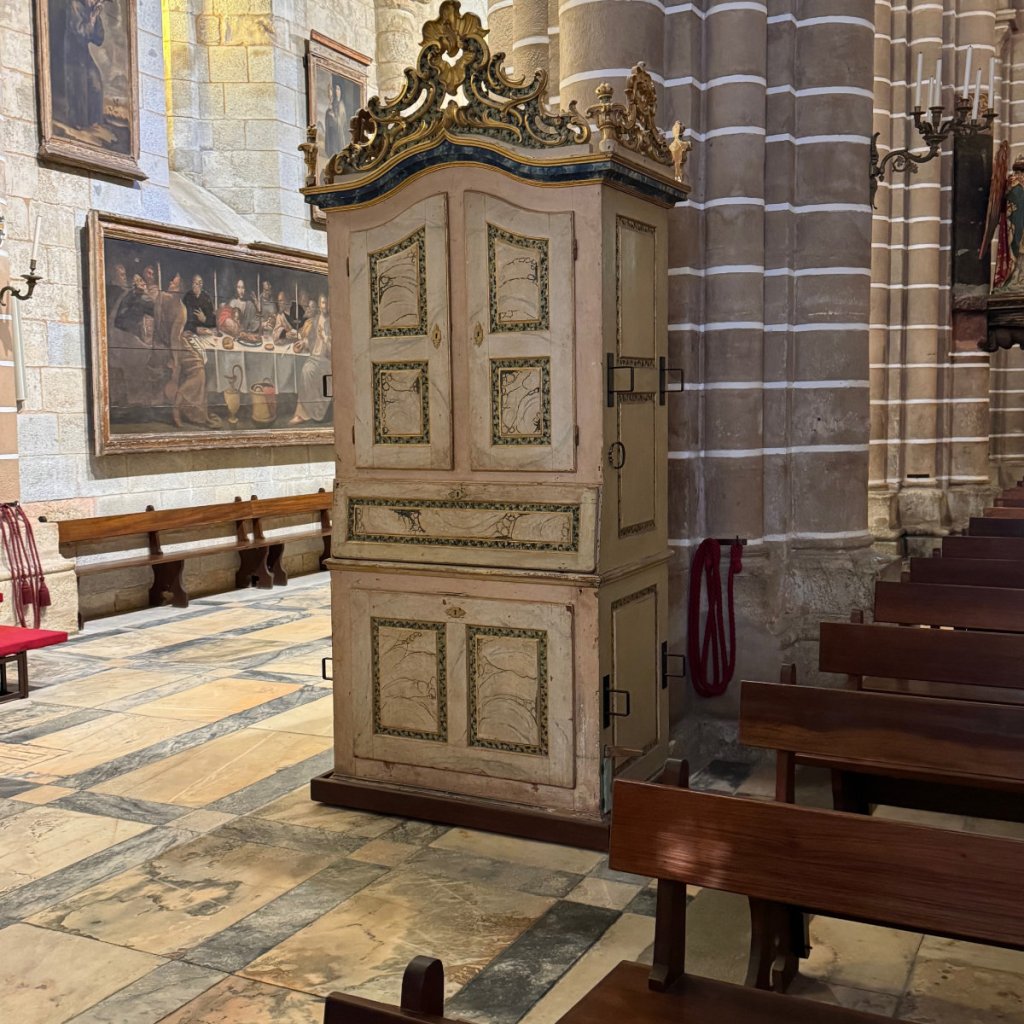
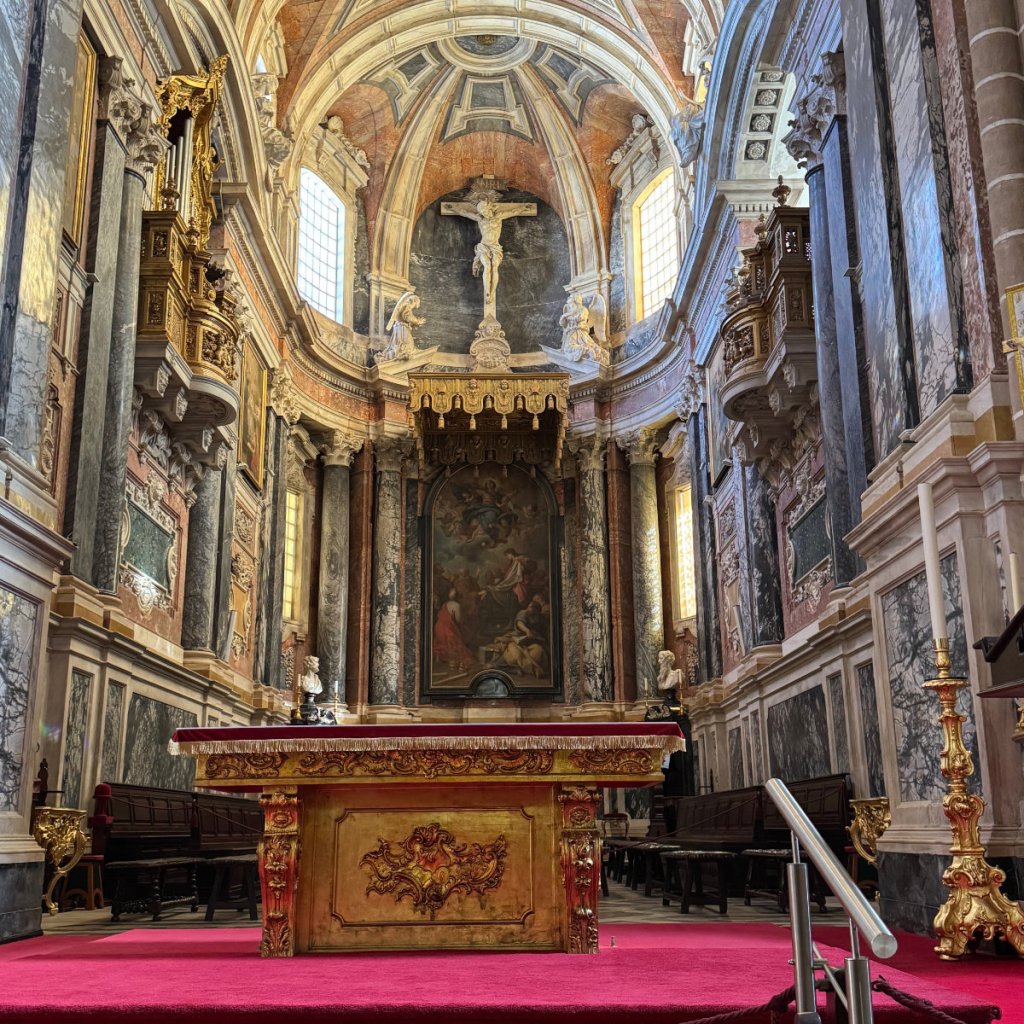
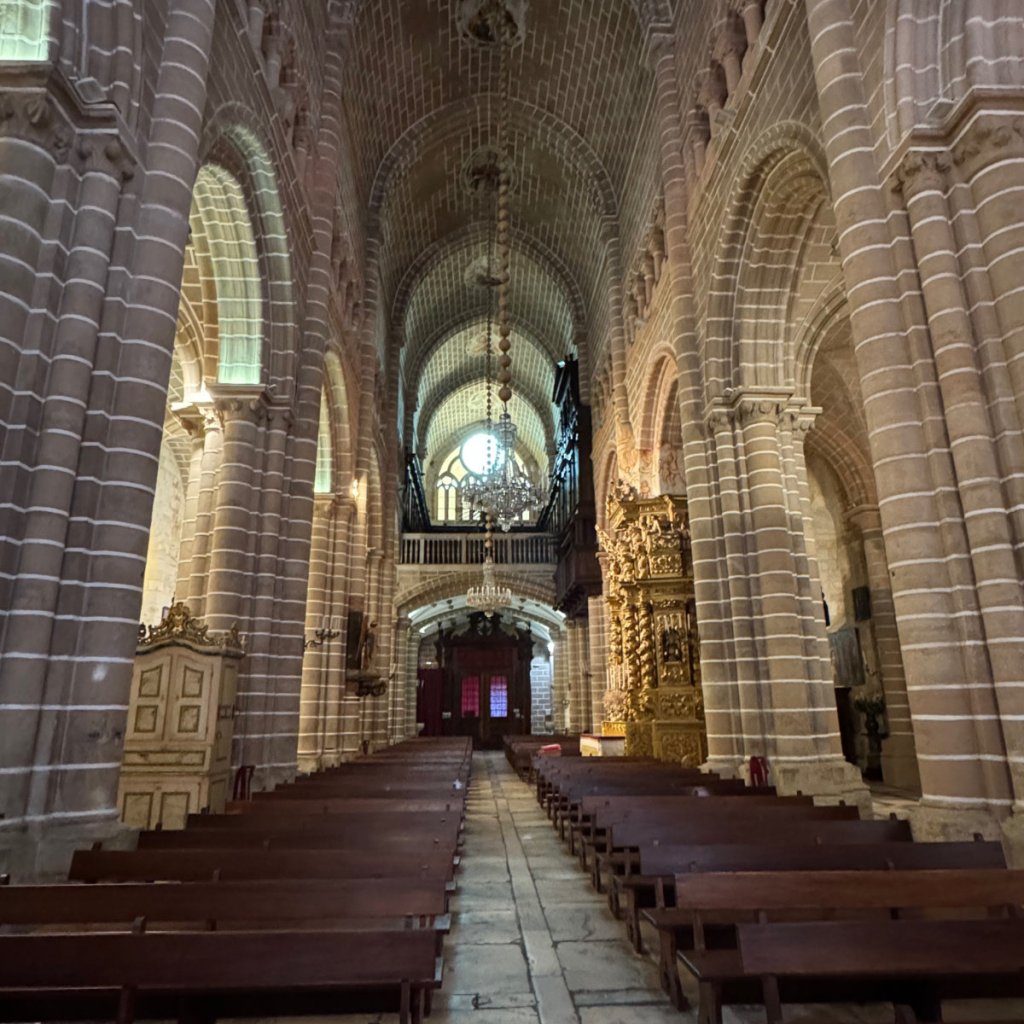
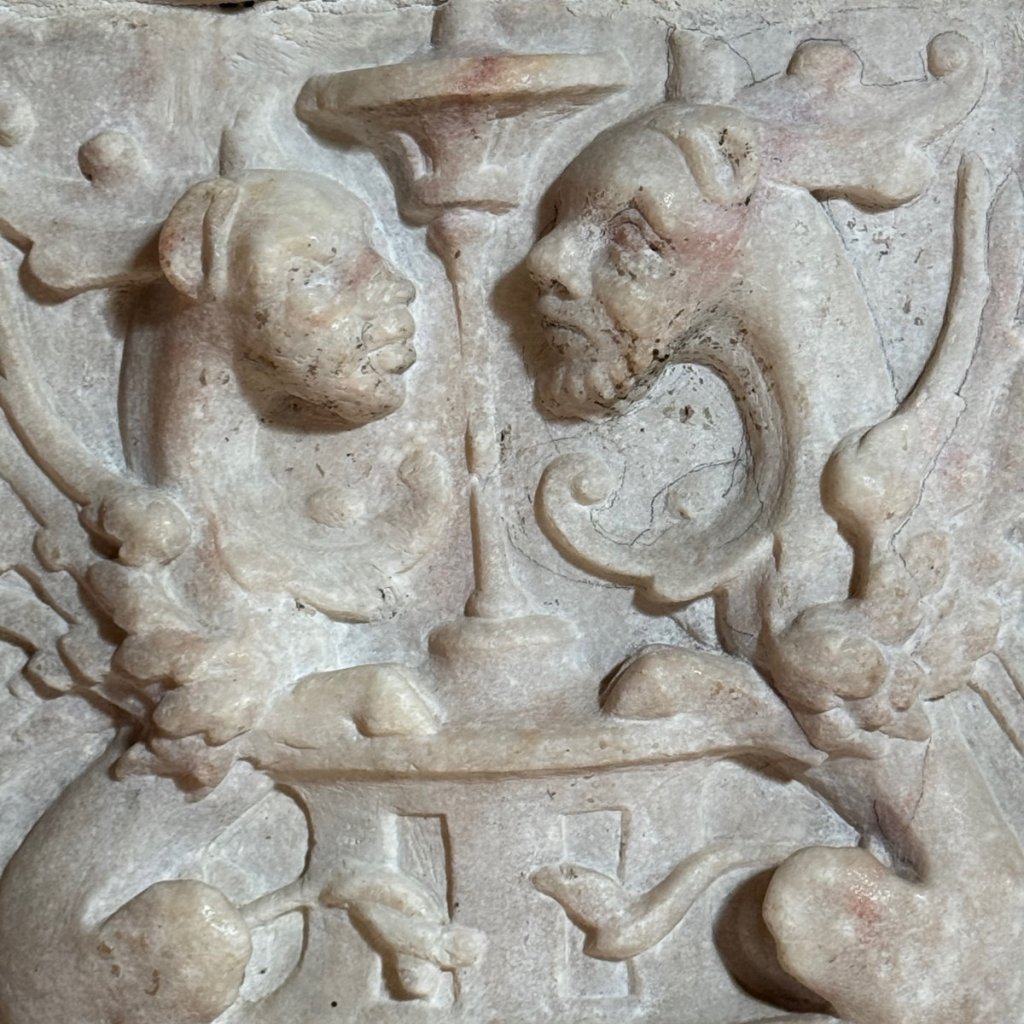

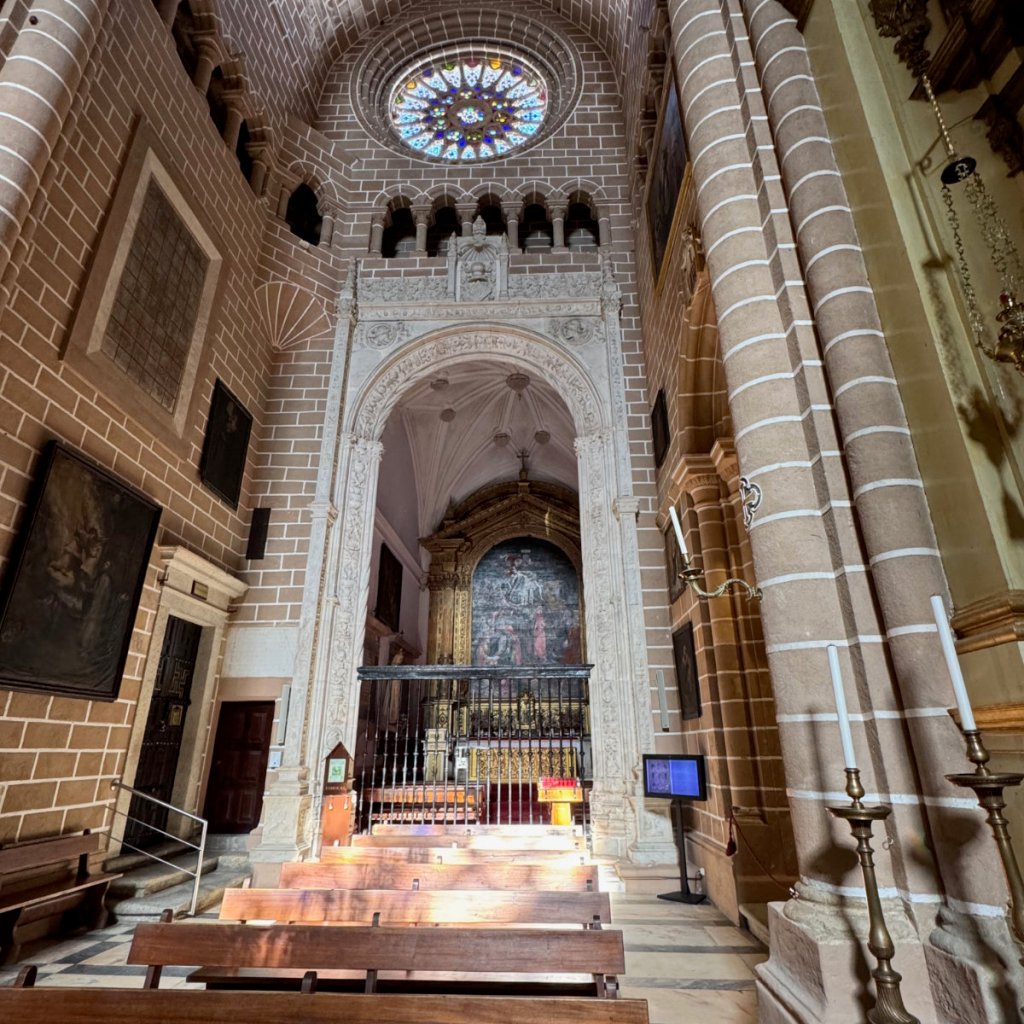
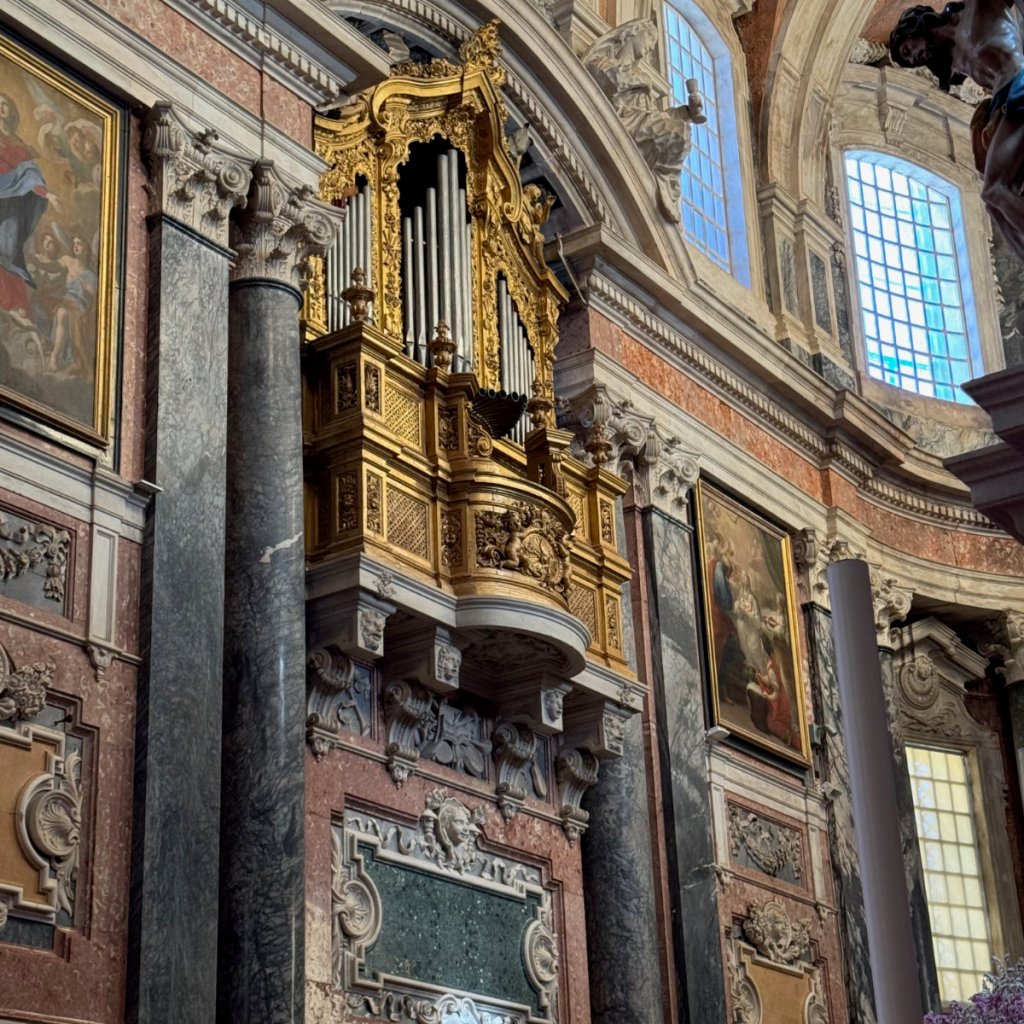
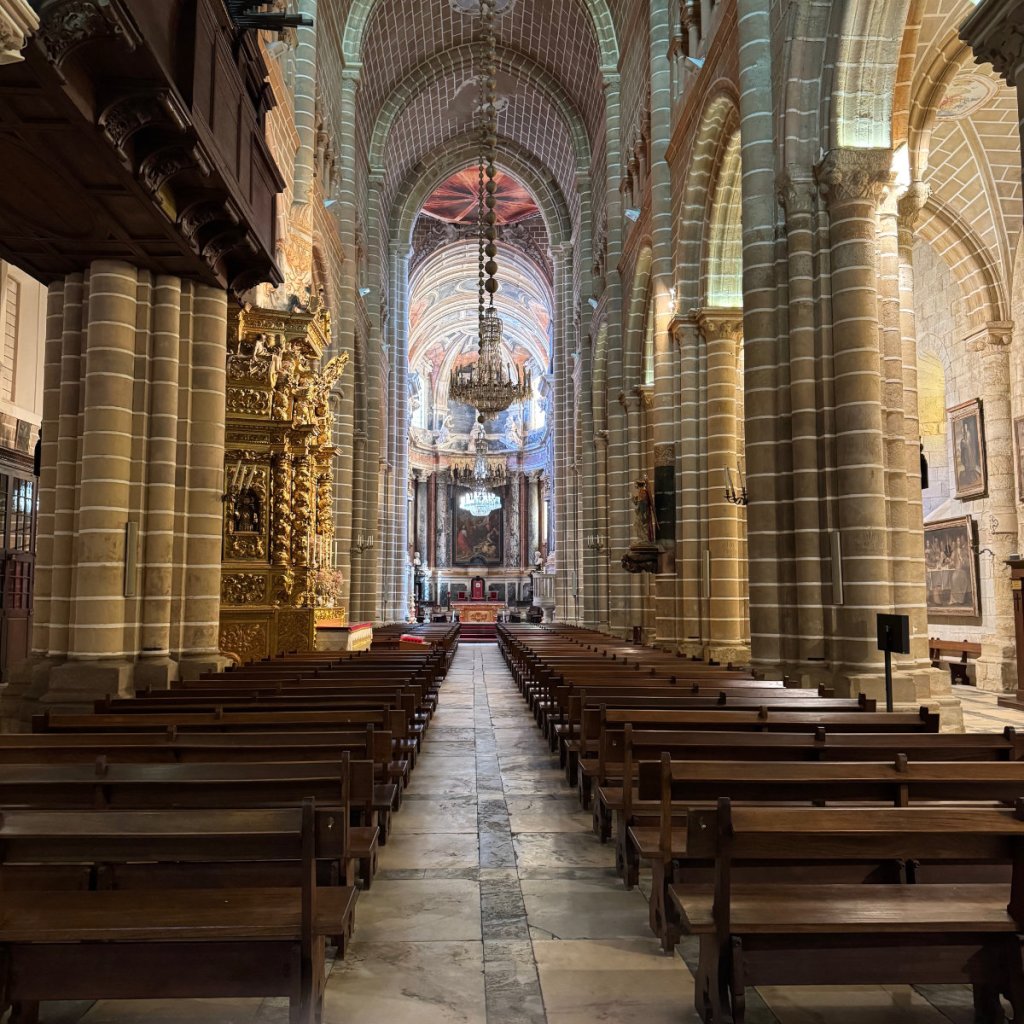
There are currently four pipe organs in the cathedral. The two largest are permanently in place: number one over the main door next to the High Choir and number four in the chancel. The High Choir Organ is also known as the Japanese organ. The designation comes from 1584 when four Japanese men visited the city as part of a cultural exchange mission. During the visit, they heard an organ performance at the cathedral, possibly the chancel organ (my guess). The result was the construction of a beautiful instrument combining the skills of Portuguese and Japanese craftsmen. The work was overseen by an Italian organ builder Francesco Cortez and Sukematsu Ito and other Japanese craftsmen. All of these instruments can be heard during an annual organ festival held in Évora. The final recitals of the recent season were in December 2025. I’m going to have to be there one of these years! Next stop Igreja de Santo Antão.
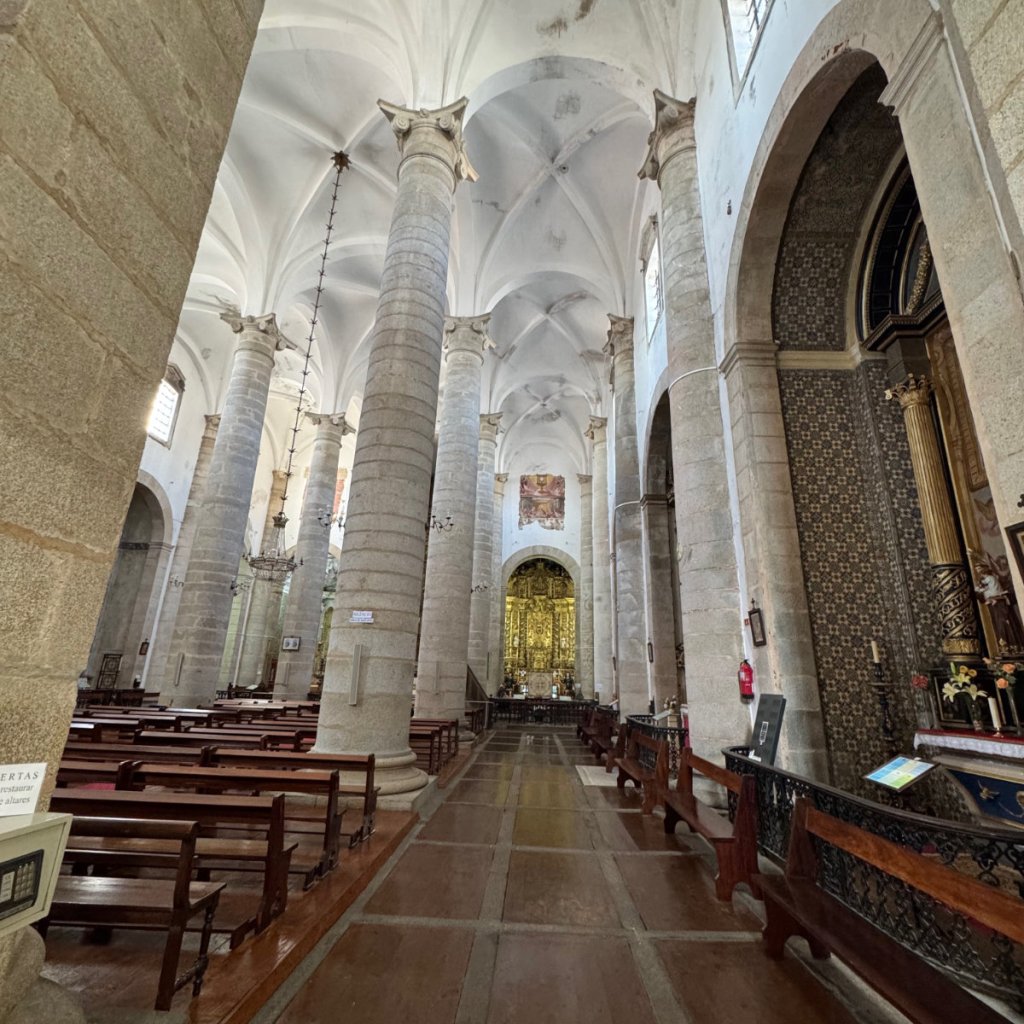
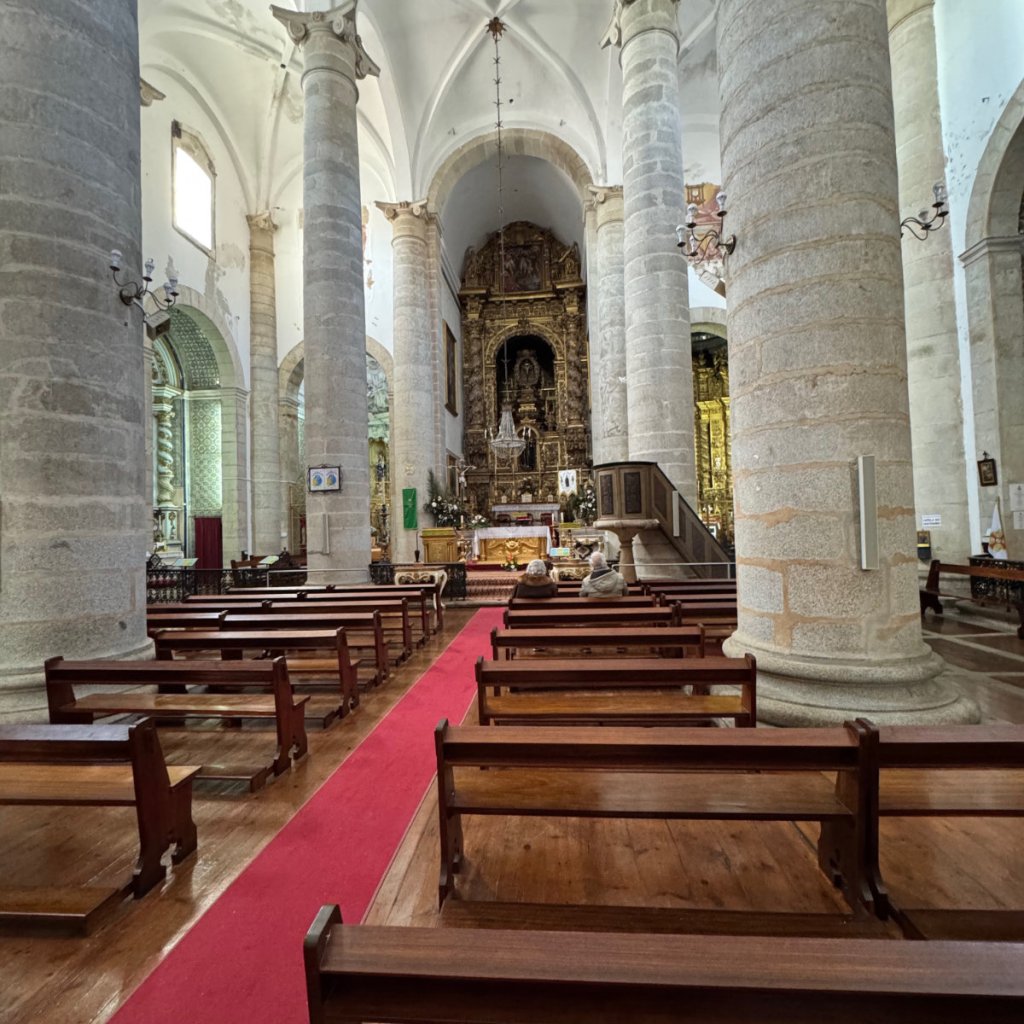
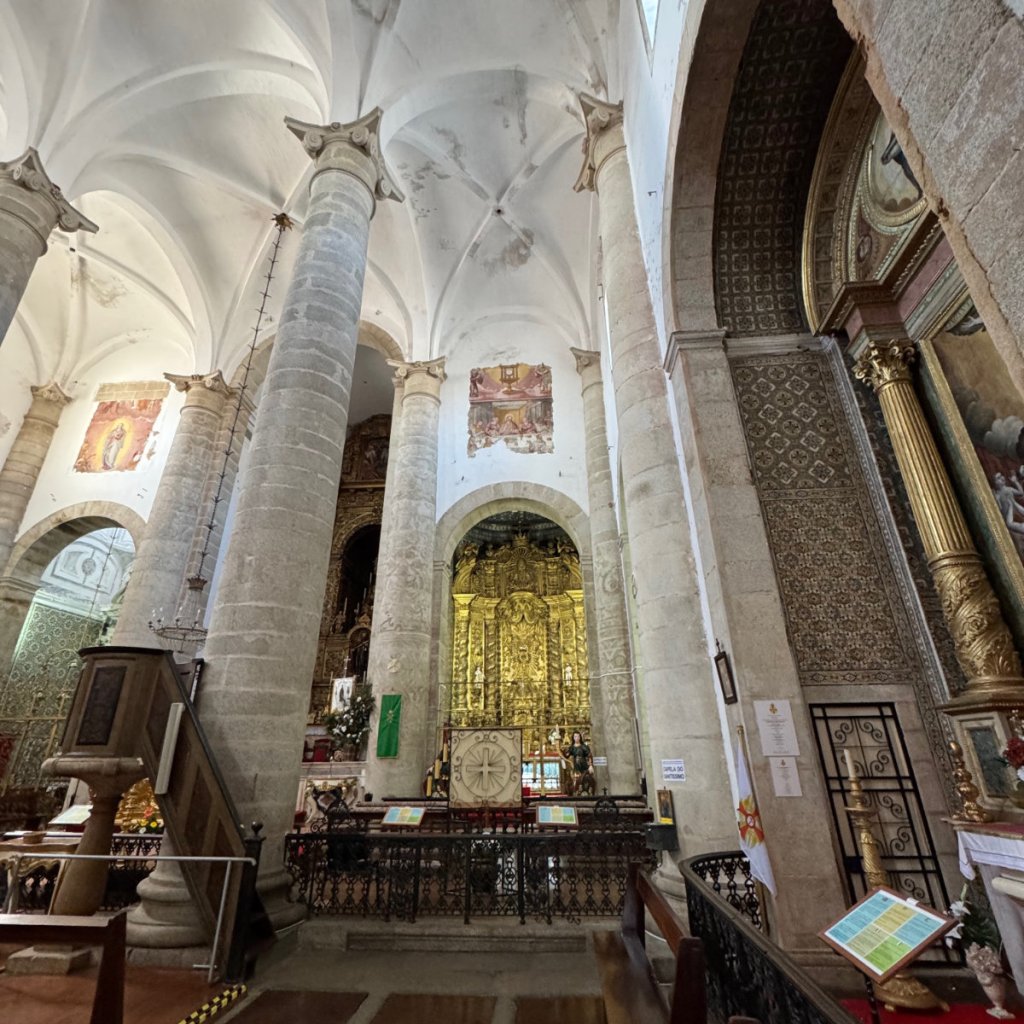
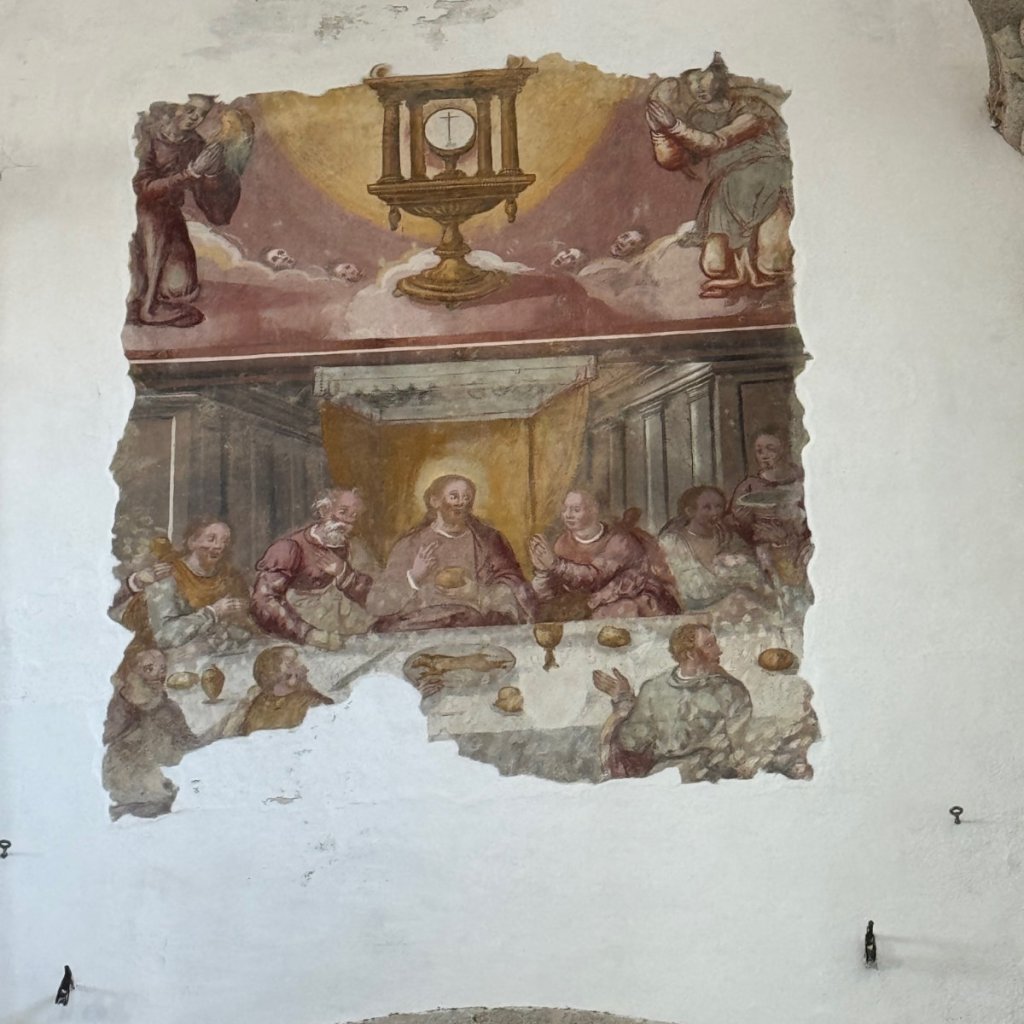
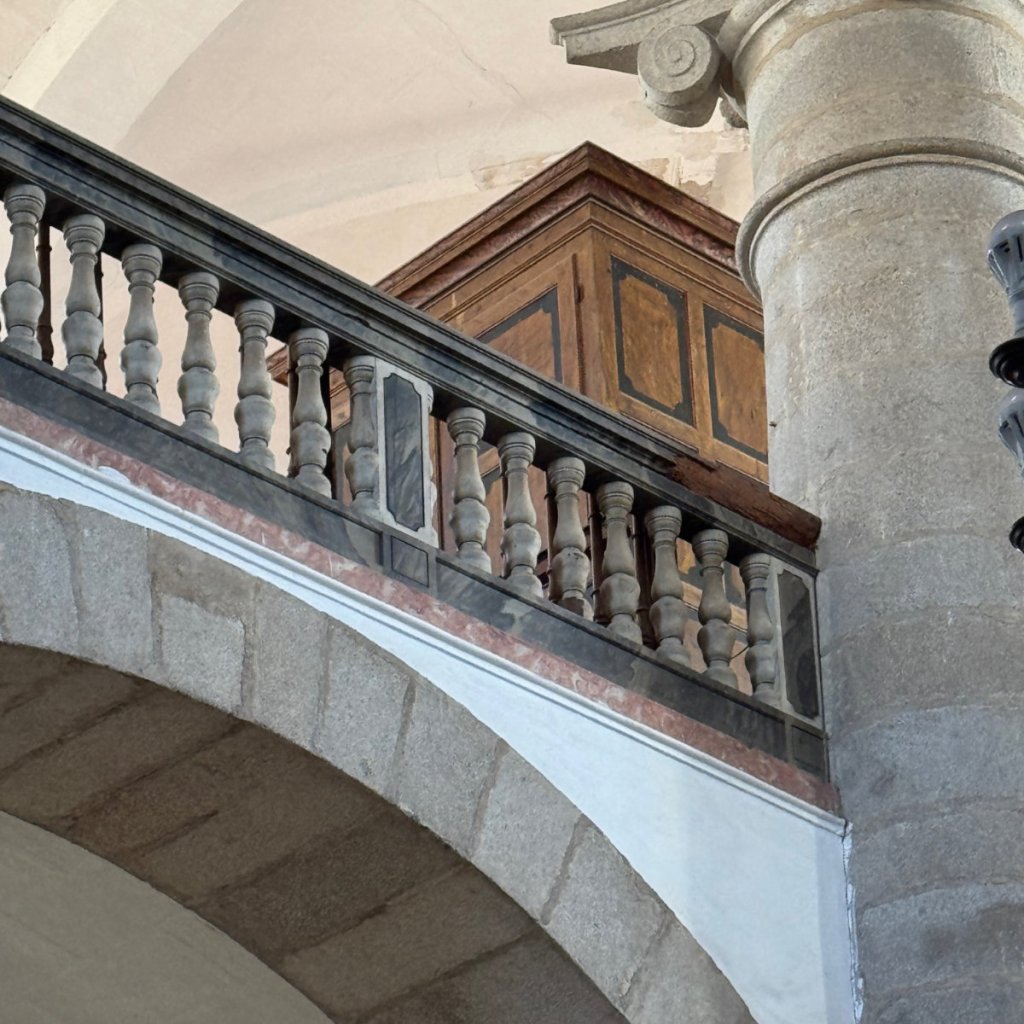
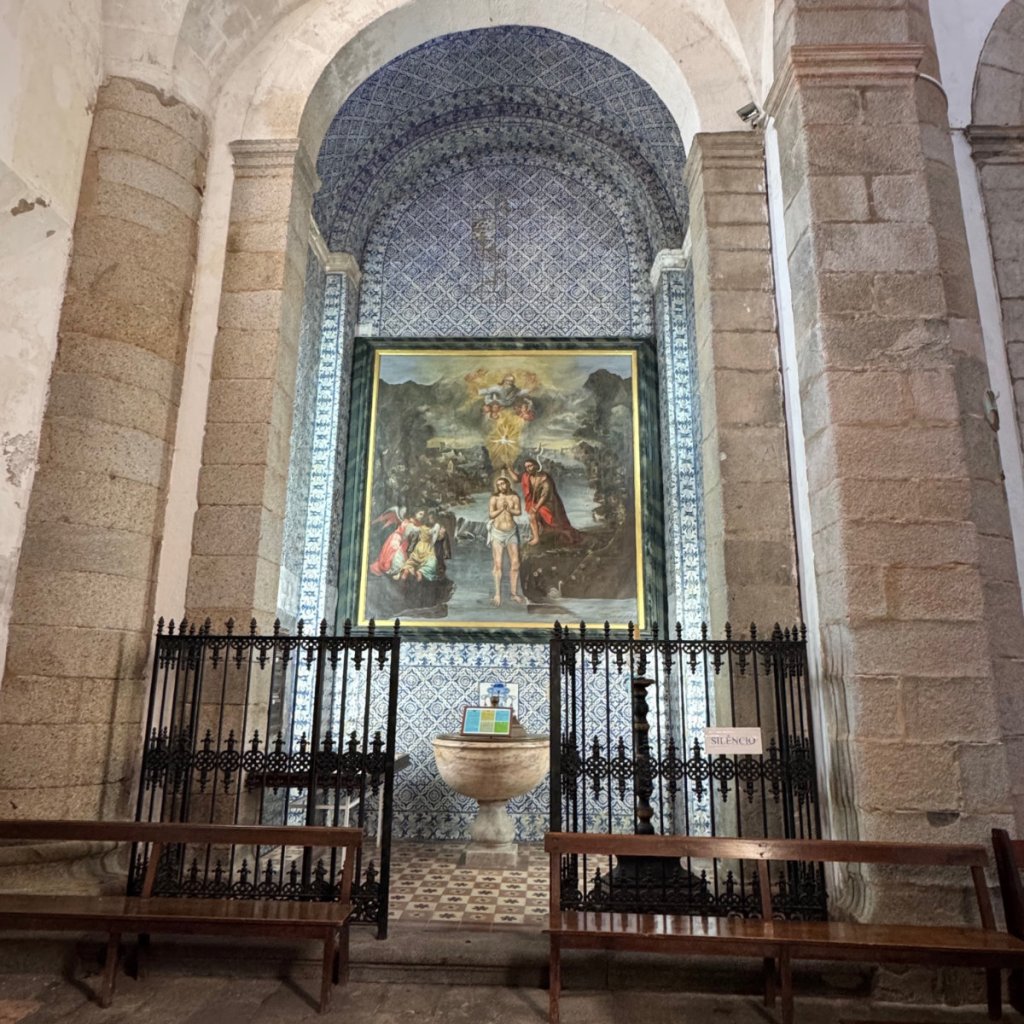
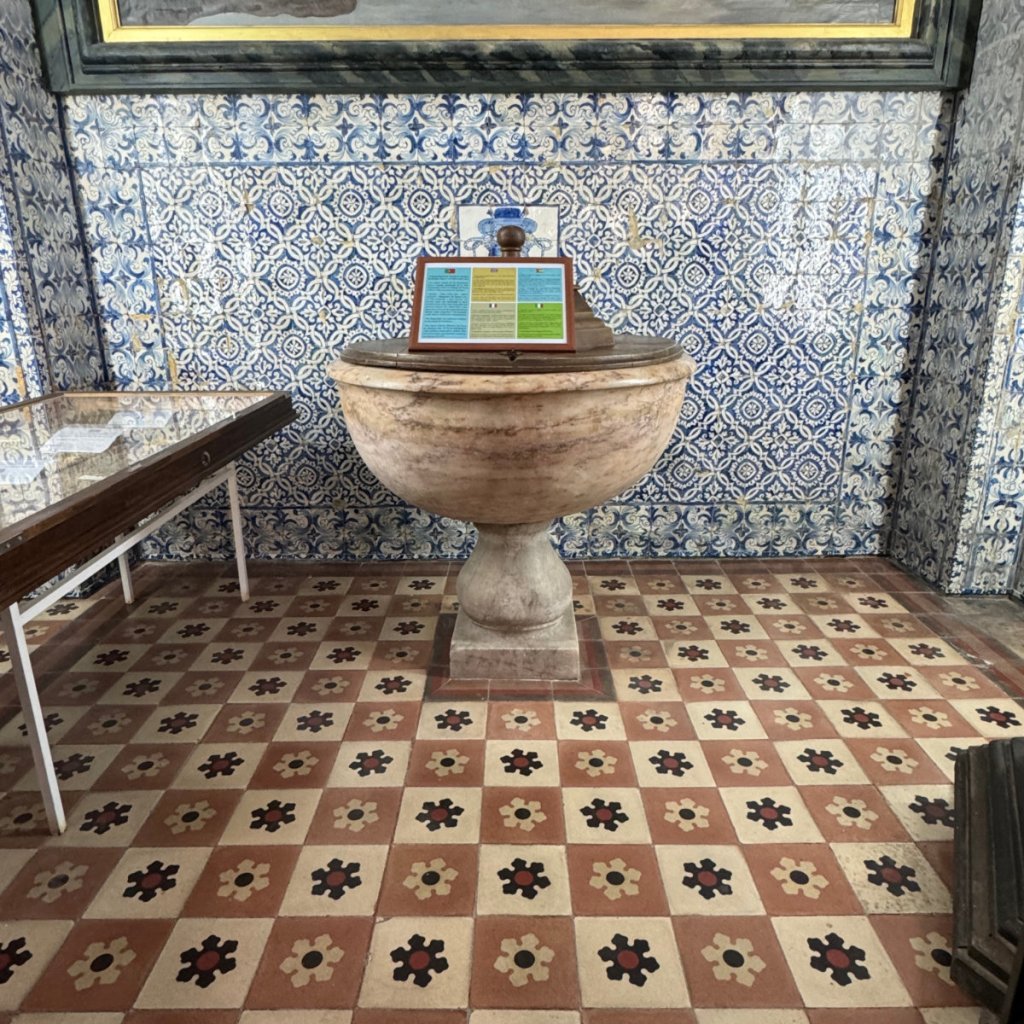
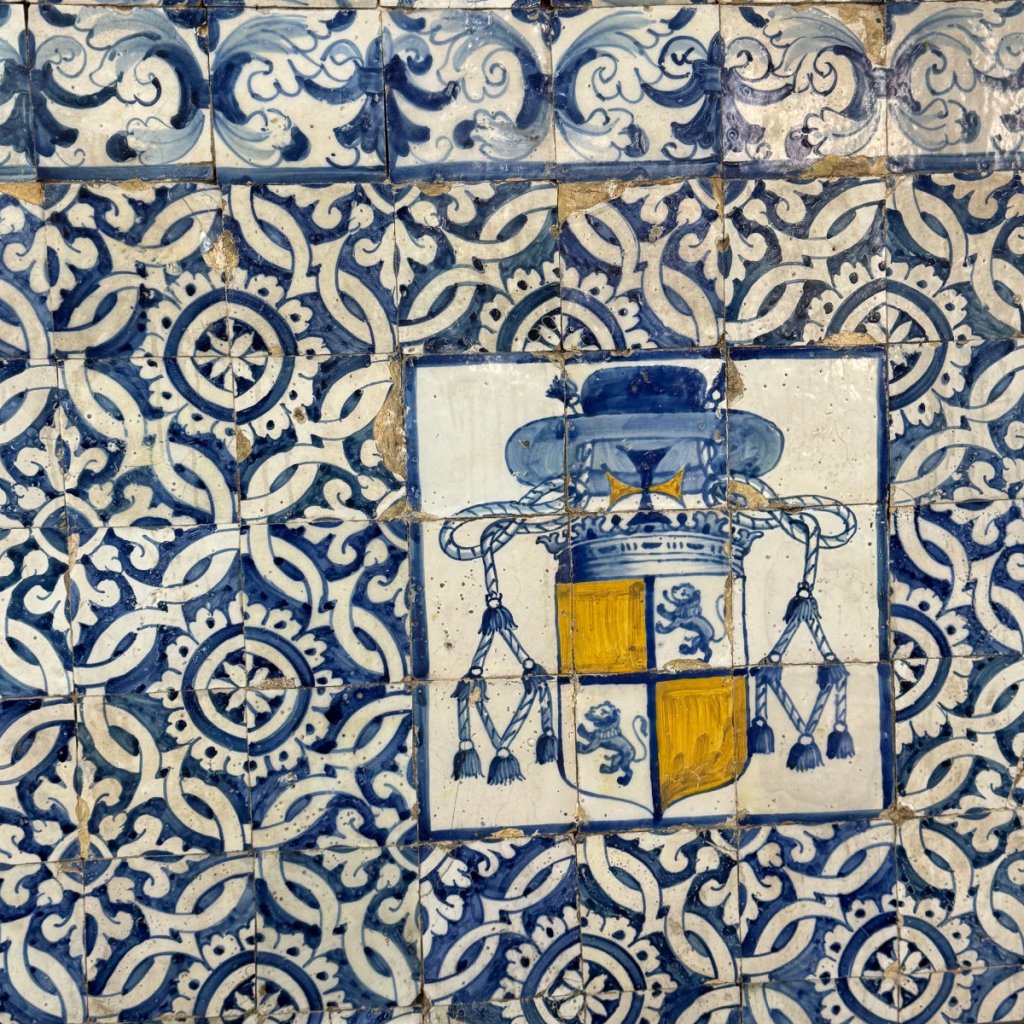
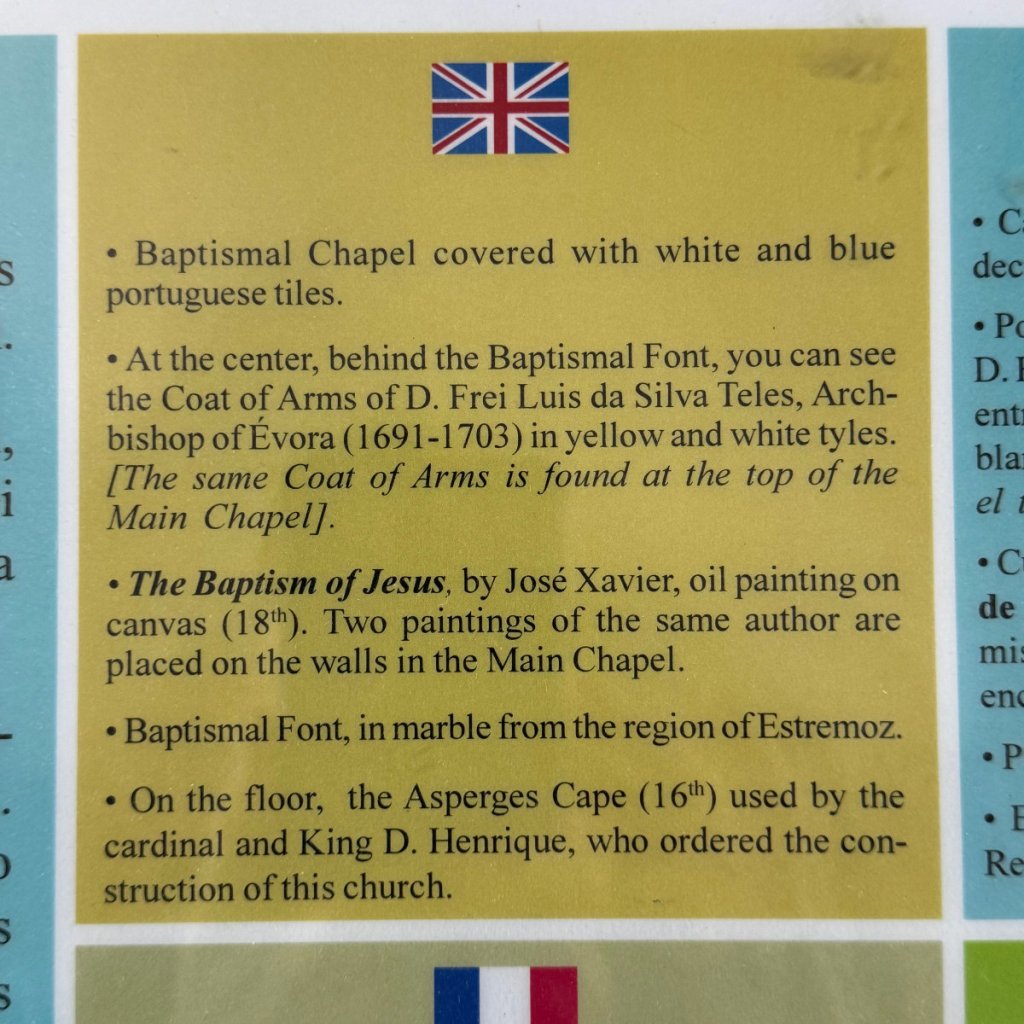
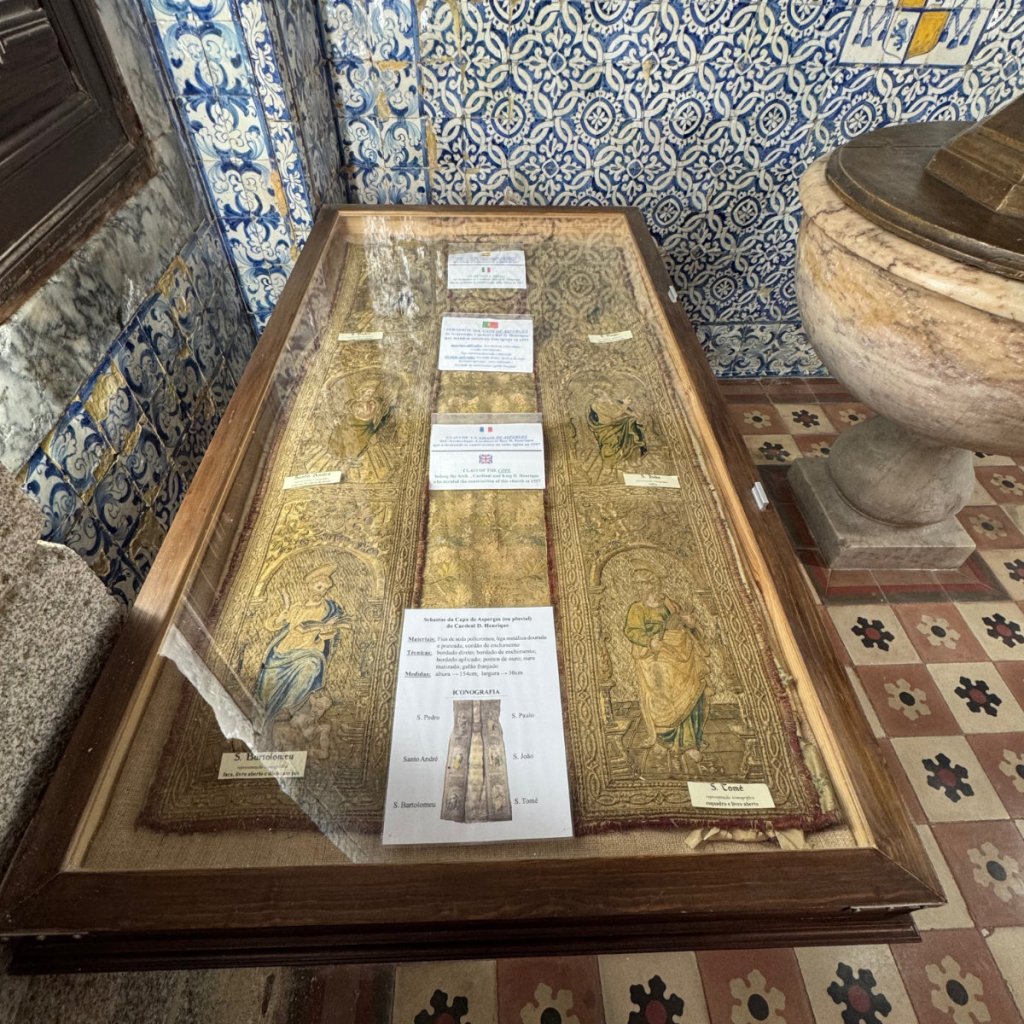
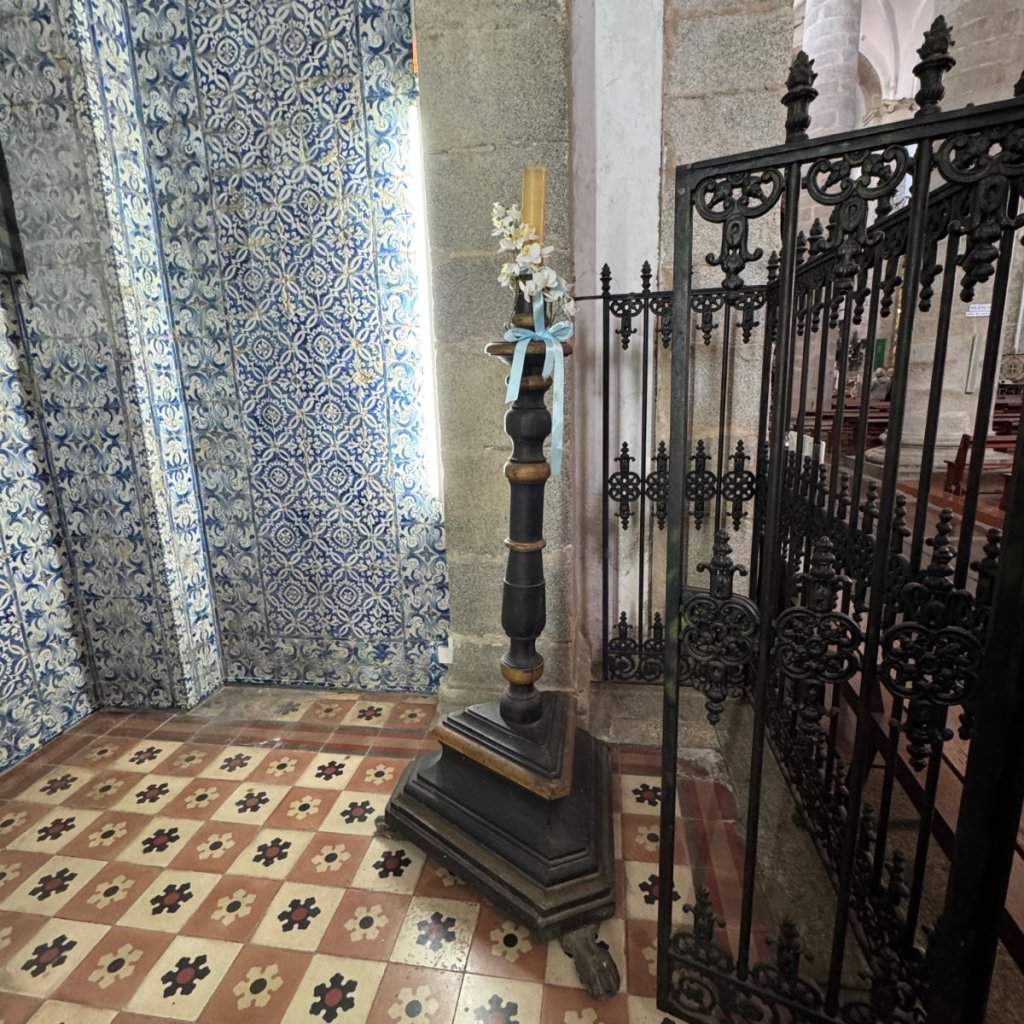
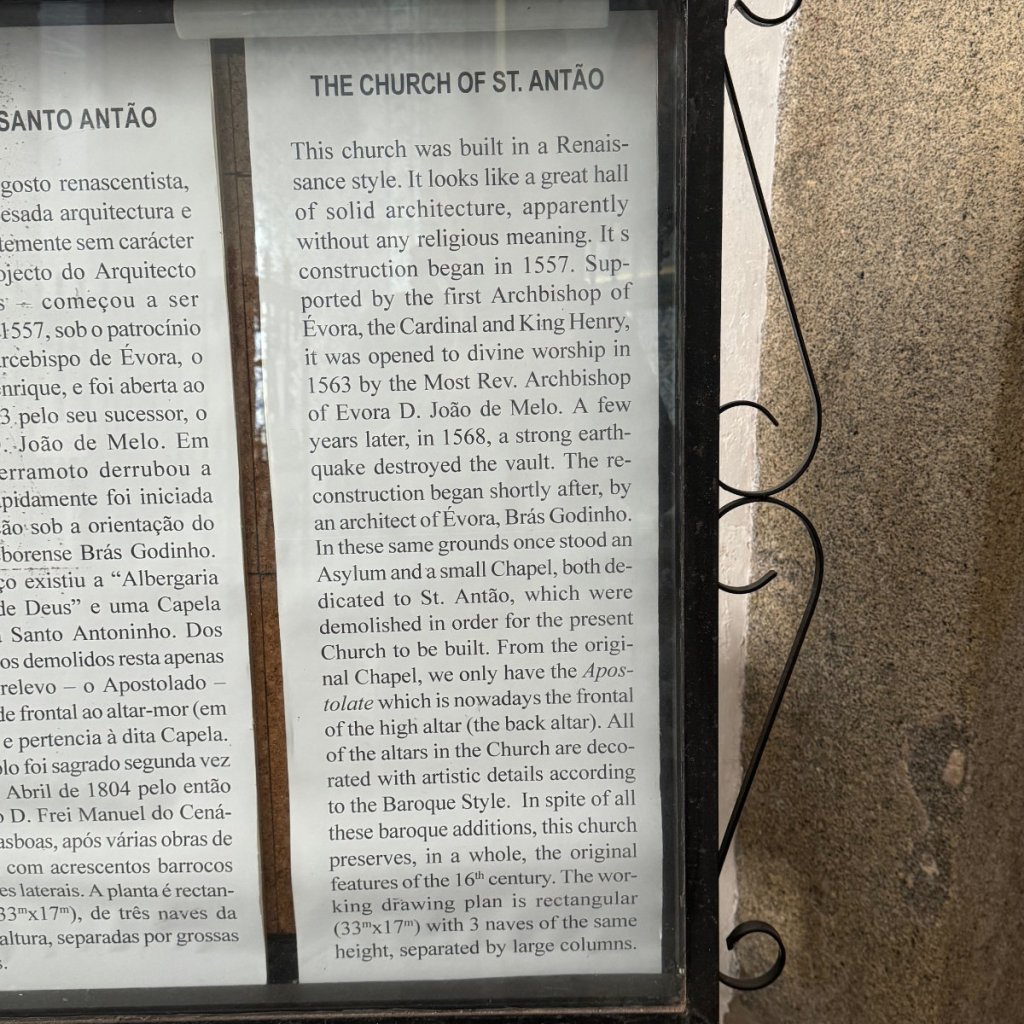
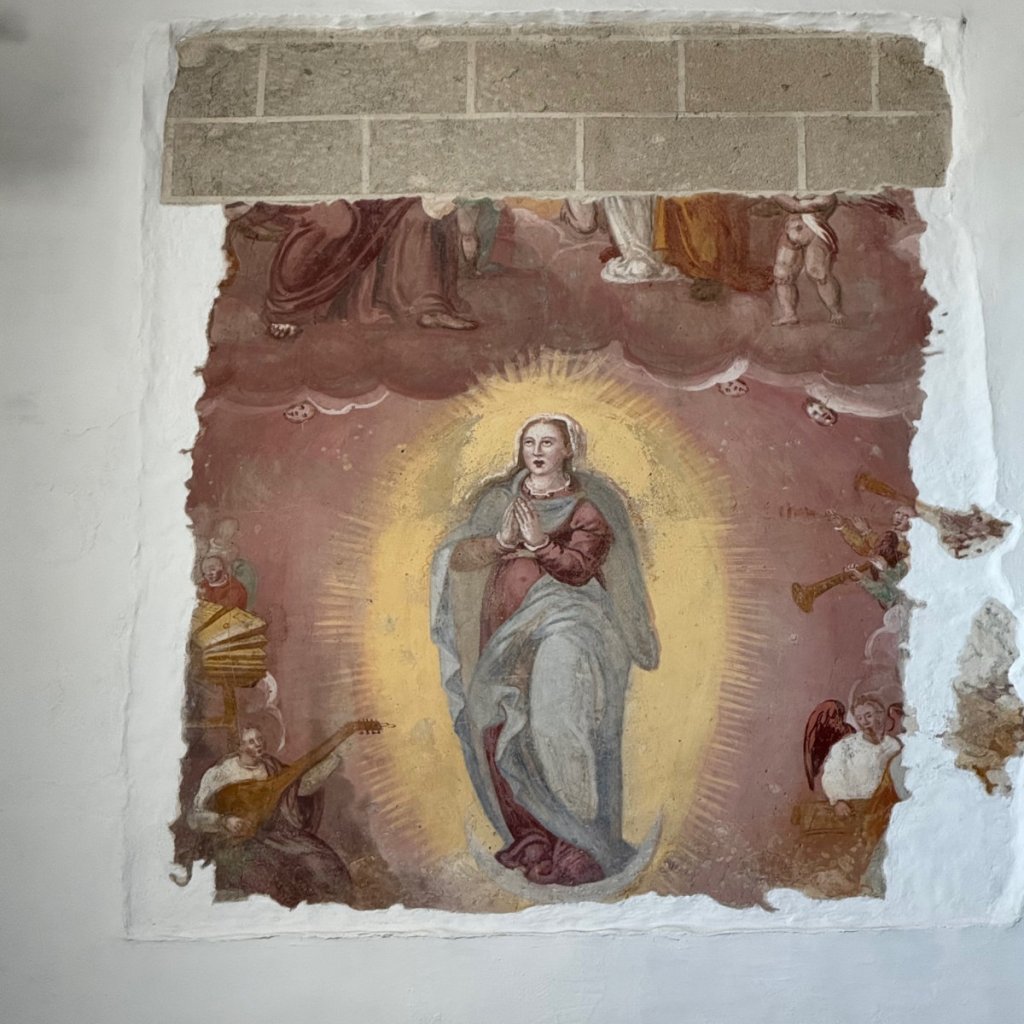
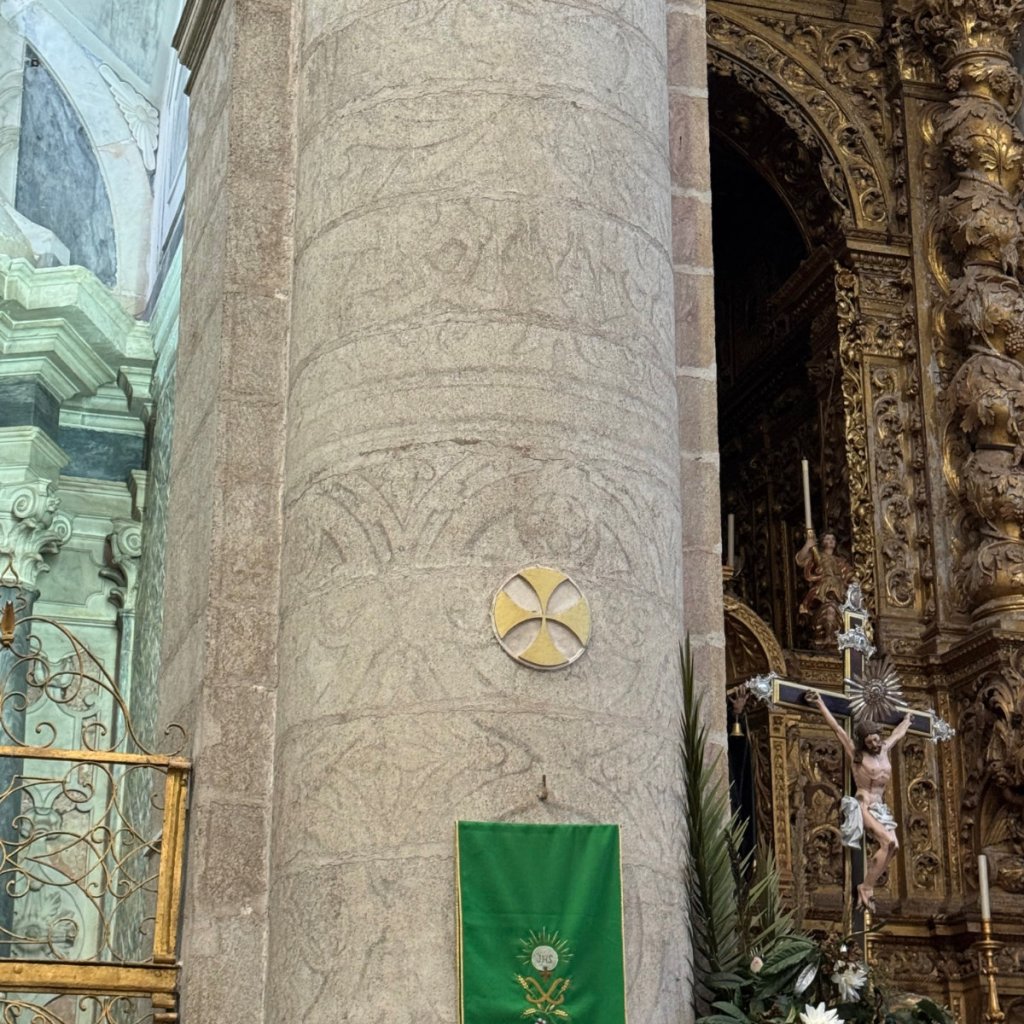
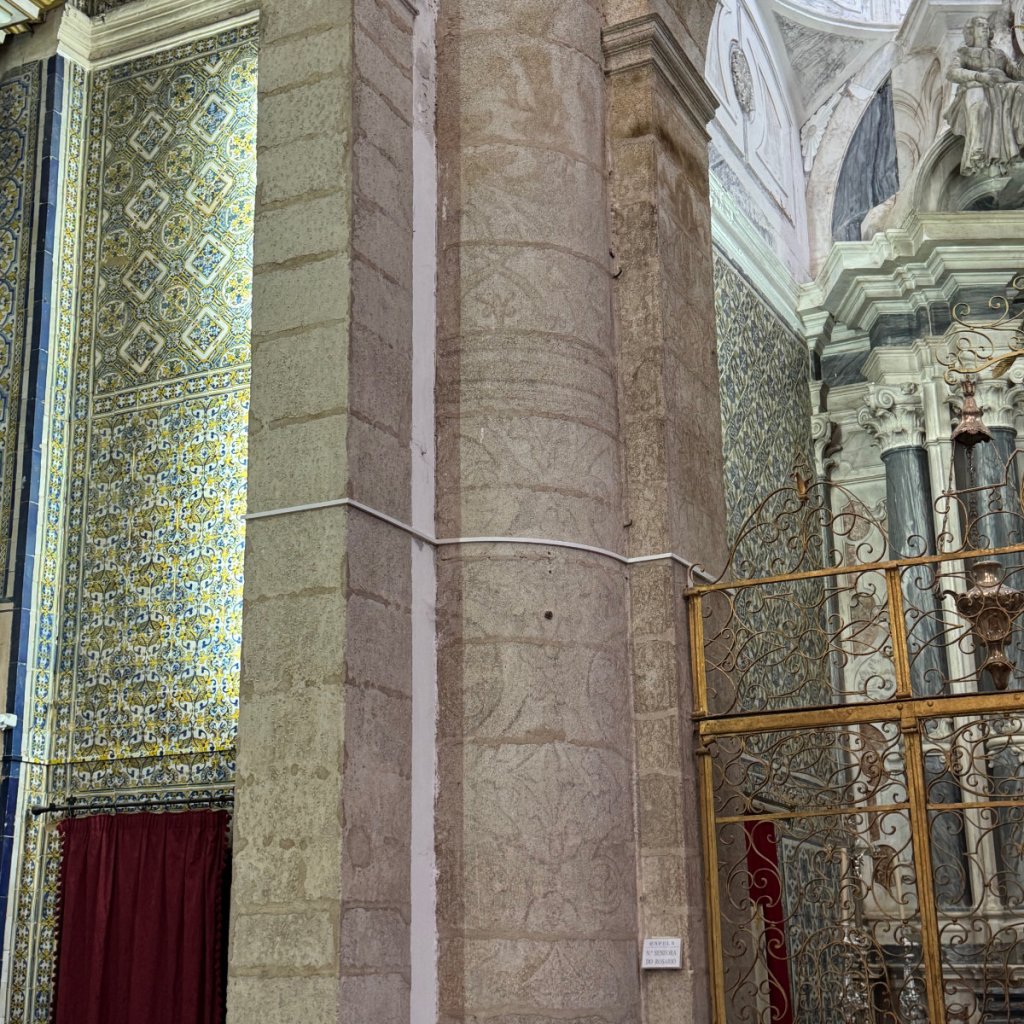
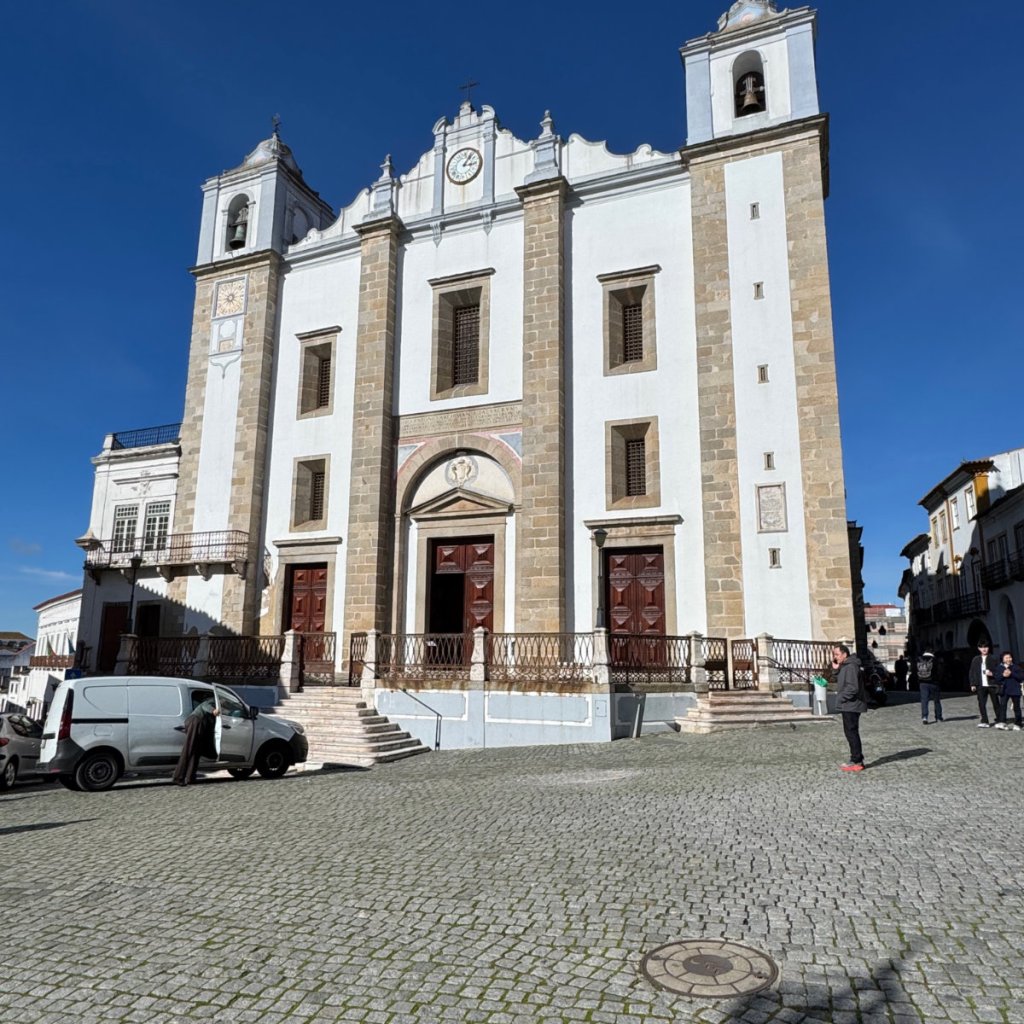
Santo Antão is on a main square in the heart of the old city. The tiles decorating the interior are amazing and I was intrigued by the remnants of earlier frescoes that have been exposed at various points on the walls.
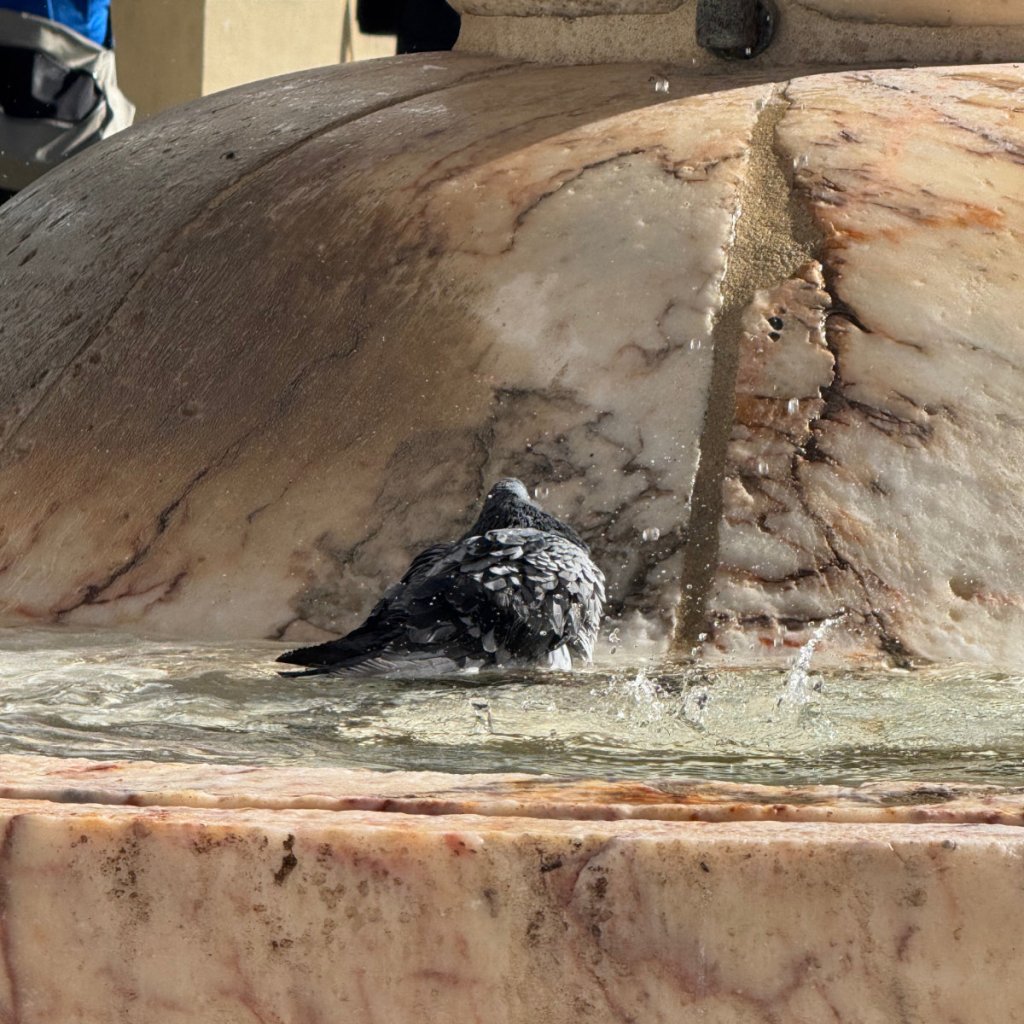
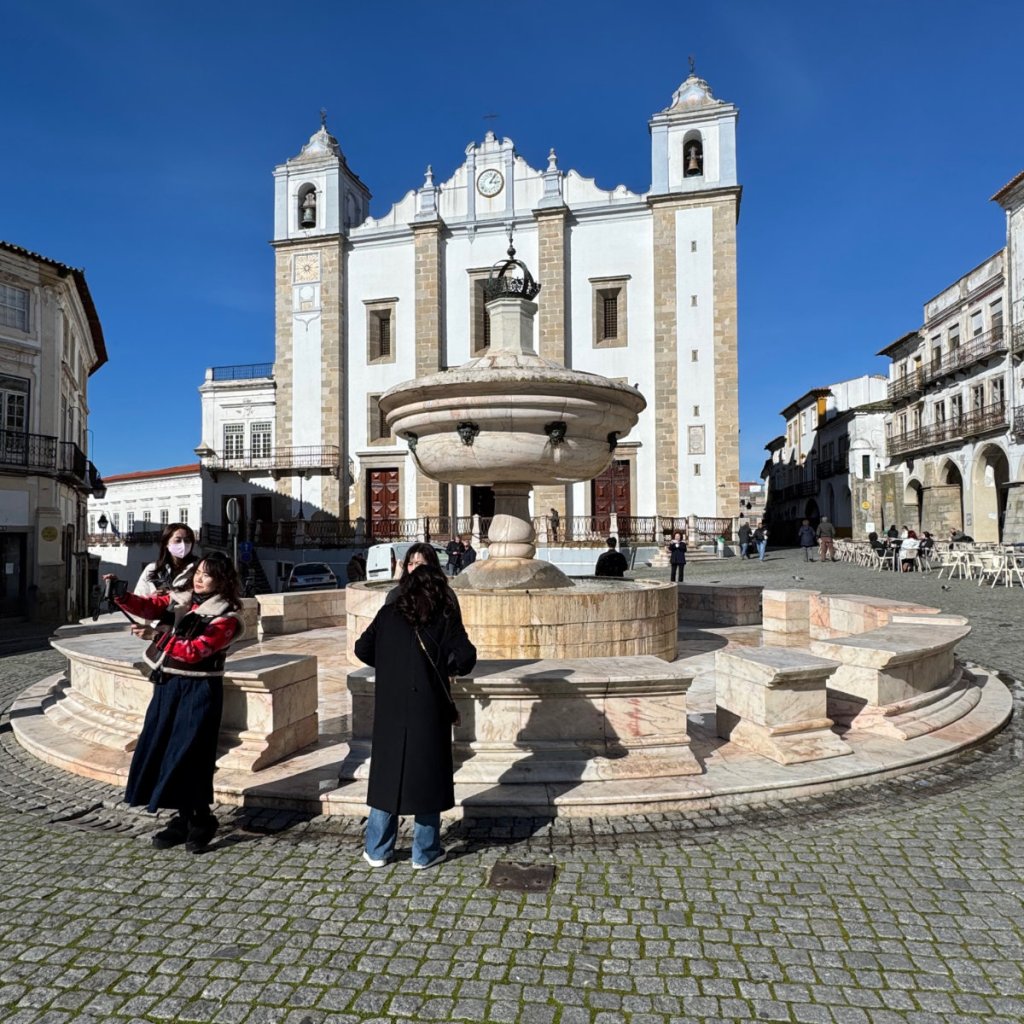
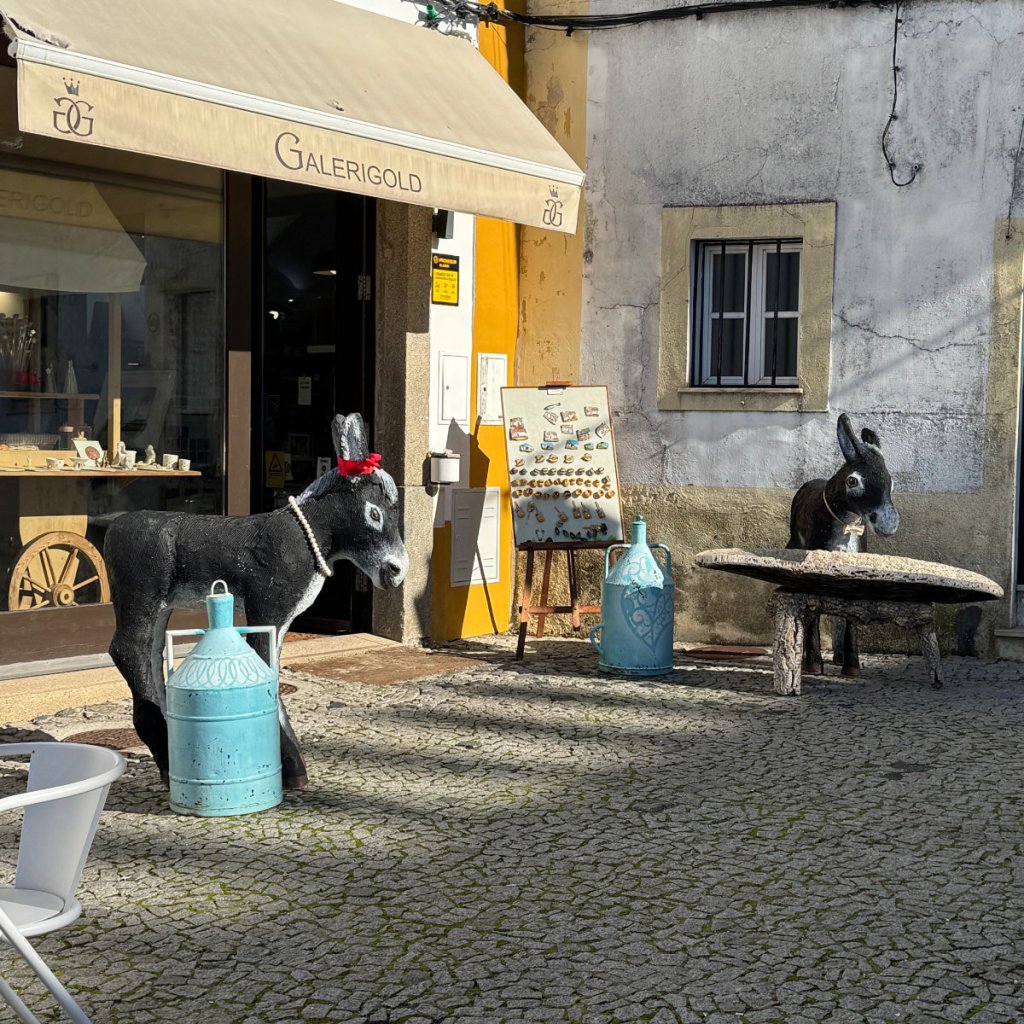
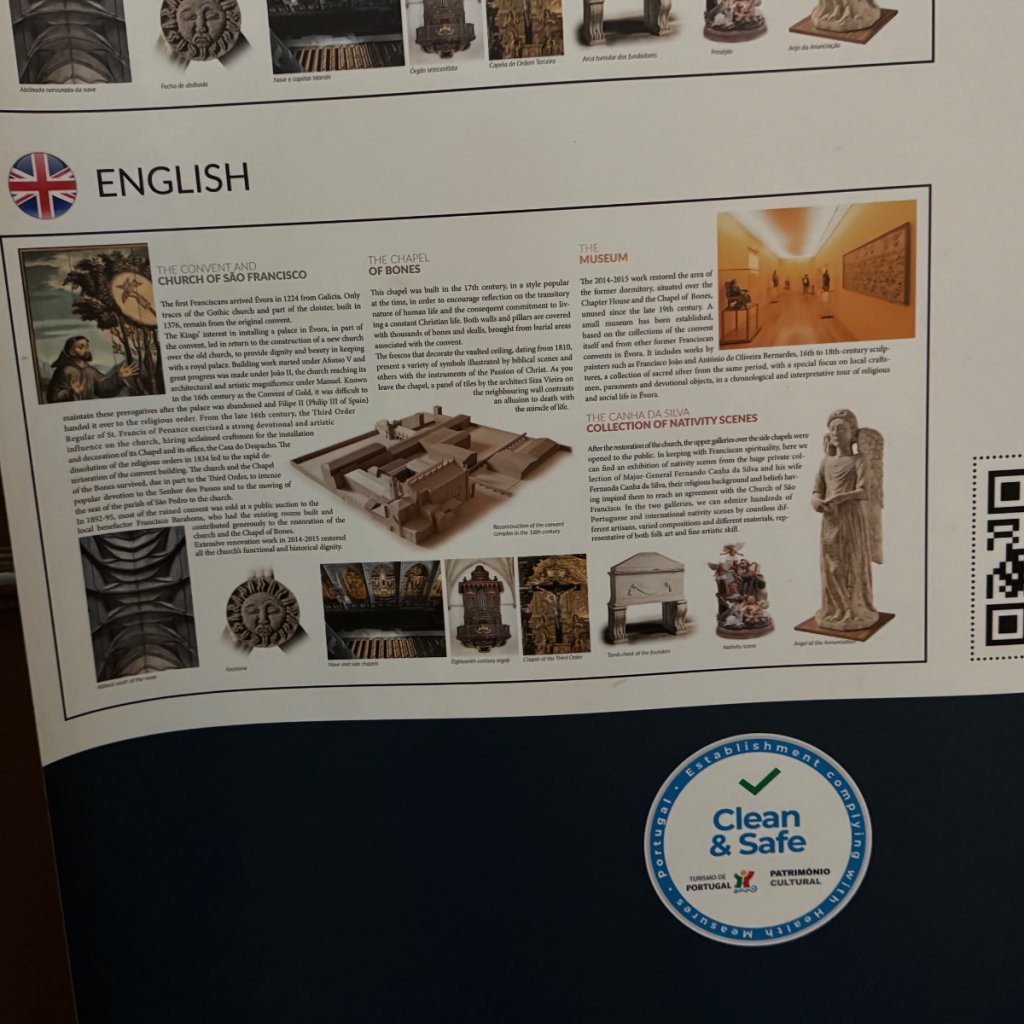
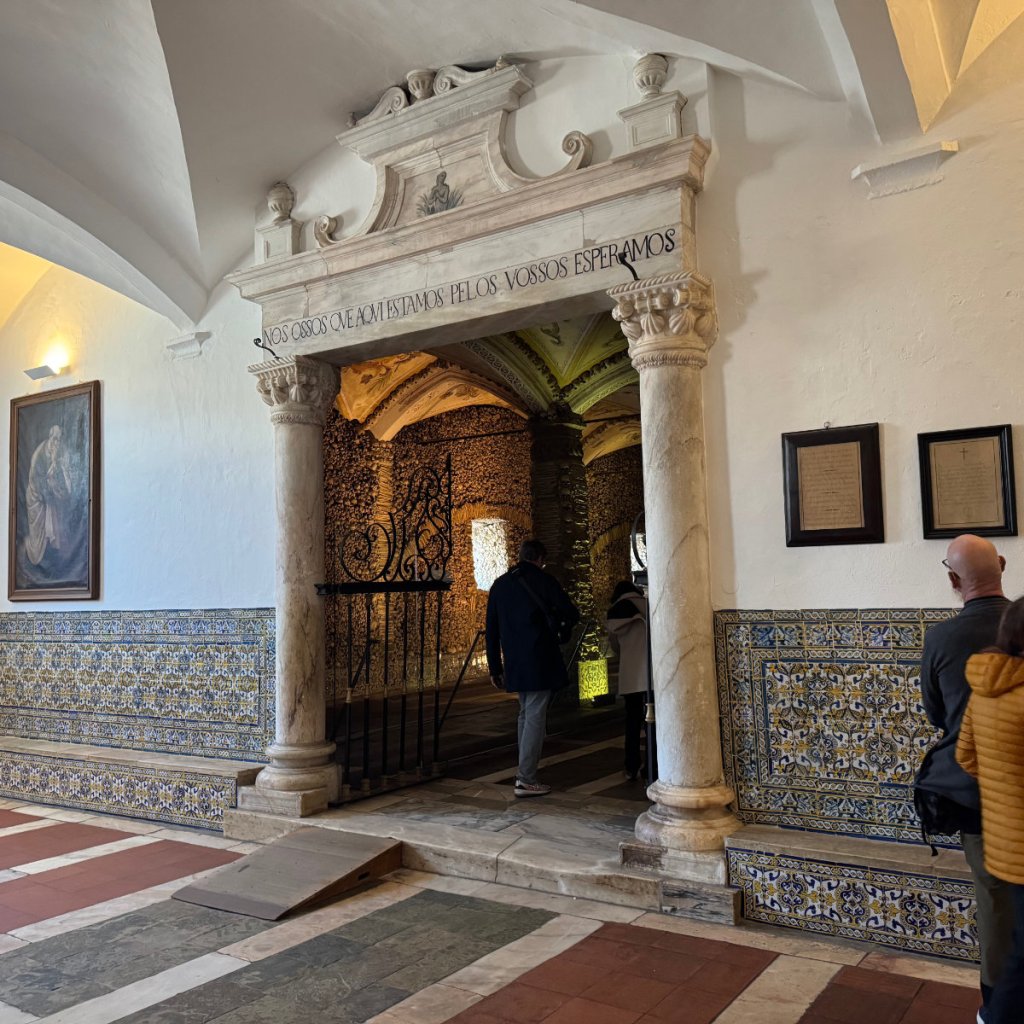
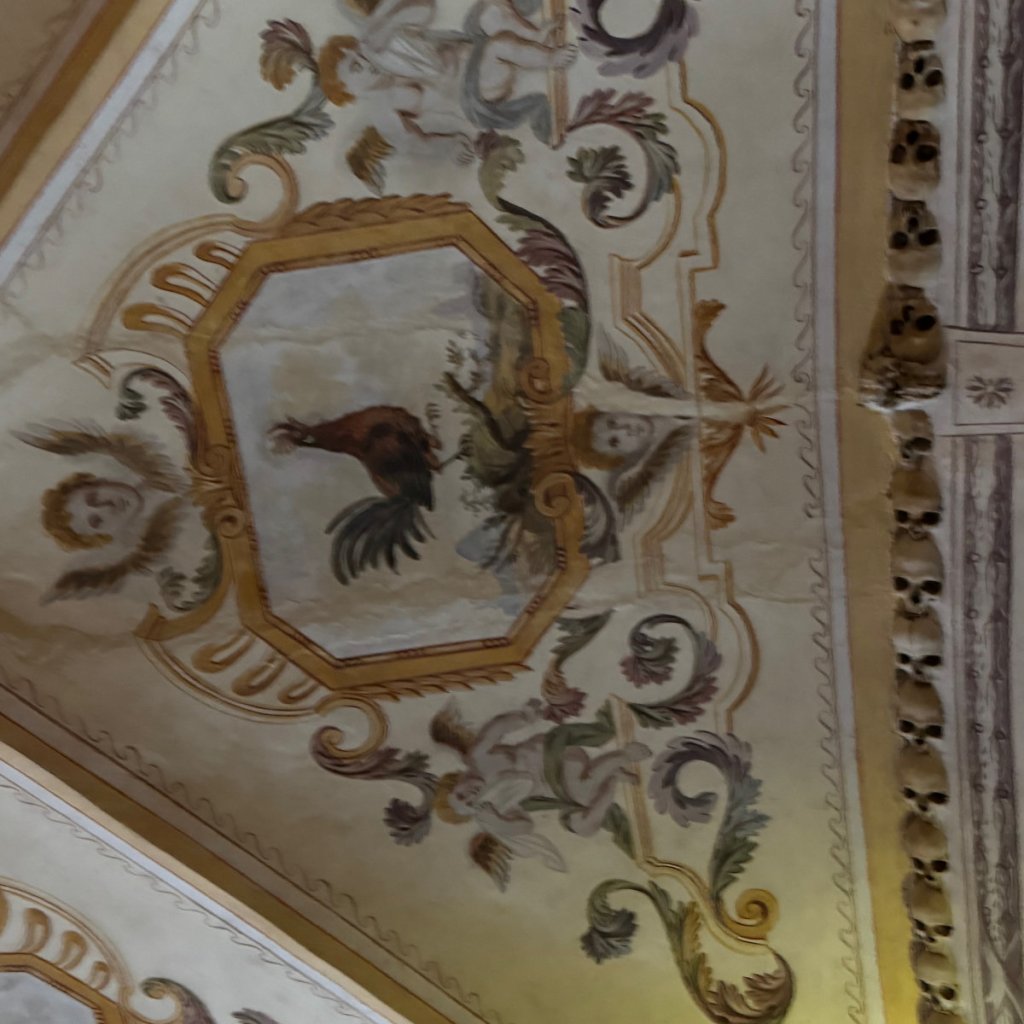
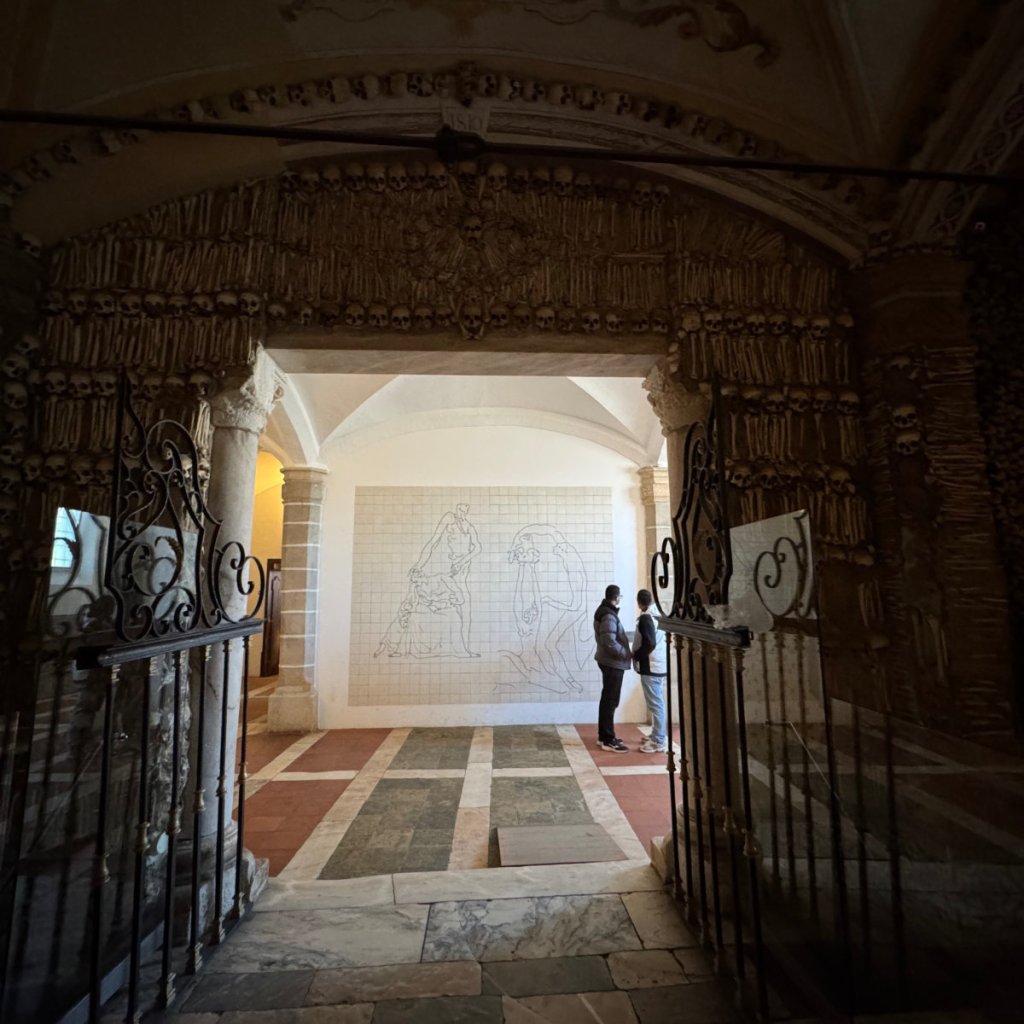
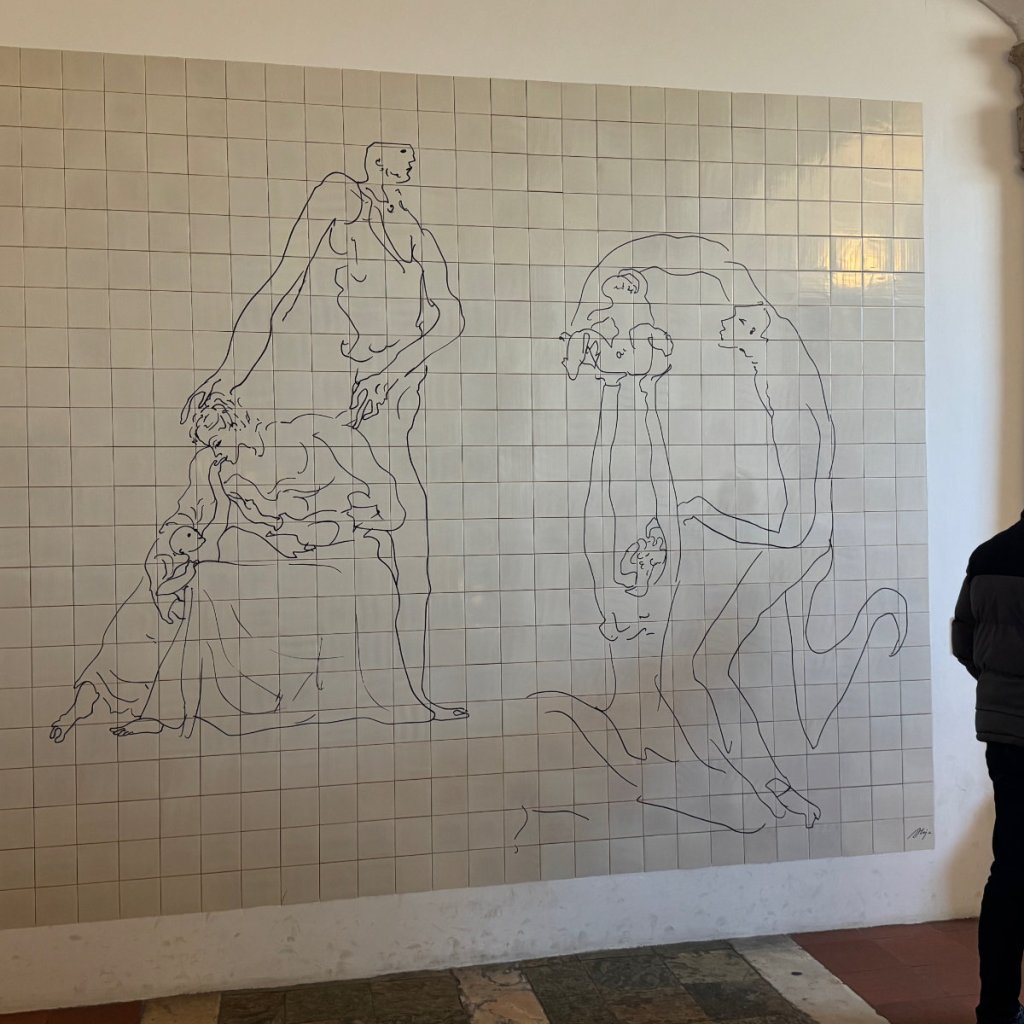
Ever onward to the Igreja de São Francisco and the Chapel of Bones.
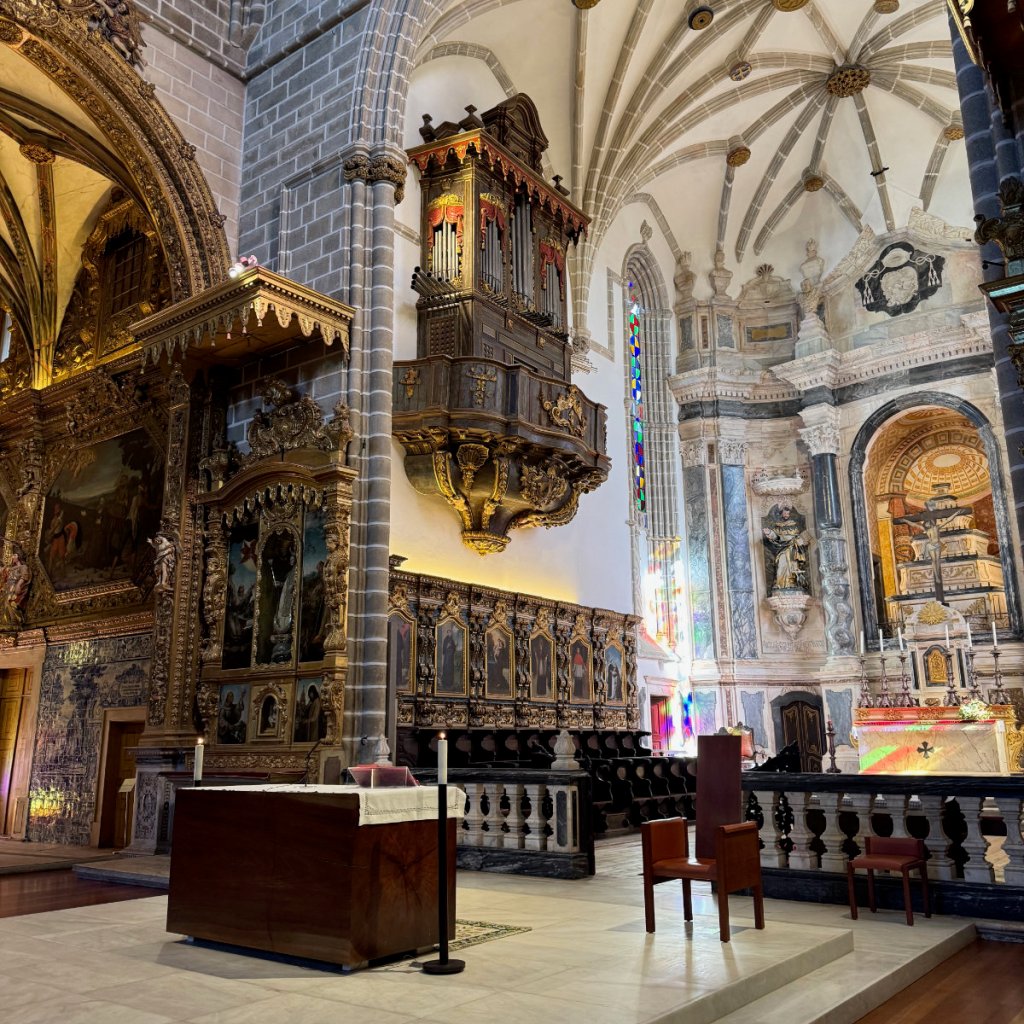
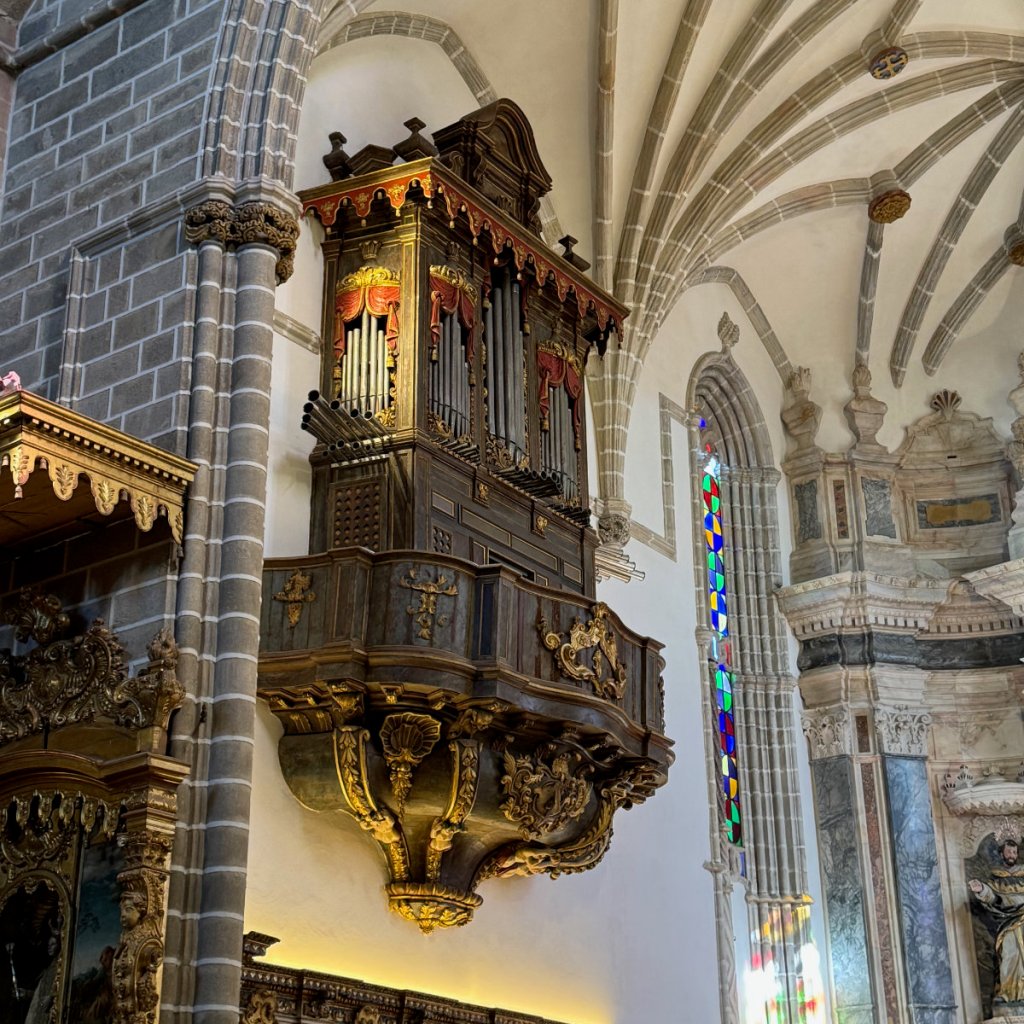
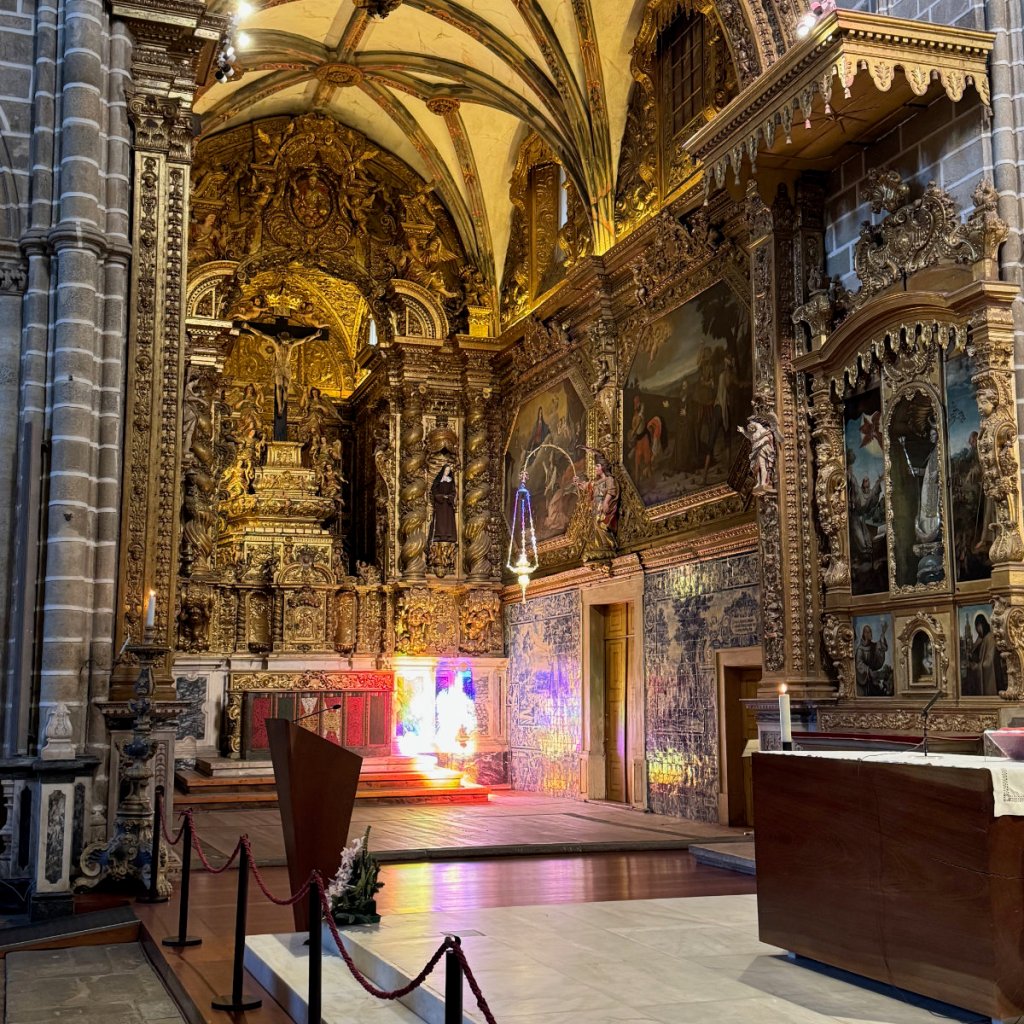
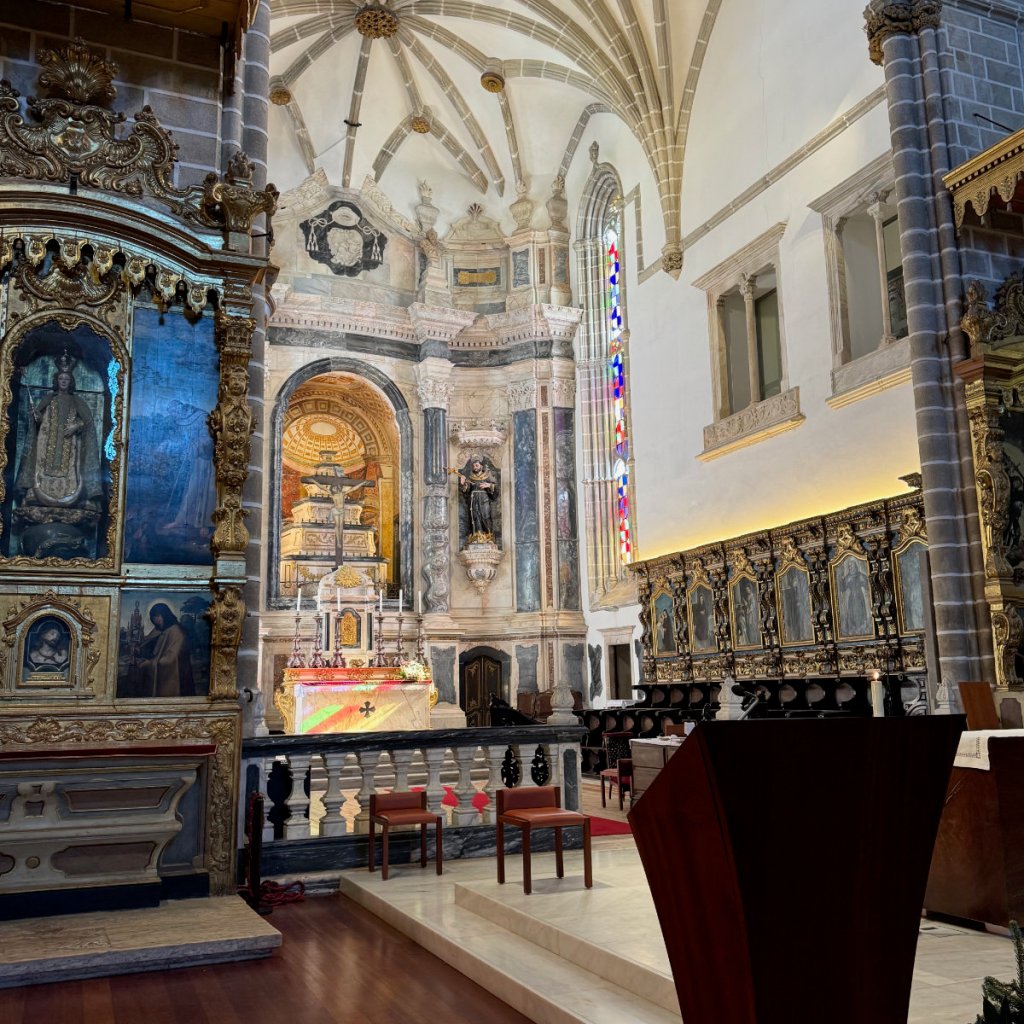
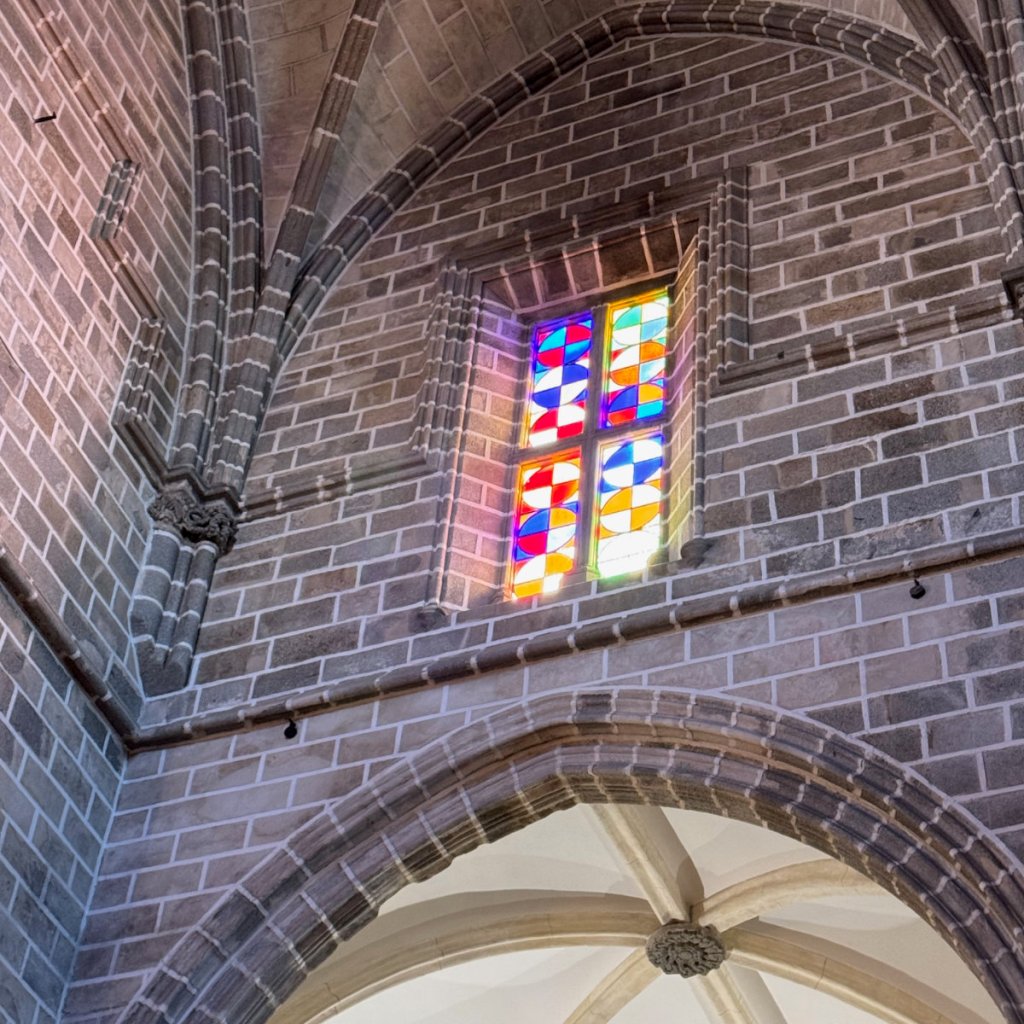
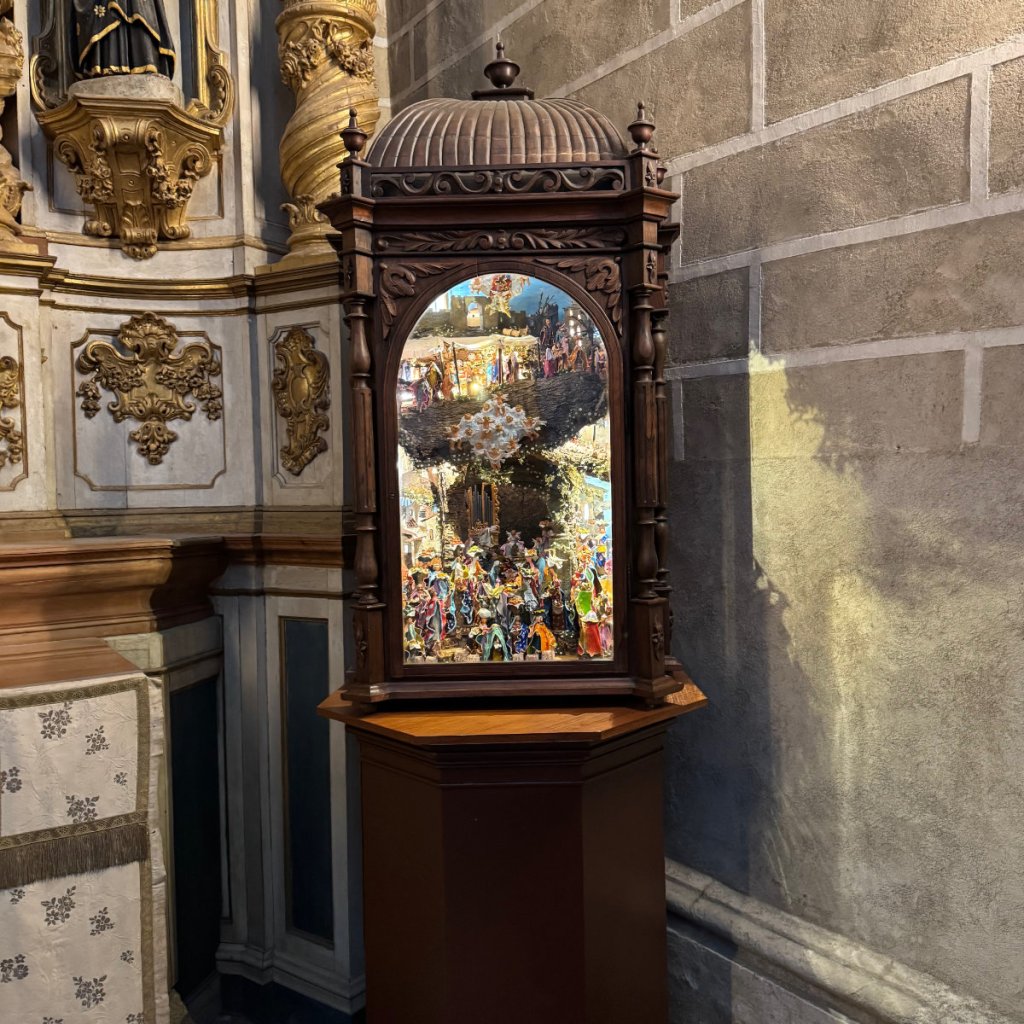
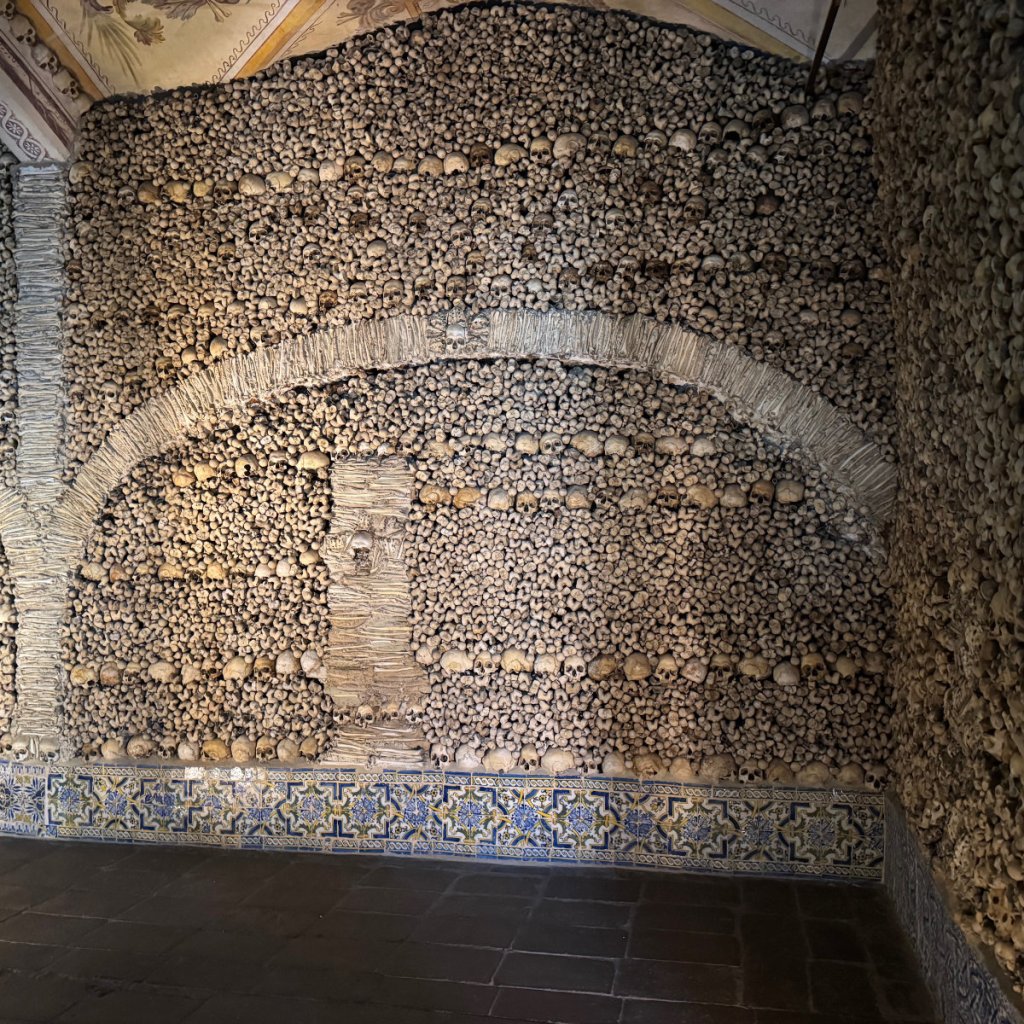
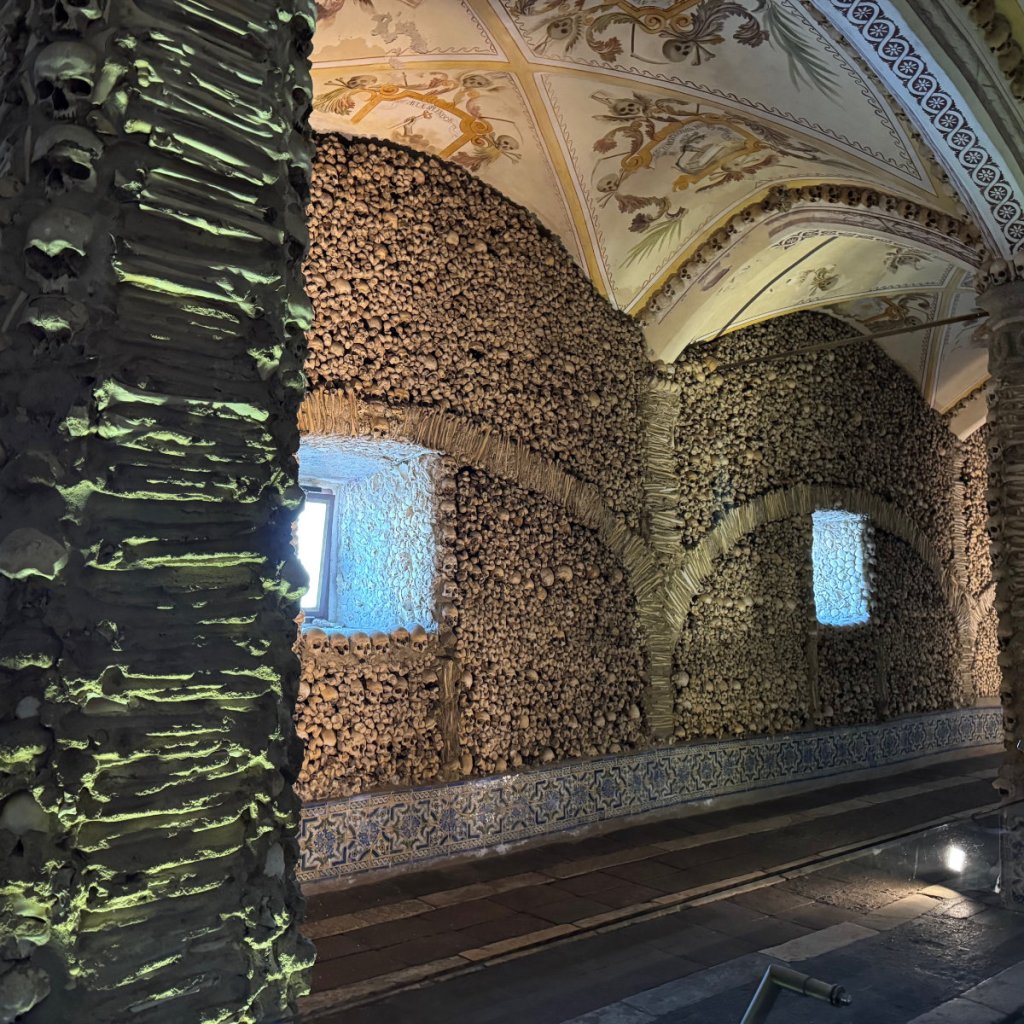
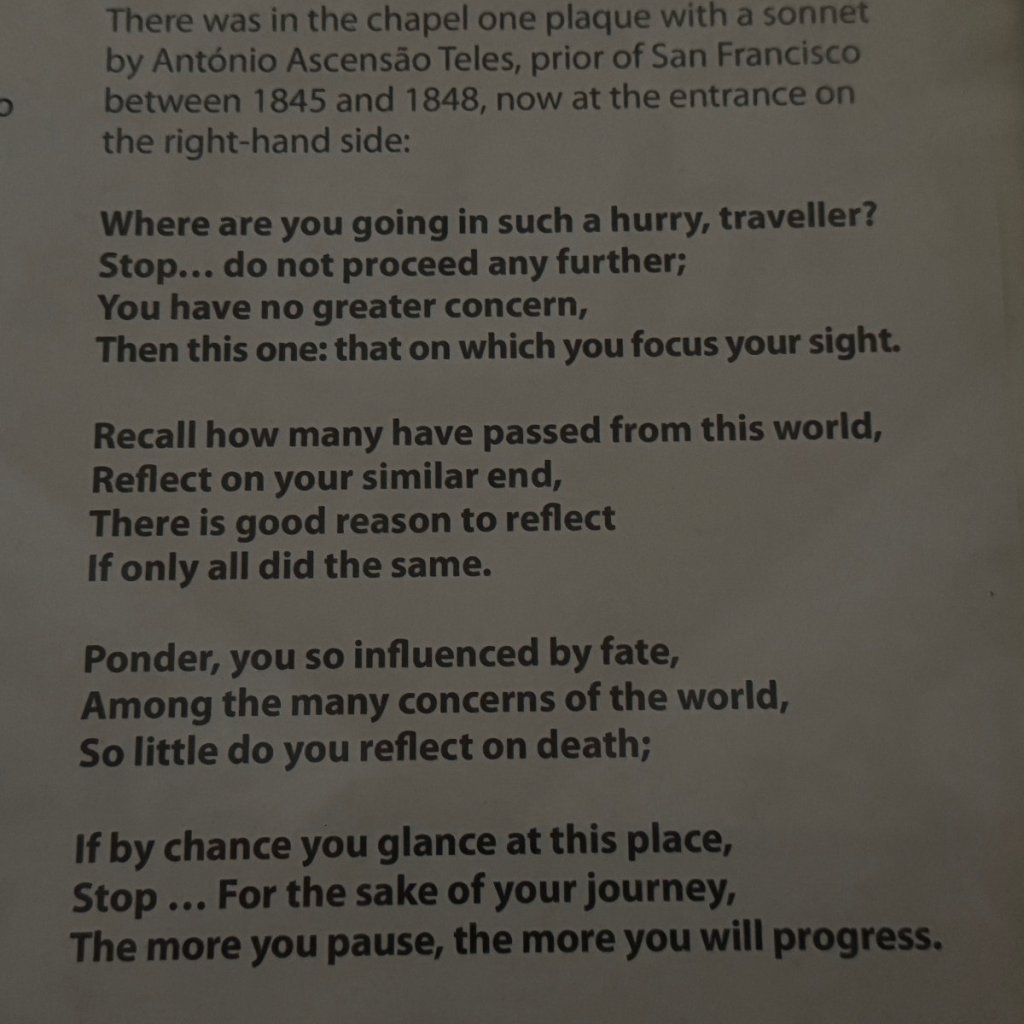
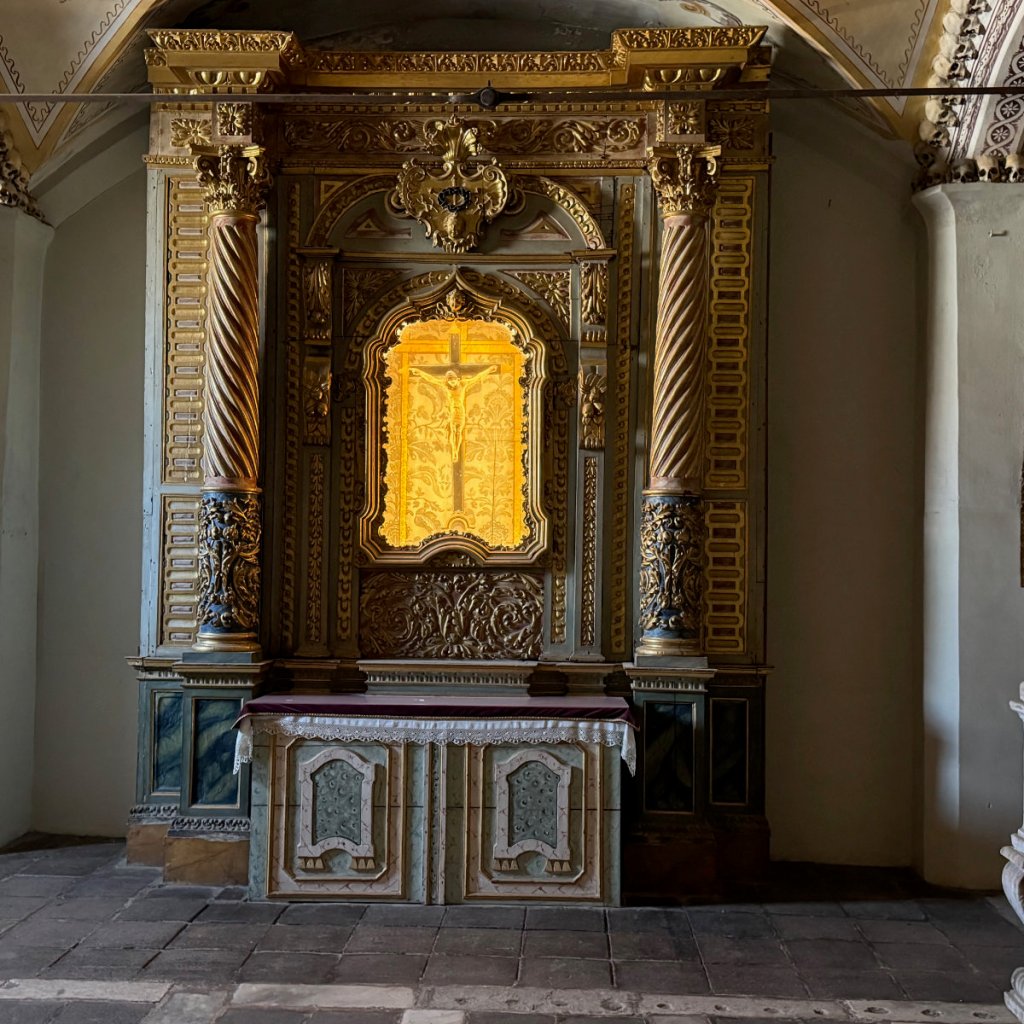
Please forgive my obsession with pipe organs! However, here is a brief history of the organs in Igreja de São Francisco written in Portuguese by historian Artur Goulart published on the church’s website: “On January 4, 1742, D. Frei José Maria da Fonseca e Évora, a native of Évora, former General of the Friars Minor in Rome and assistant to the Papal Throne, recently appointed bishop of Porto, hired the Genoese organ builder D. Pascoal Caetano Oldovino in Lisbon to build a new organ for the church of S. Francisco.
The success of this first instrument led to other commissions, which prompted him to settle permanently in Évora, buy a house, and set up a workshop. He married Laureana Rosa Lizarda, originally from Palmela, in September 1762, in the chapel of Nossa Senhora ao pé da Cruz. They had no children, and he became fully integrated into the social and religious life of Évora until his death on April 25, 1785.
Of the more than thirty organs he built throughout the Alentejo, to which he gave a special mark of quality that is still recognizable today, he left two more in the church of São Francisco. One, a cabinet organ from 1756 for the upper choir (formerly the Royal Tribune), which was dispersed after the extinction of the convents, has now been restored in Switzerland. In its place there is now another of the same type, made for the Convent of Salvador in 1751, with a highly decorative case. Another smaller one, a barrel organ dating from 1762, was his personal instrument.
Oldovino always maintained a very close connection with the church of São Francisco: he professed in 1745 in the Third Order, belonged to the Brotherhoods of Nossa Senhora da Conceição (extinct in 1779) and Santo António, to which he bequeathed his barrel organ and in whose chapel he was buried.”
Translated with DeepL.com (free version)
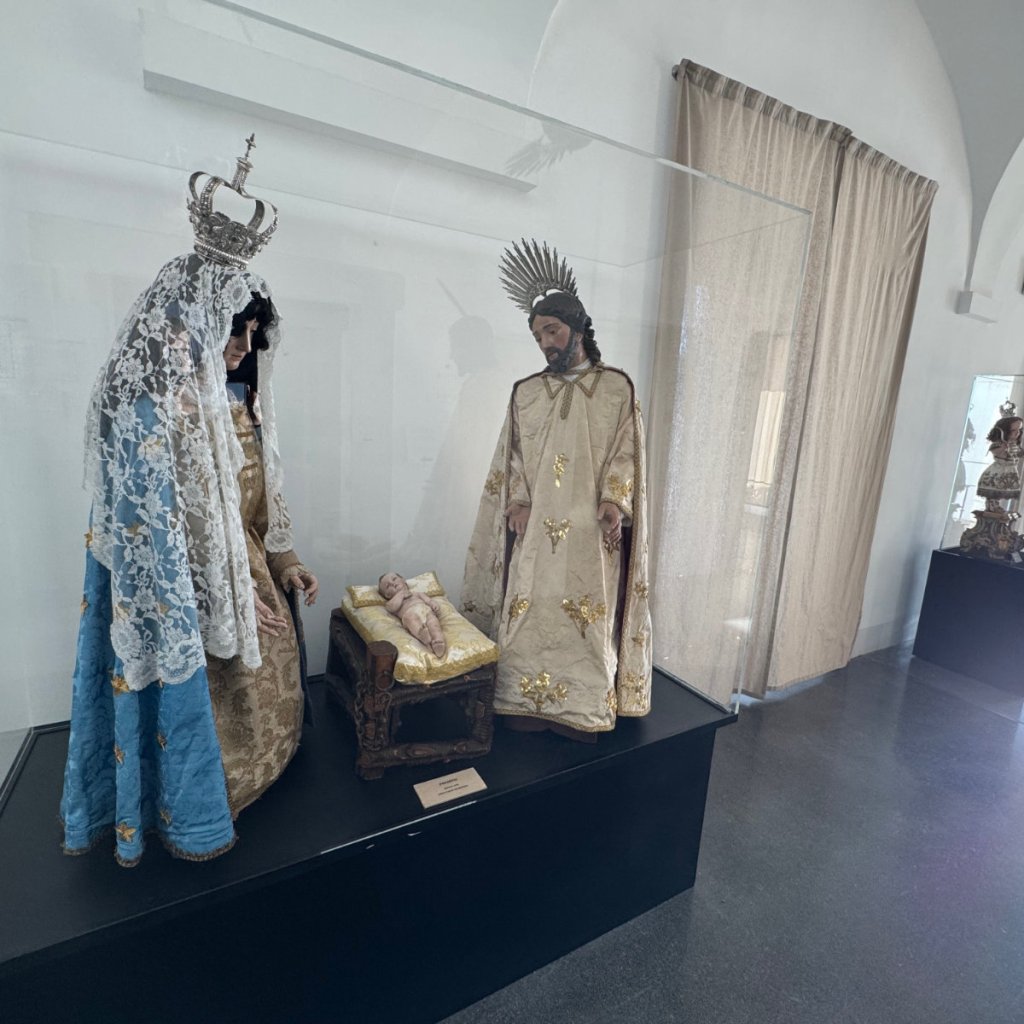
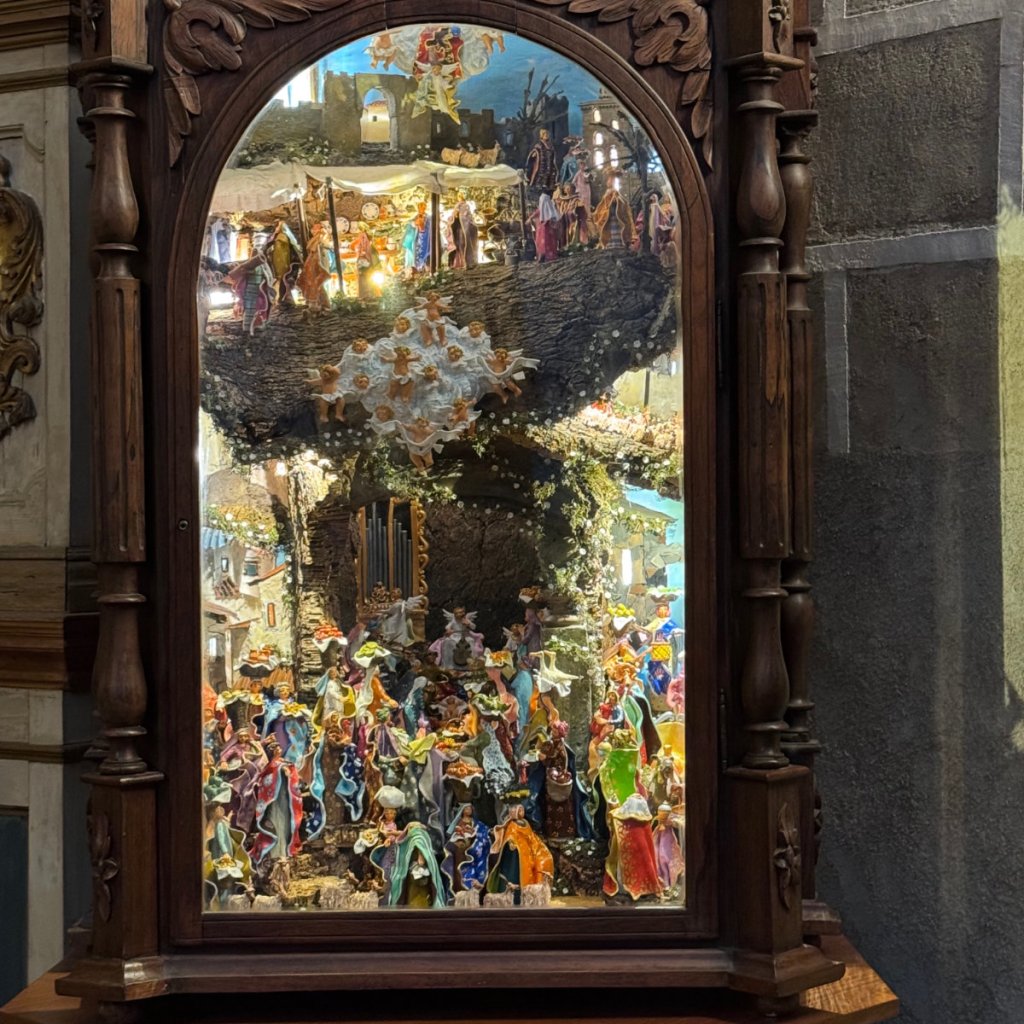
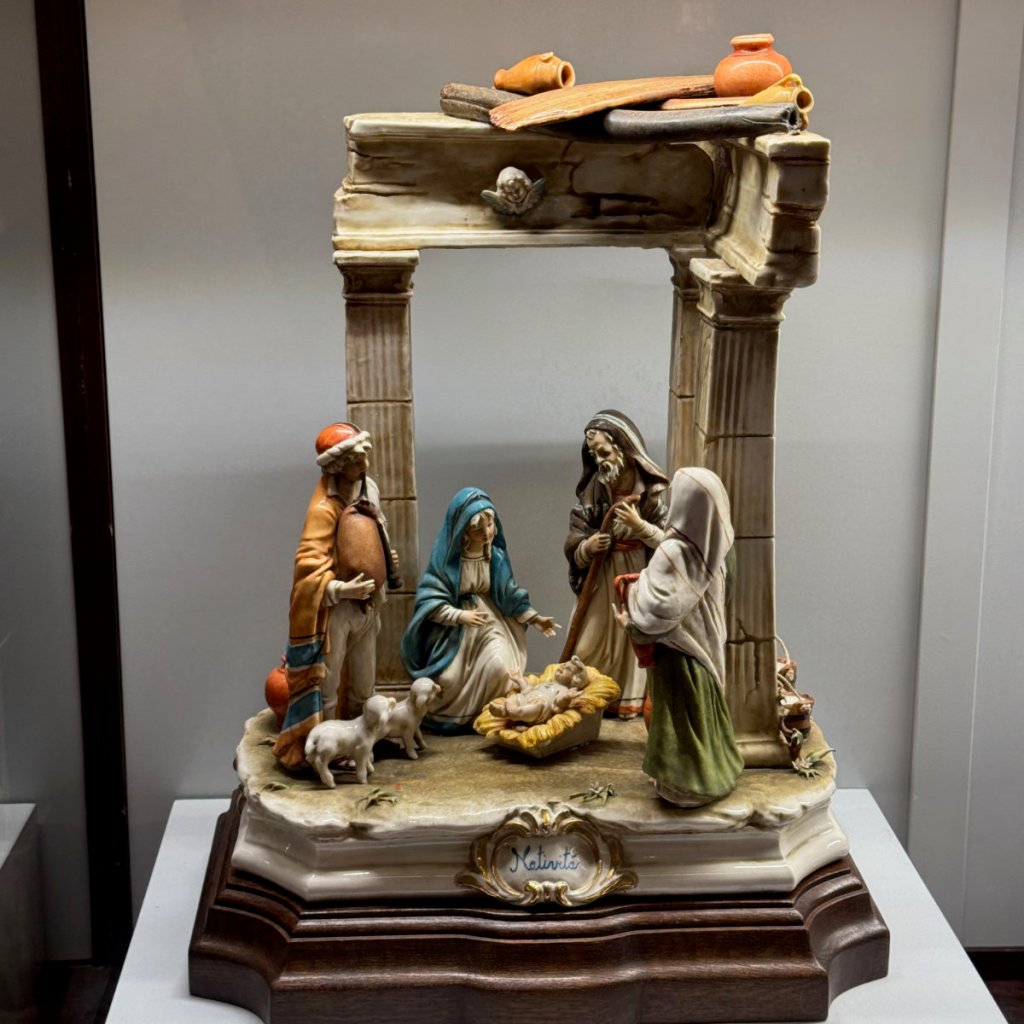
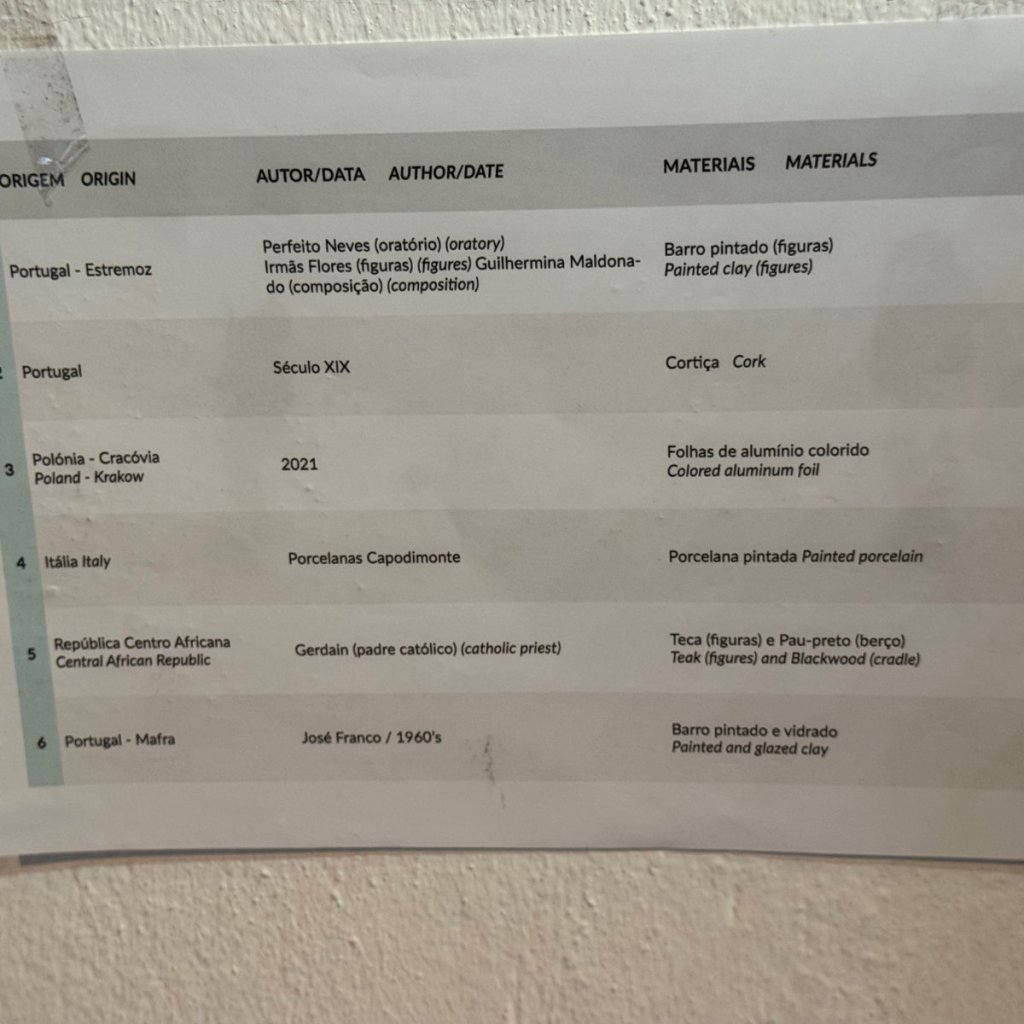
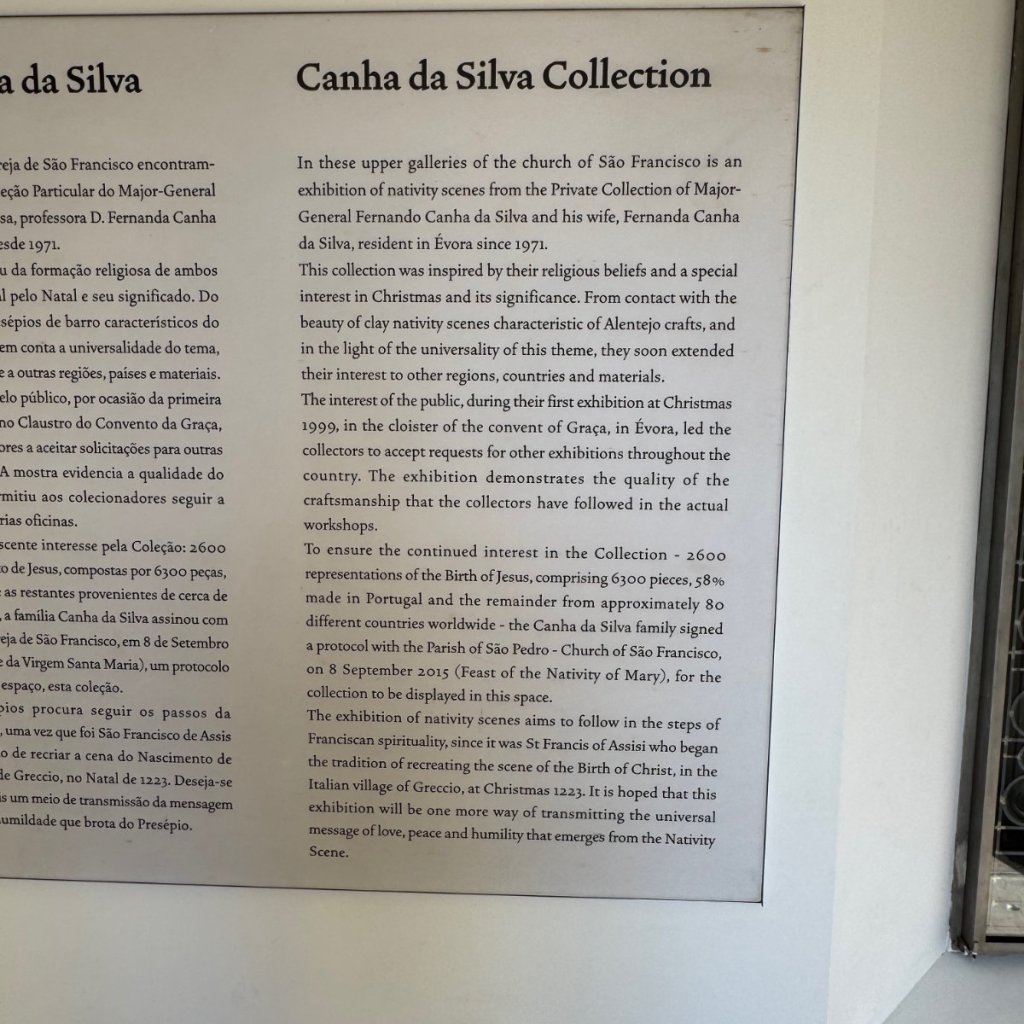
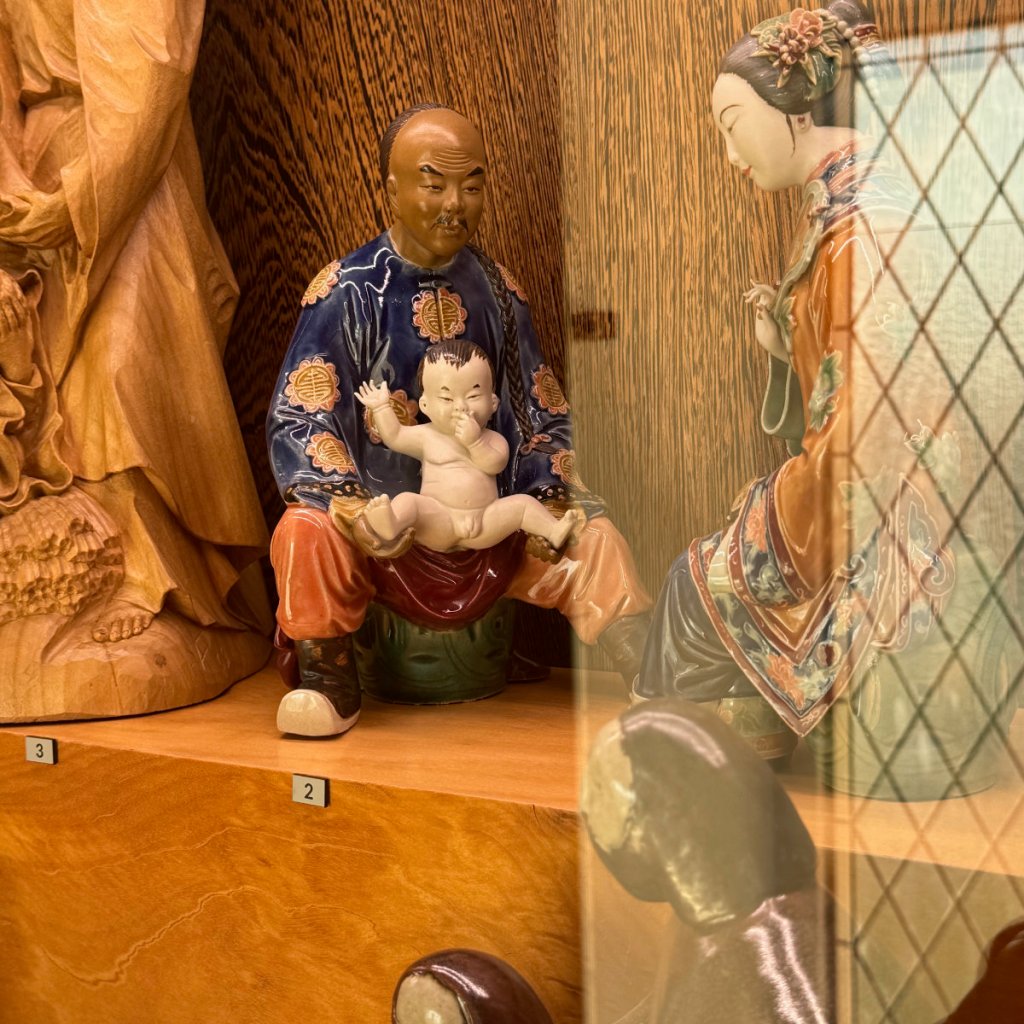
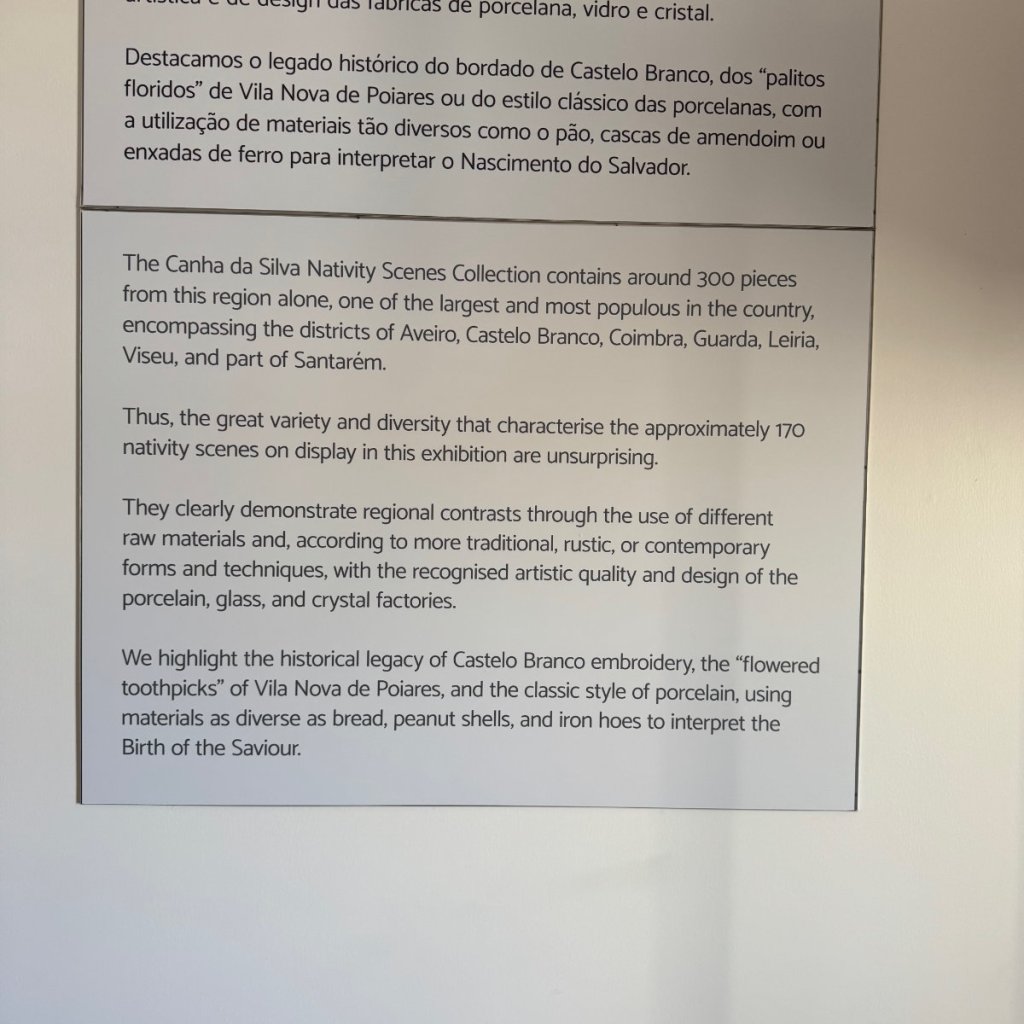
The upper galleries of the church are home to an extensive collection of nativity scenes collected from various regions of Portugal. Part of the collection on display is on loan from a local family. I found them all incredibly captivating from the tiniest of details created with deft ingenuity and patience to the largest and grandest. Have a look!
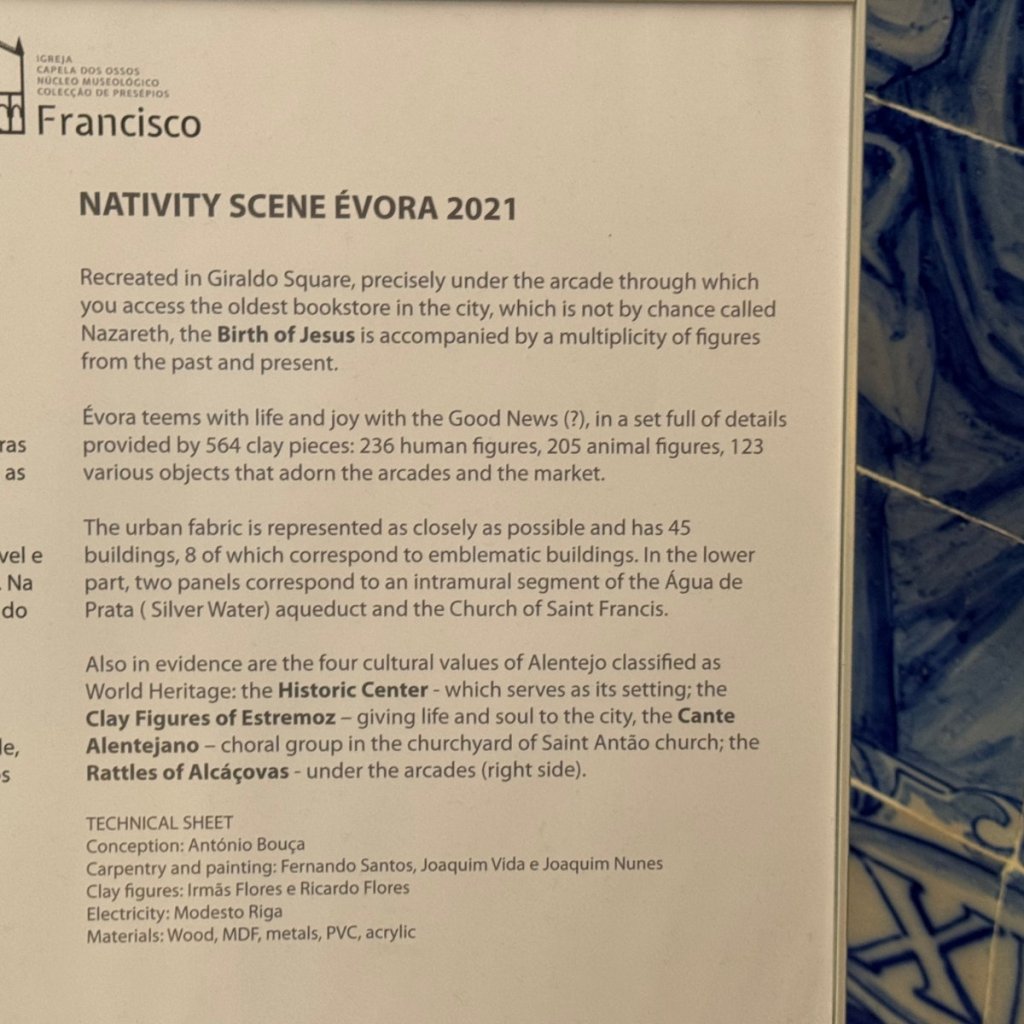
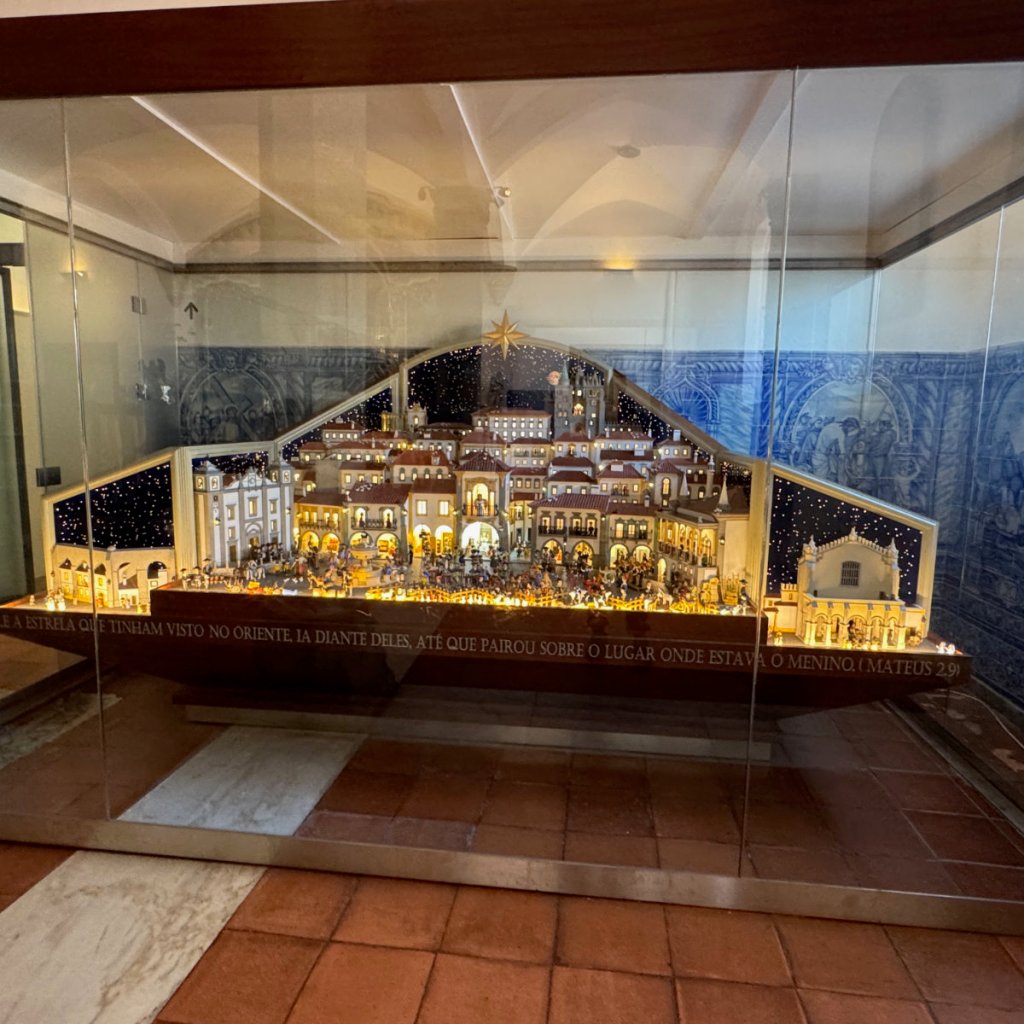
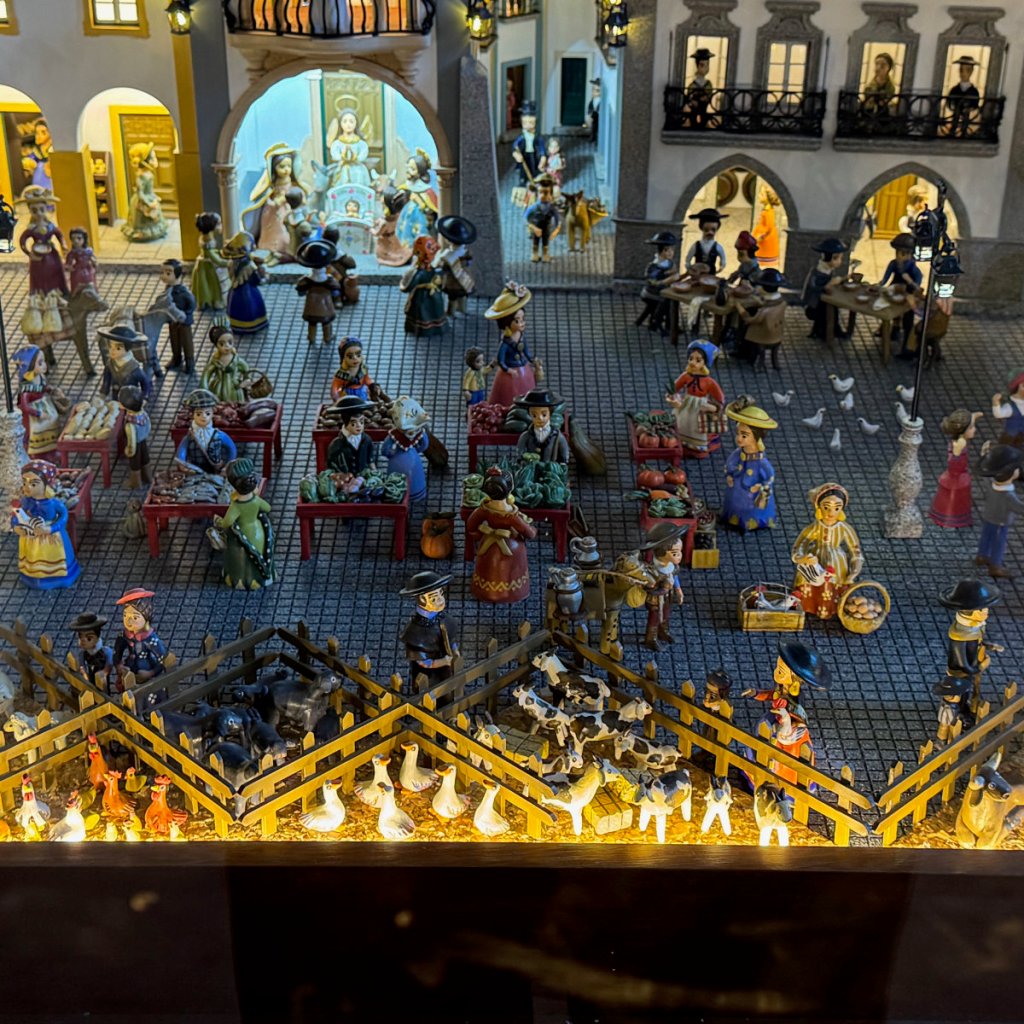
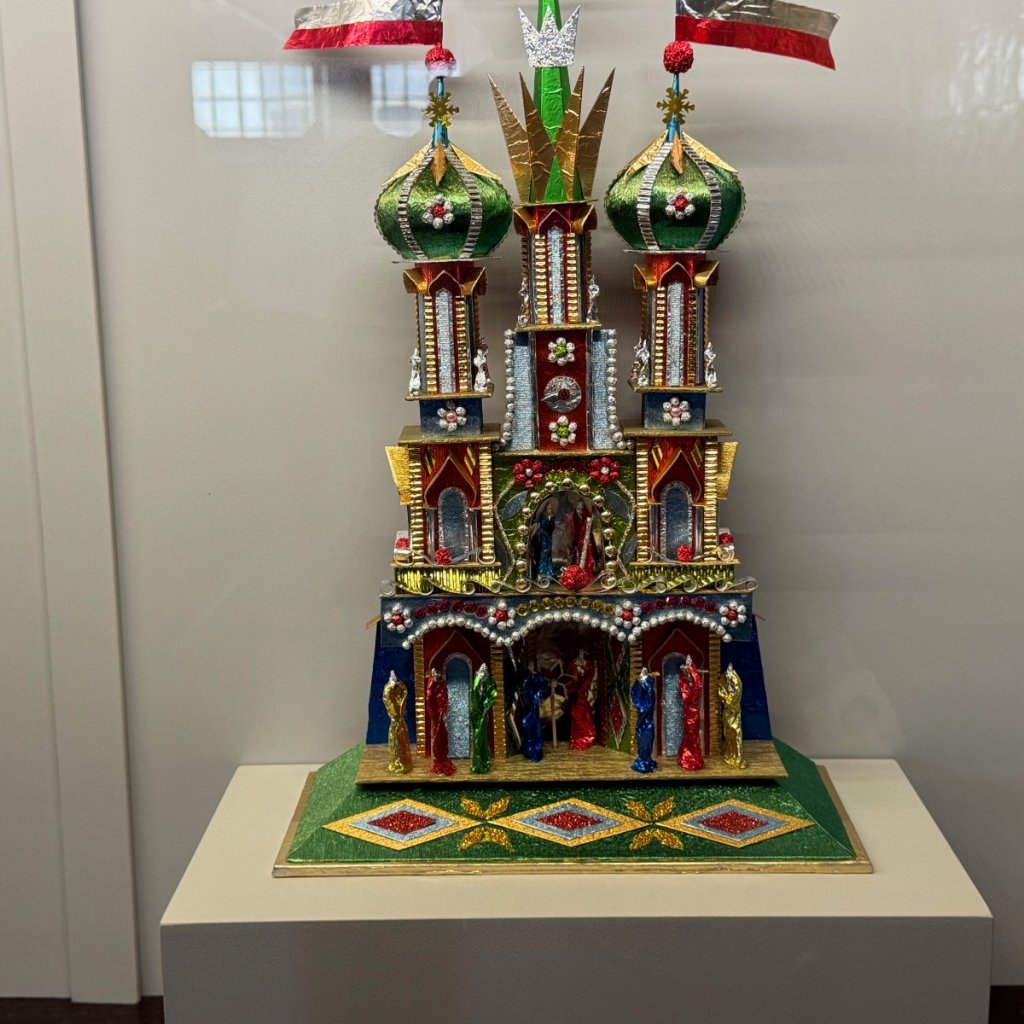
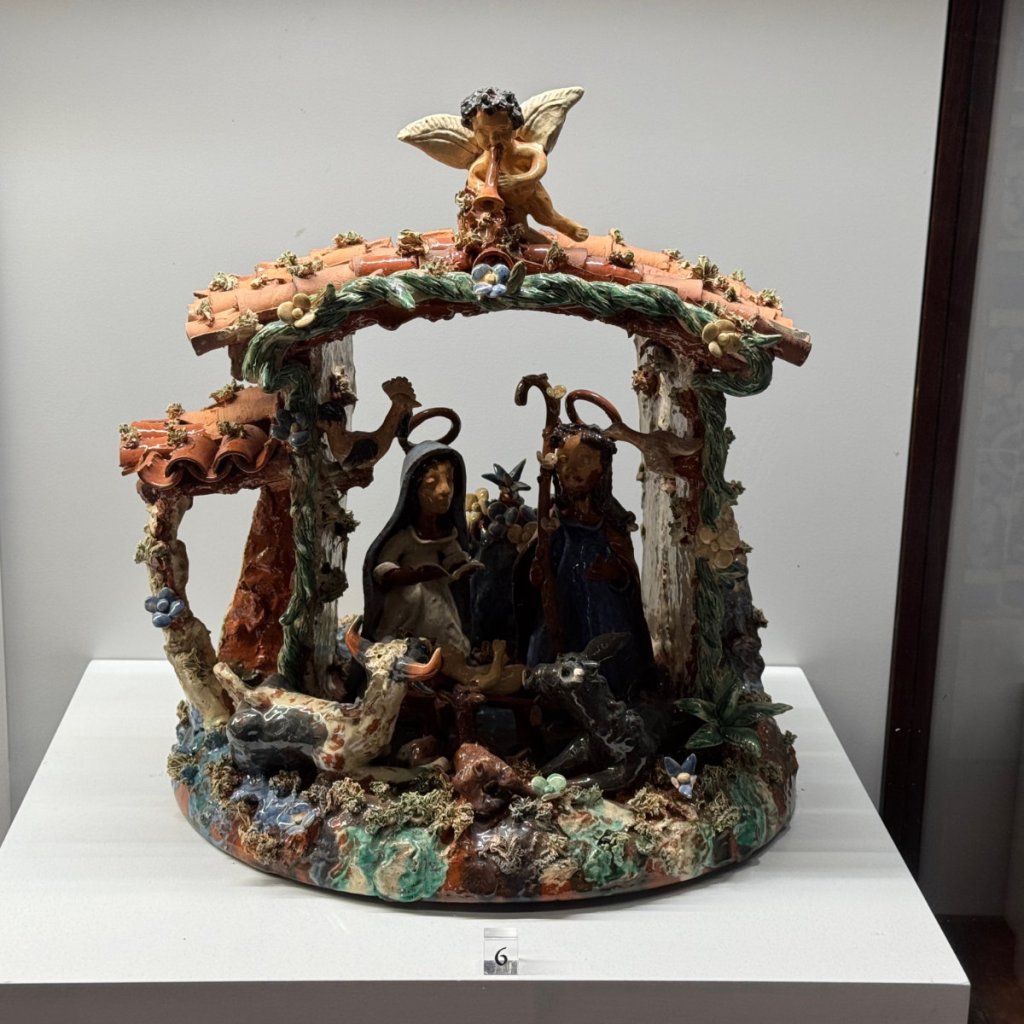
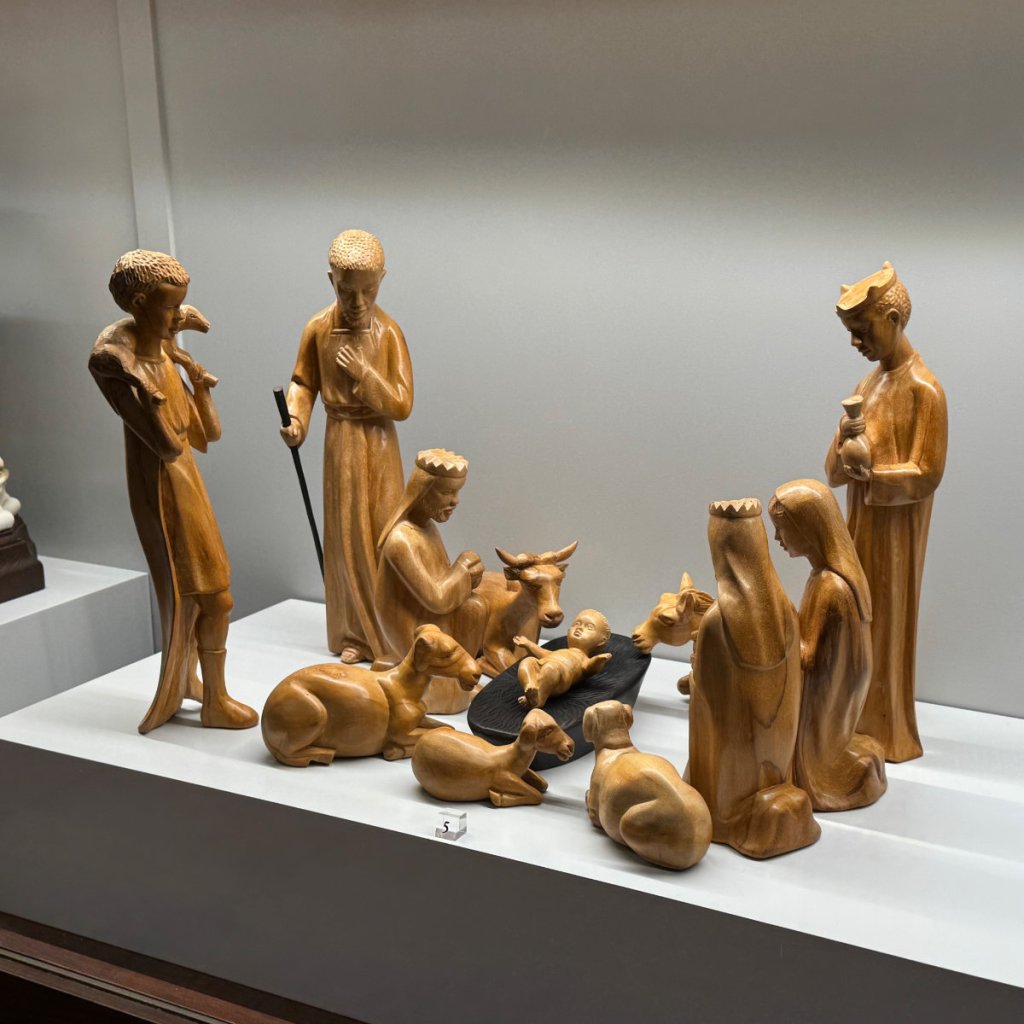
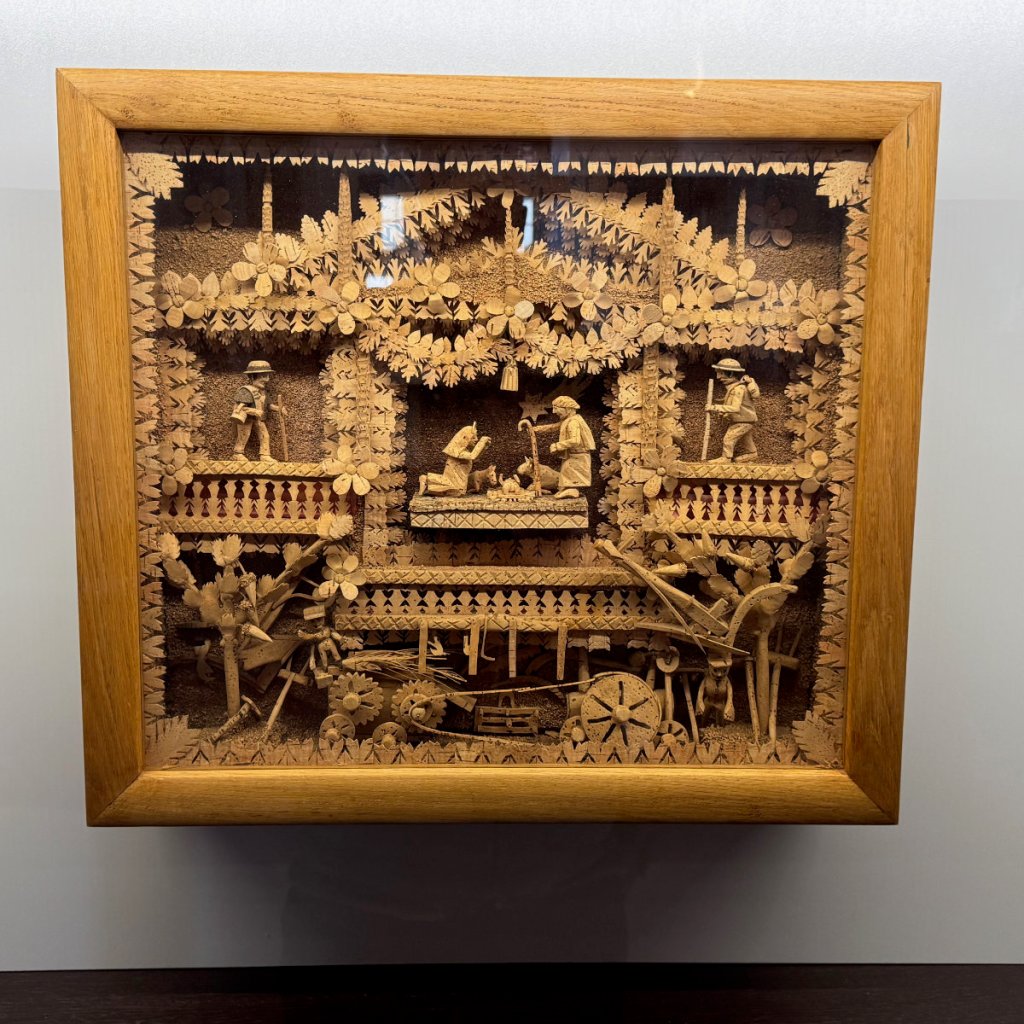
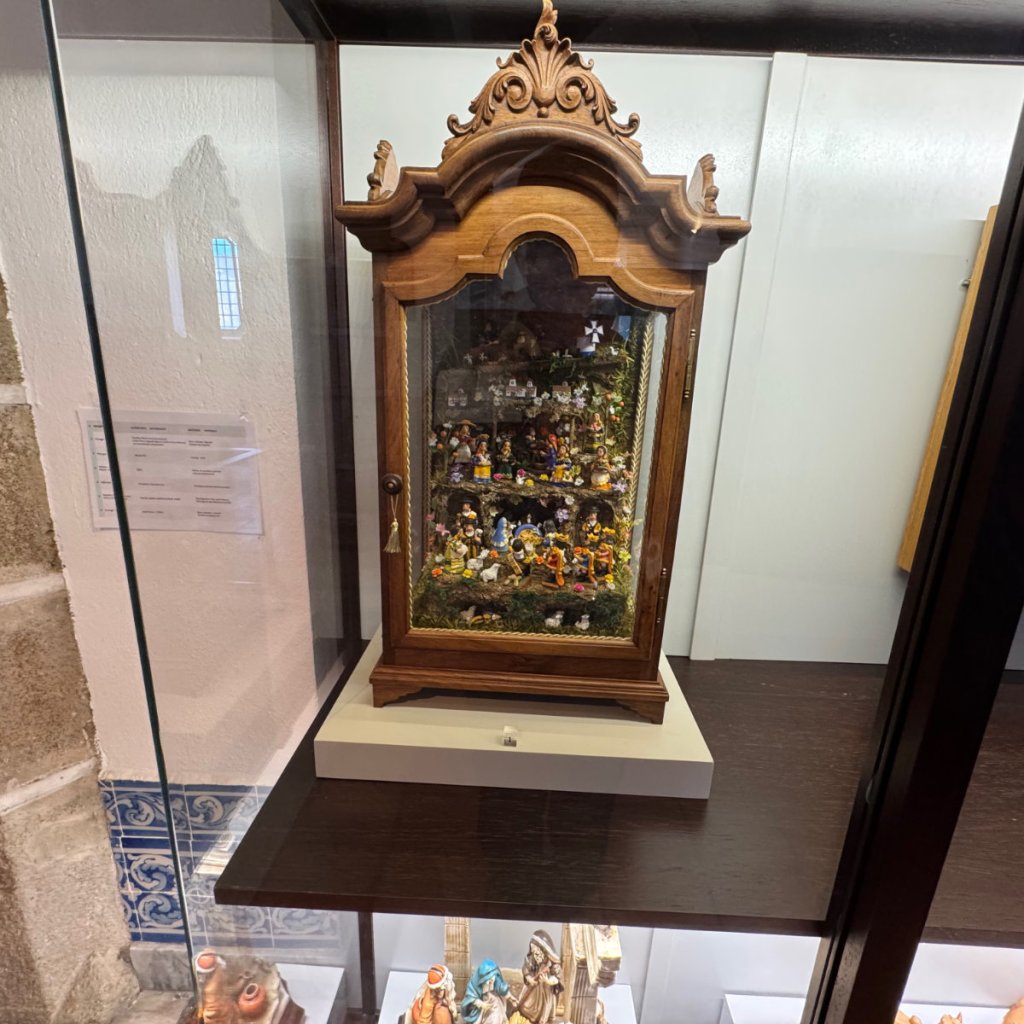
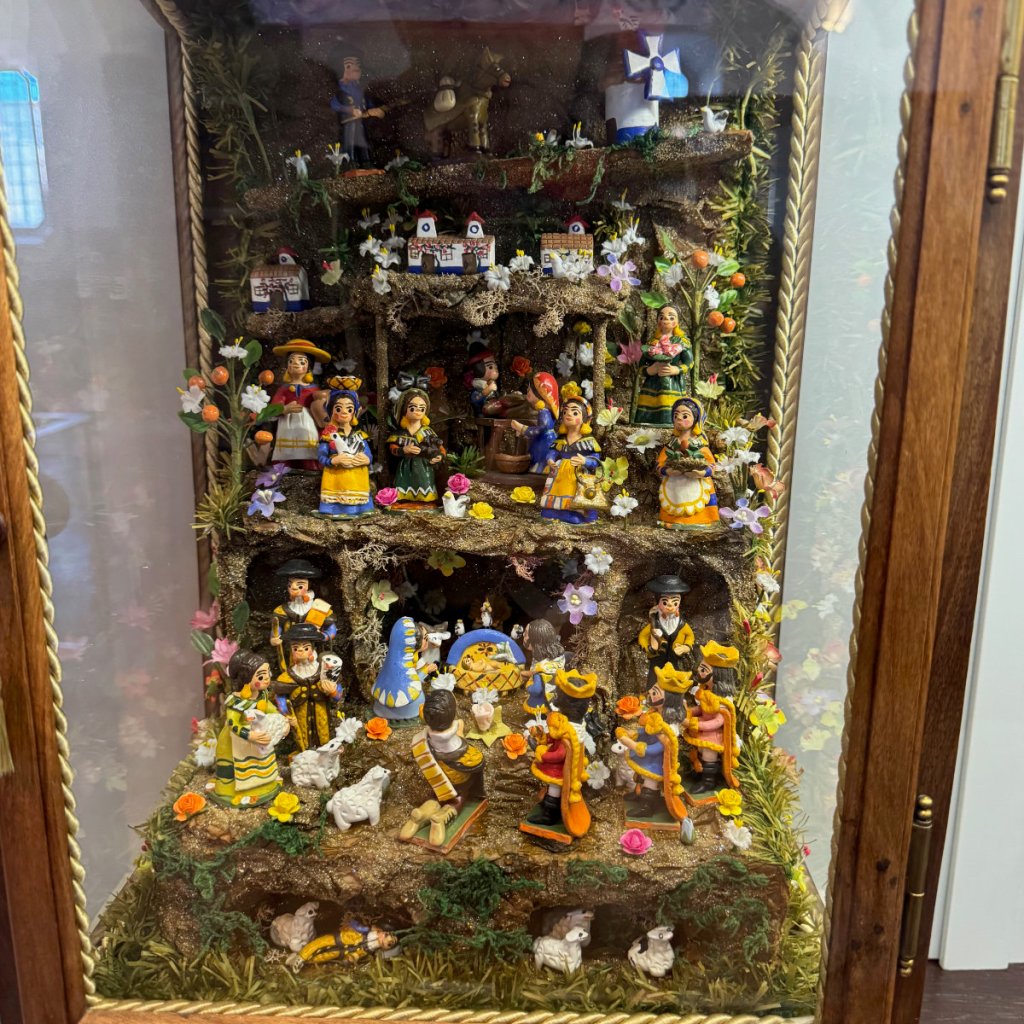
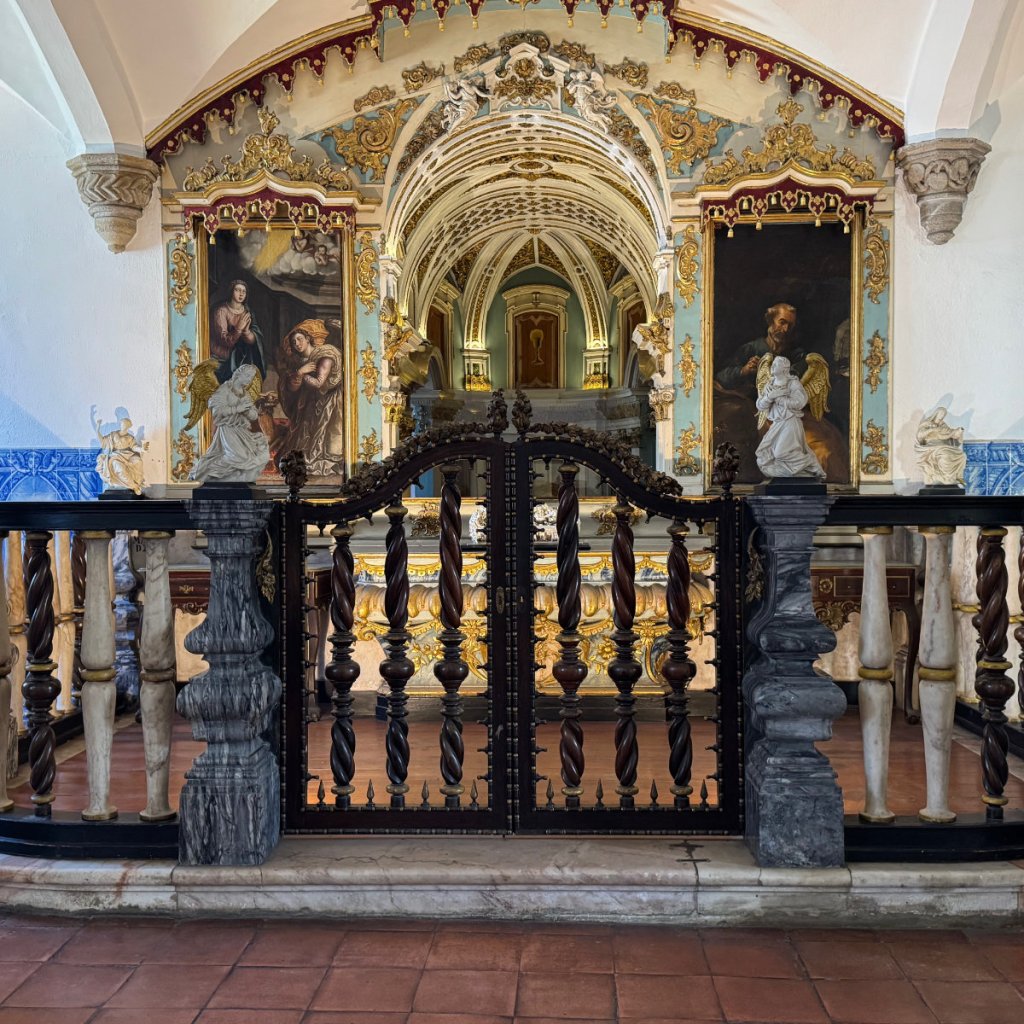
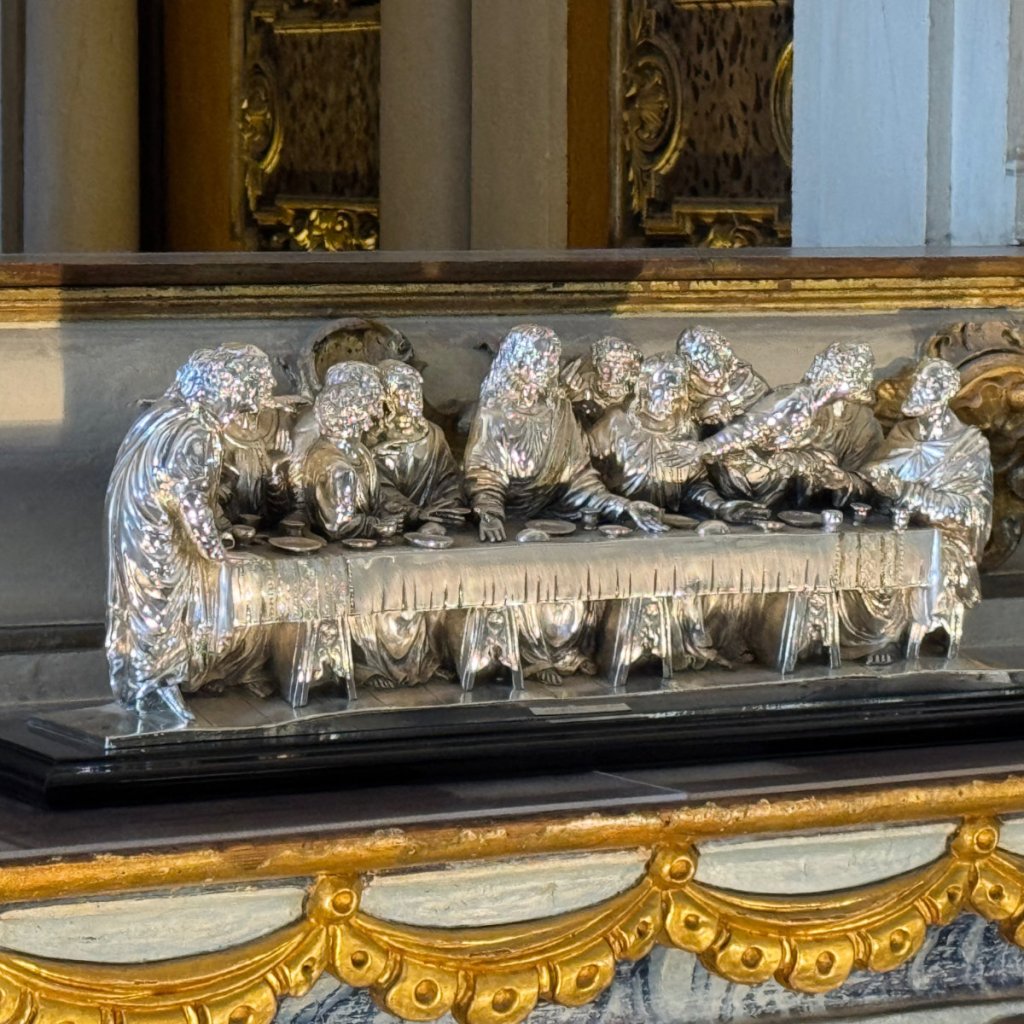
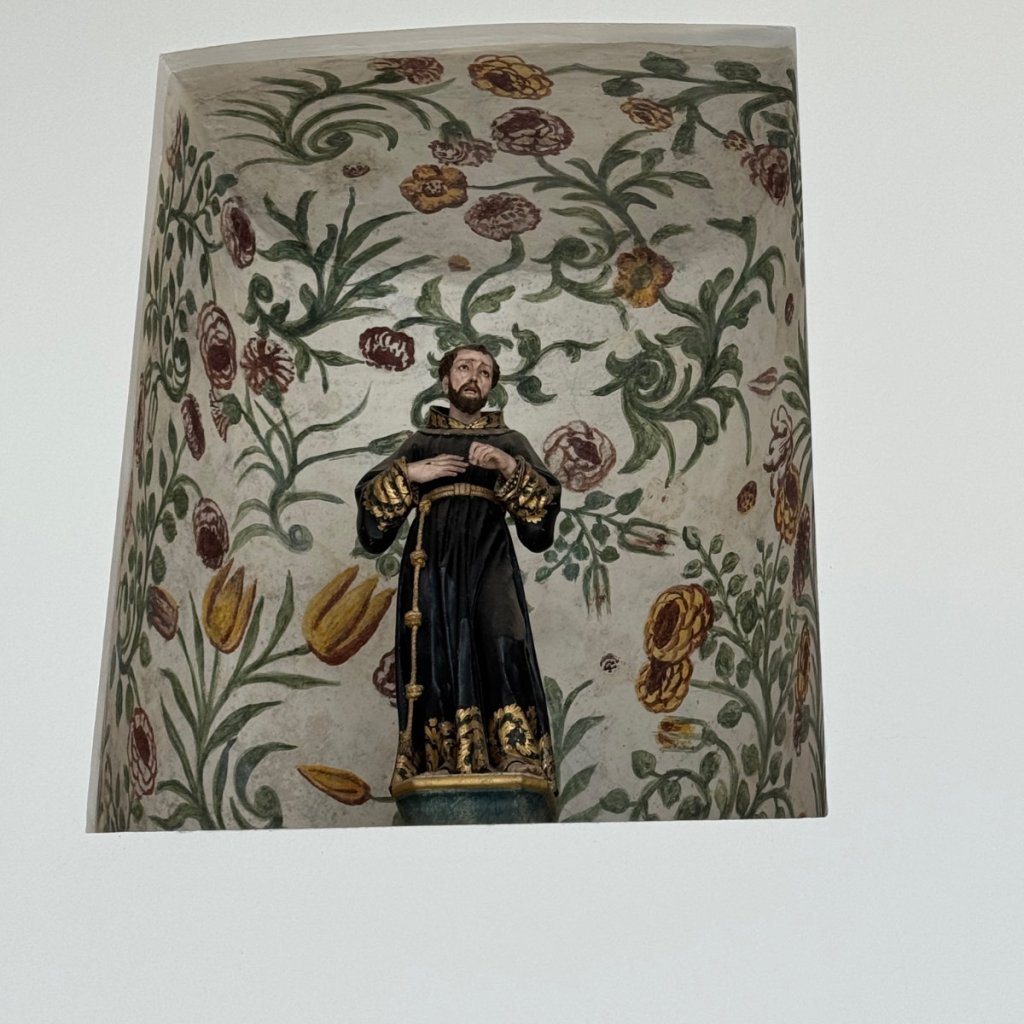
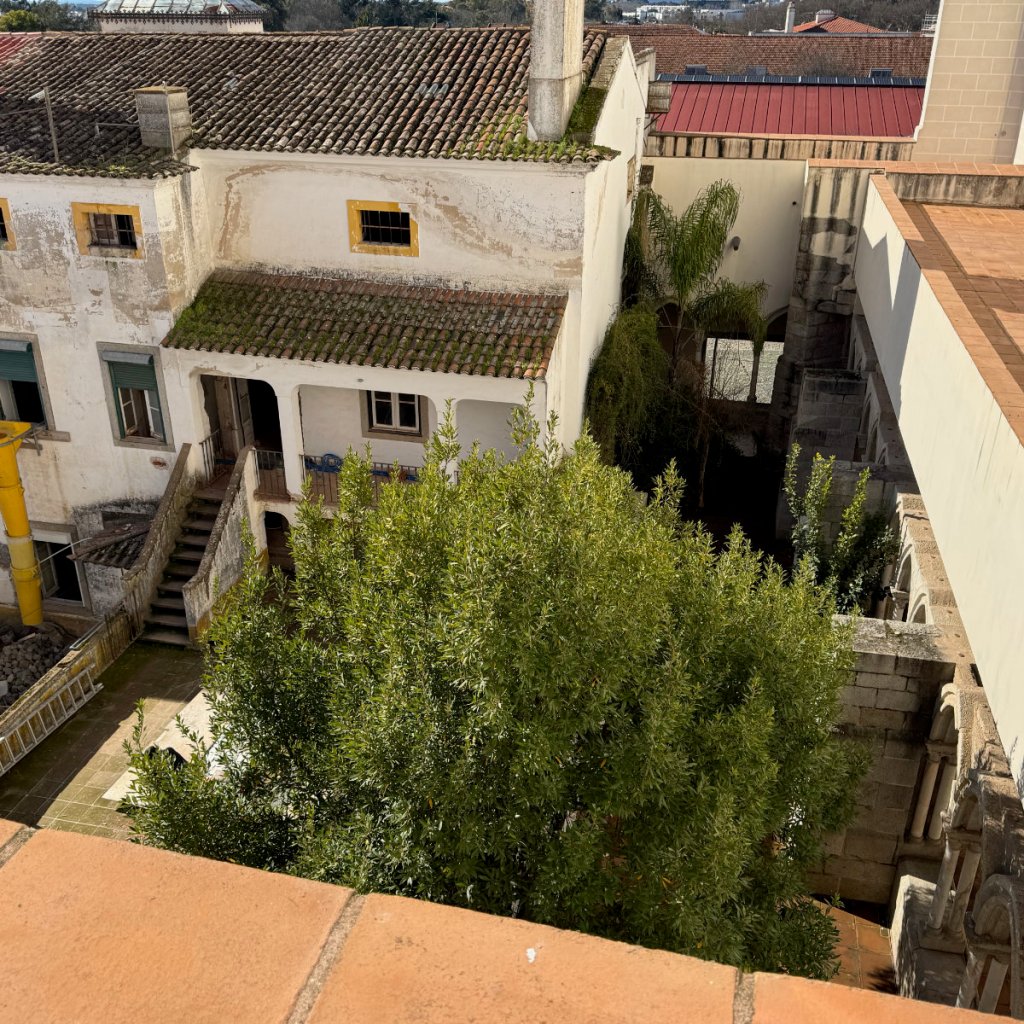
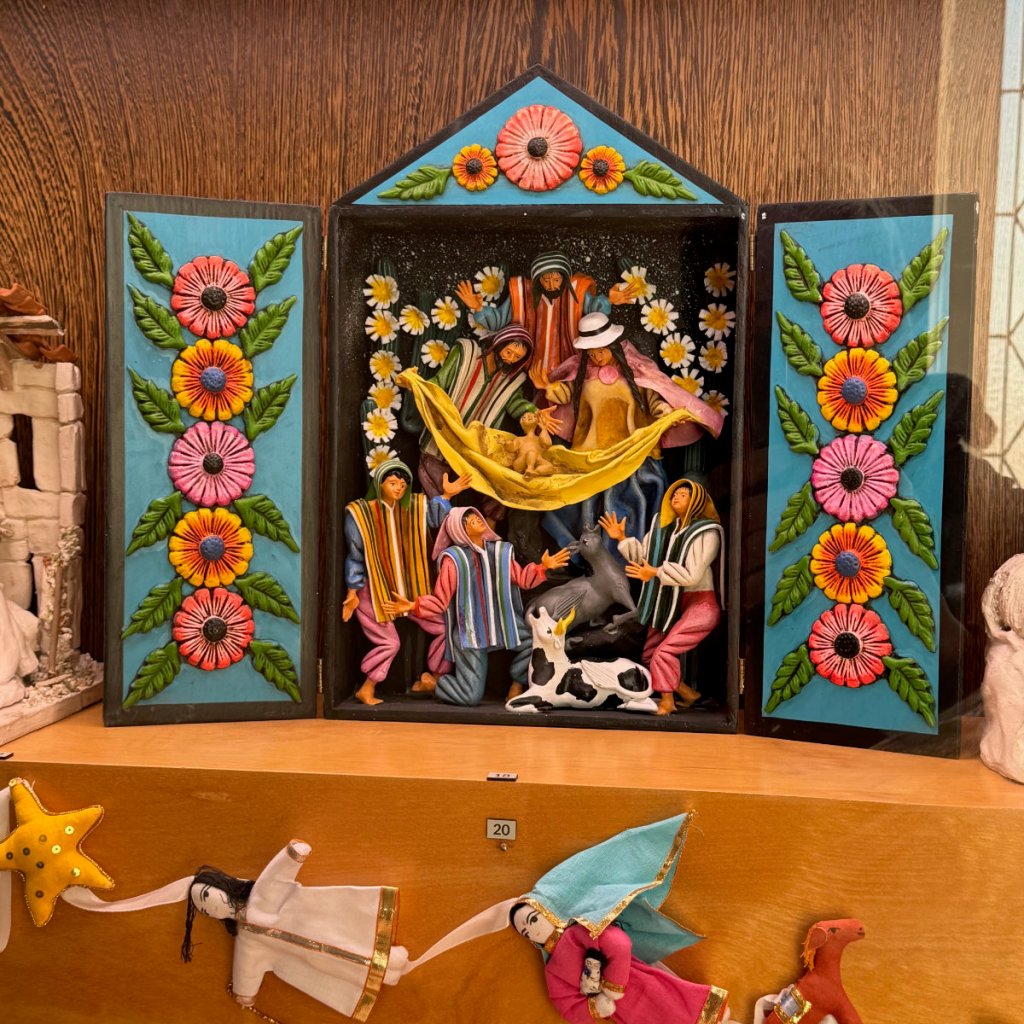
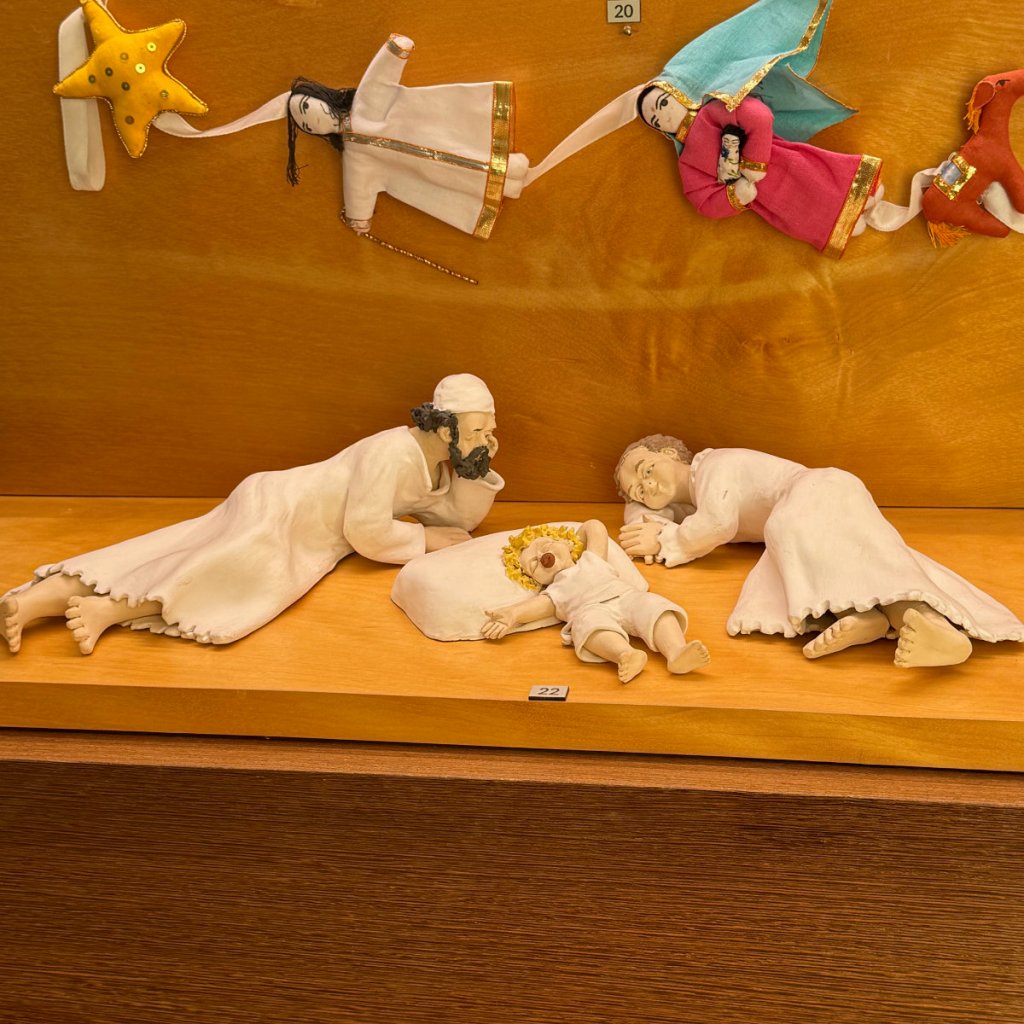
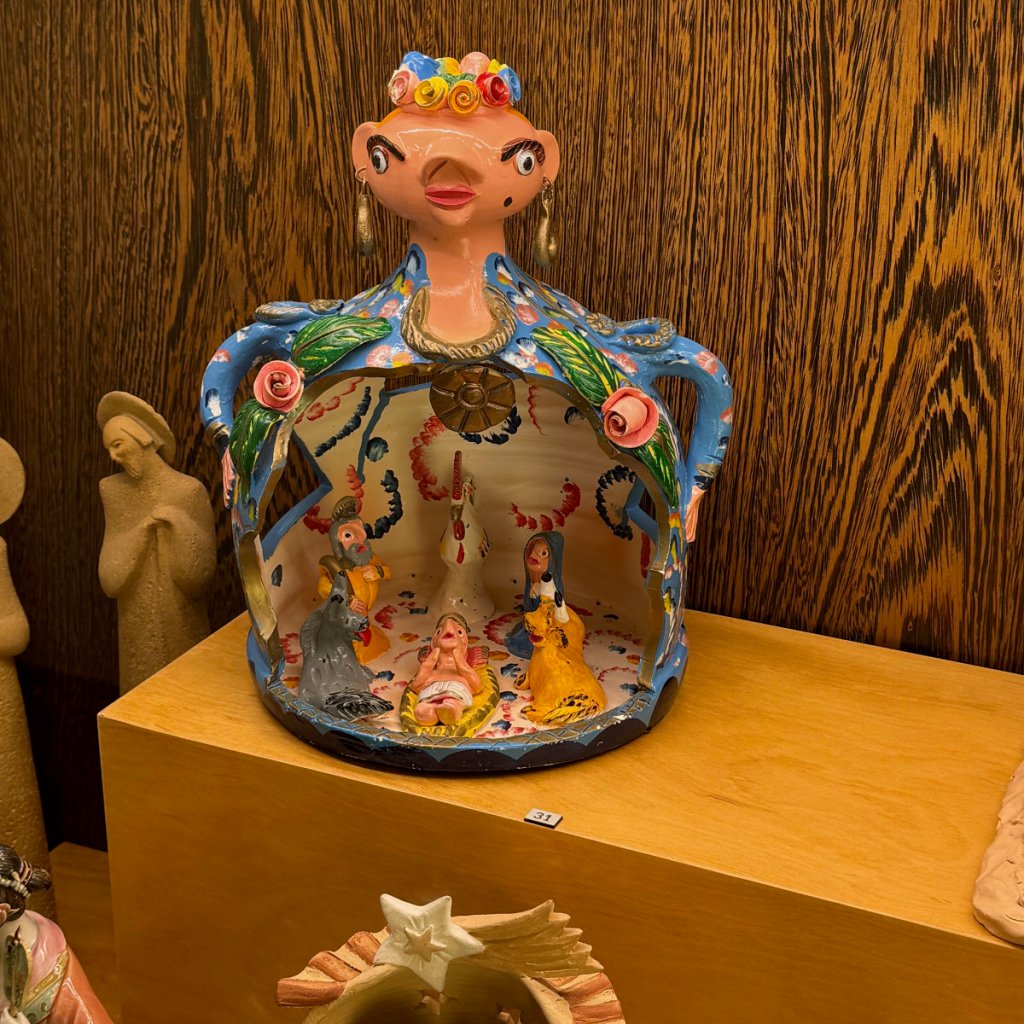
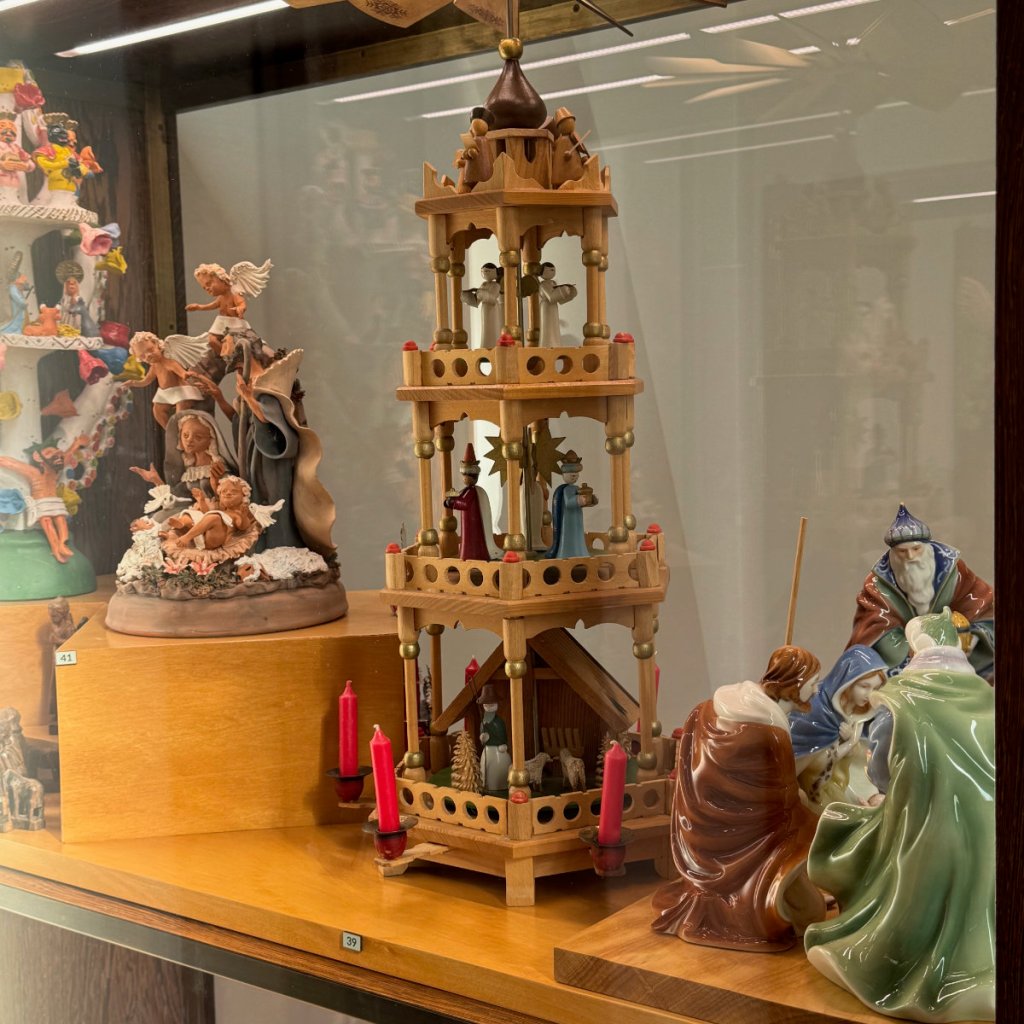
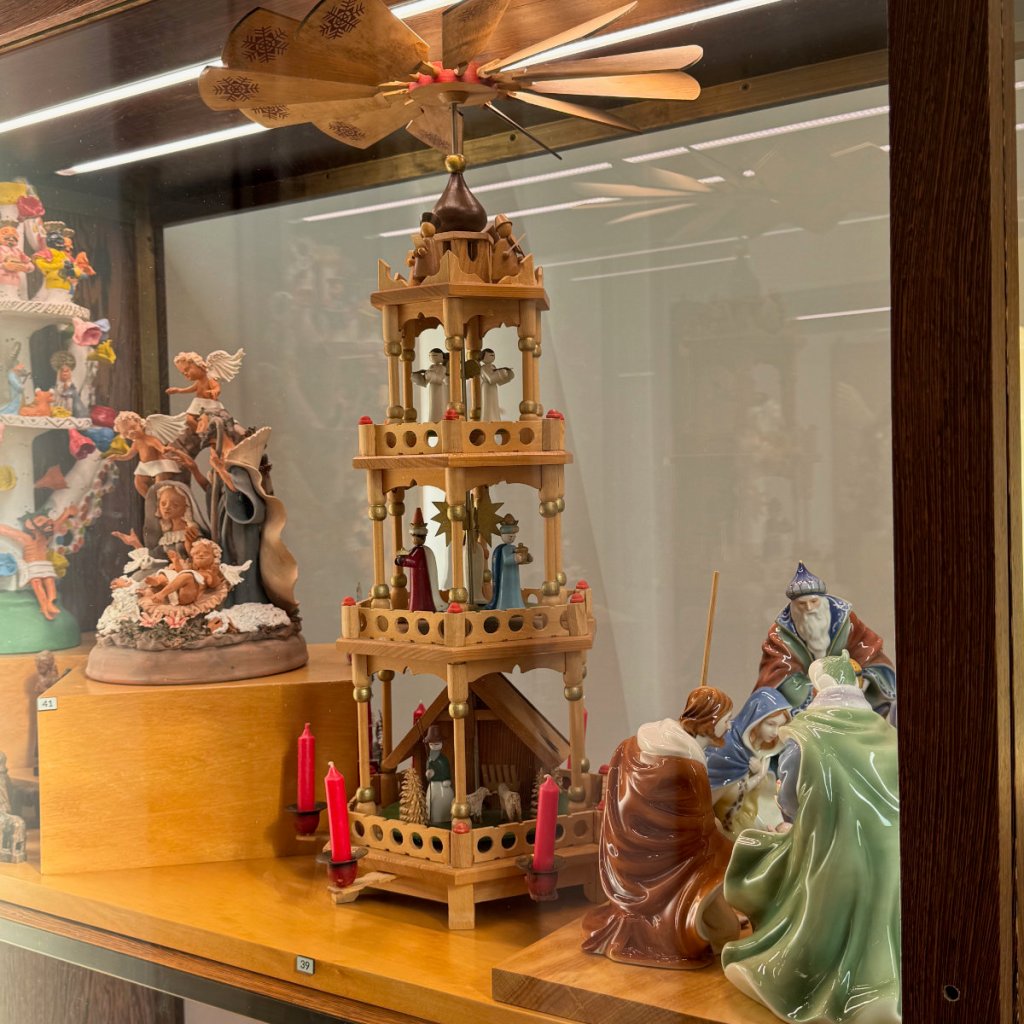
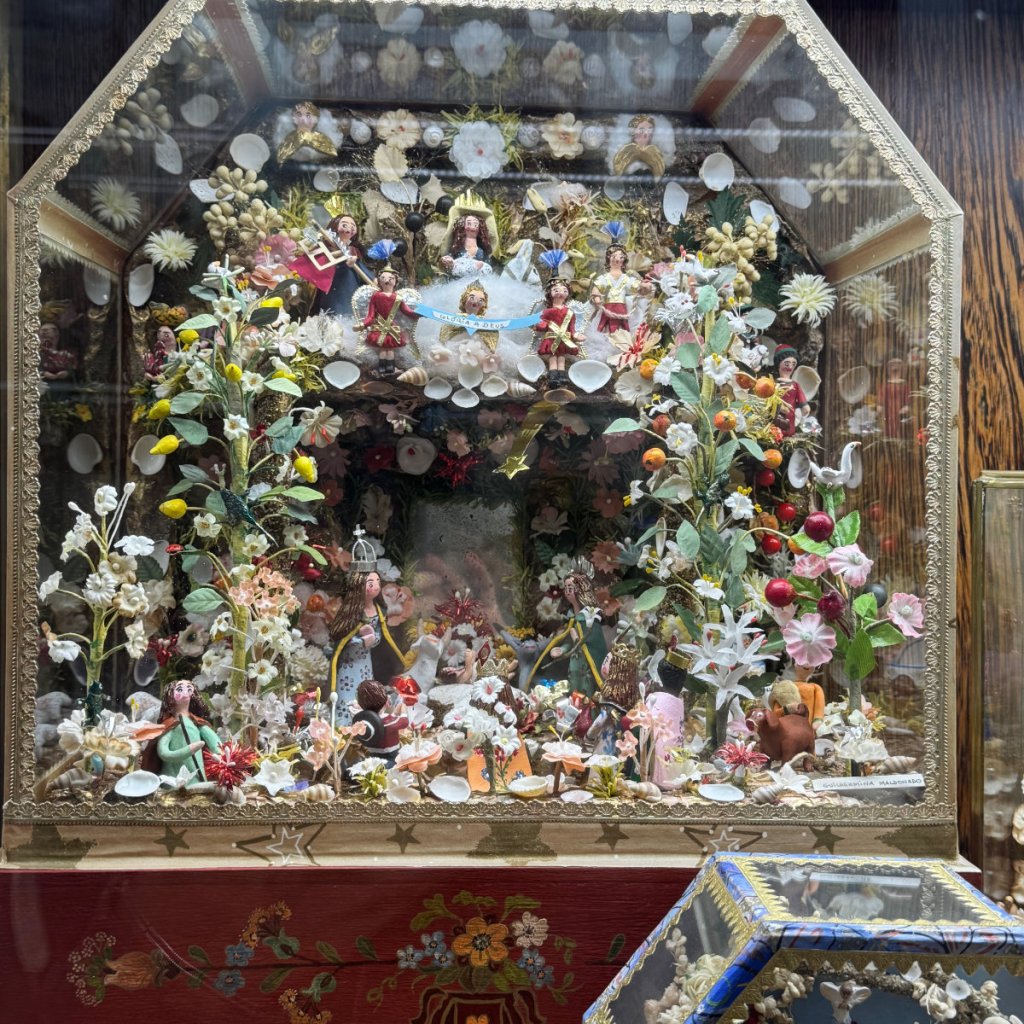
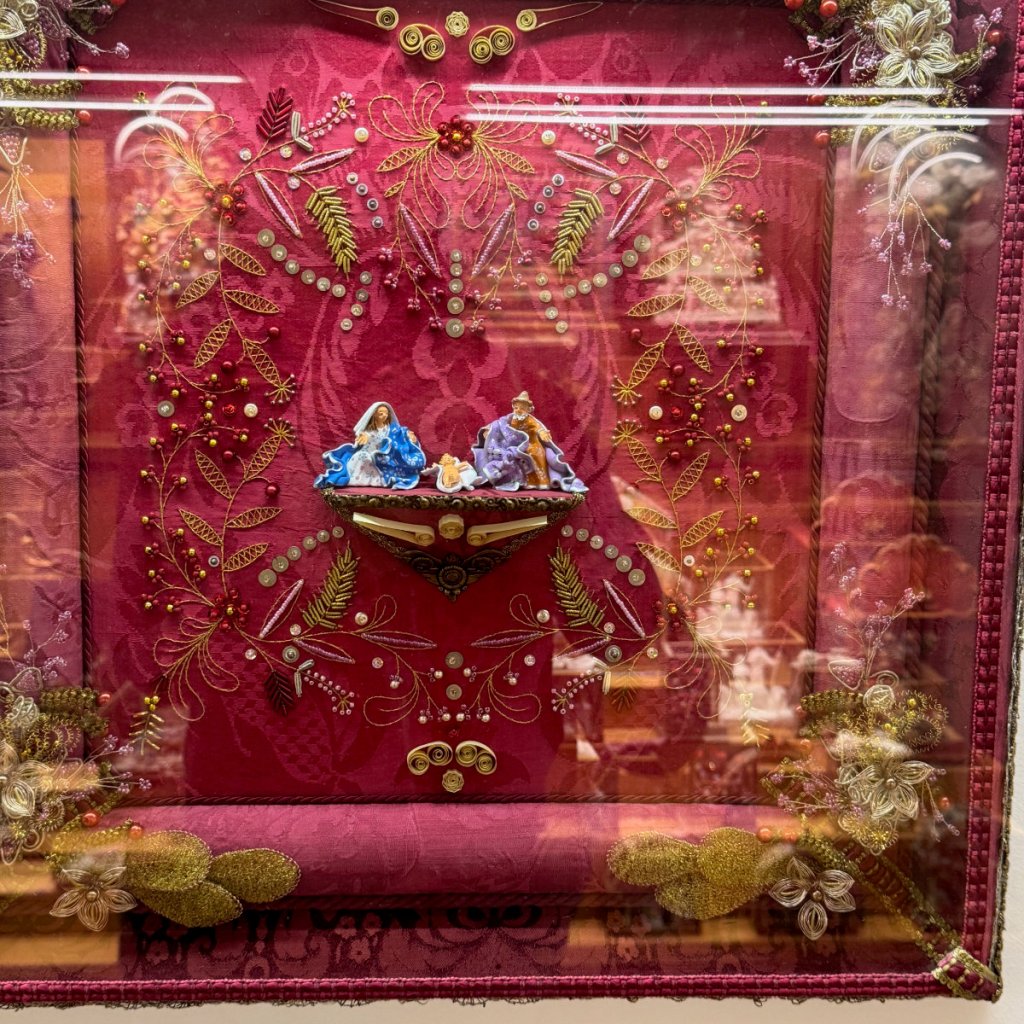
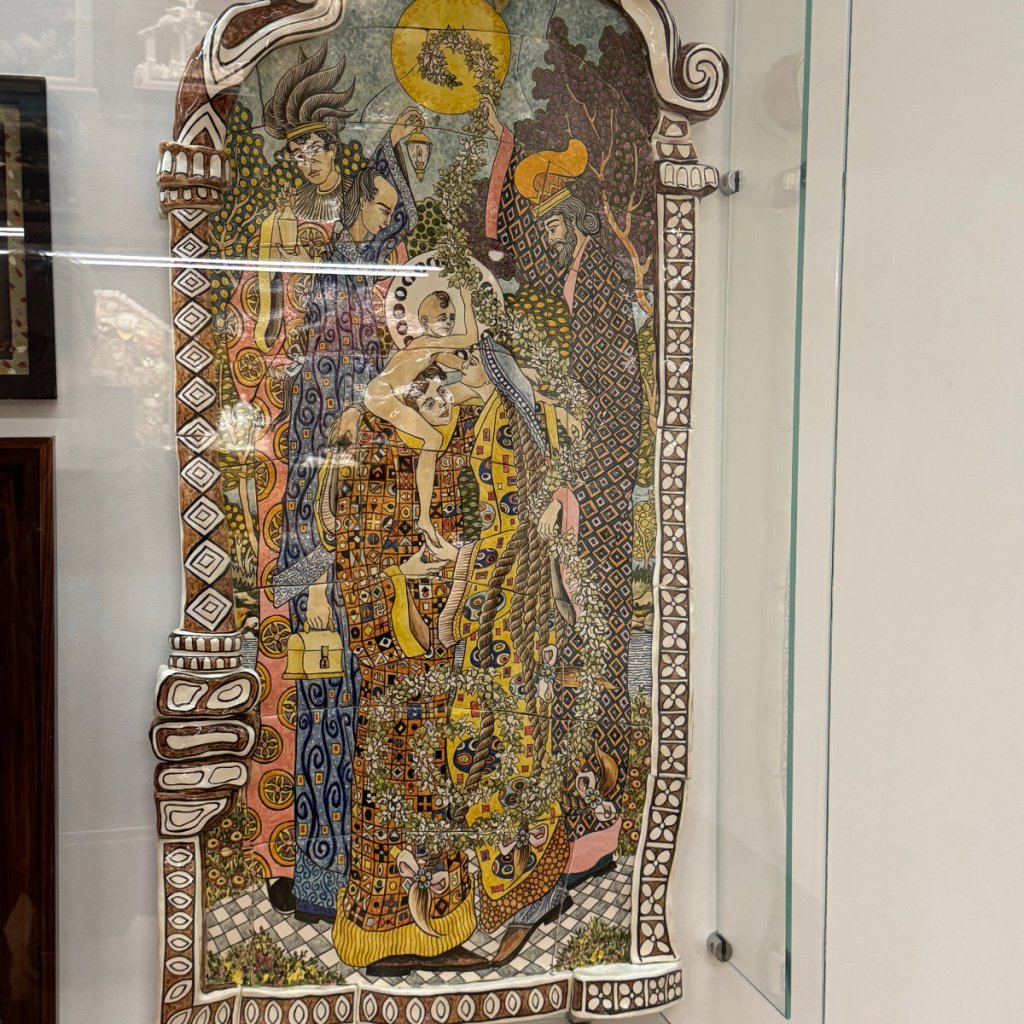
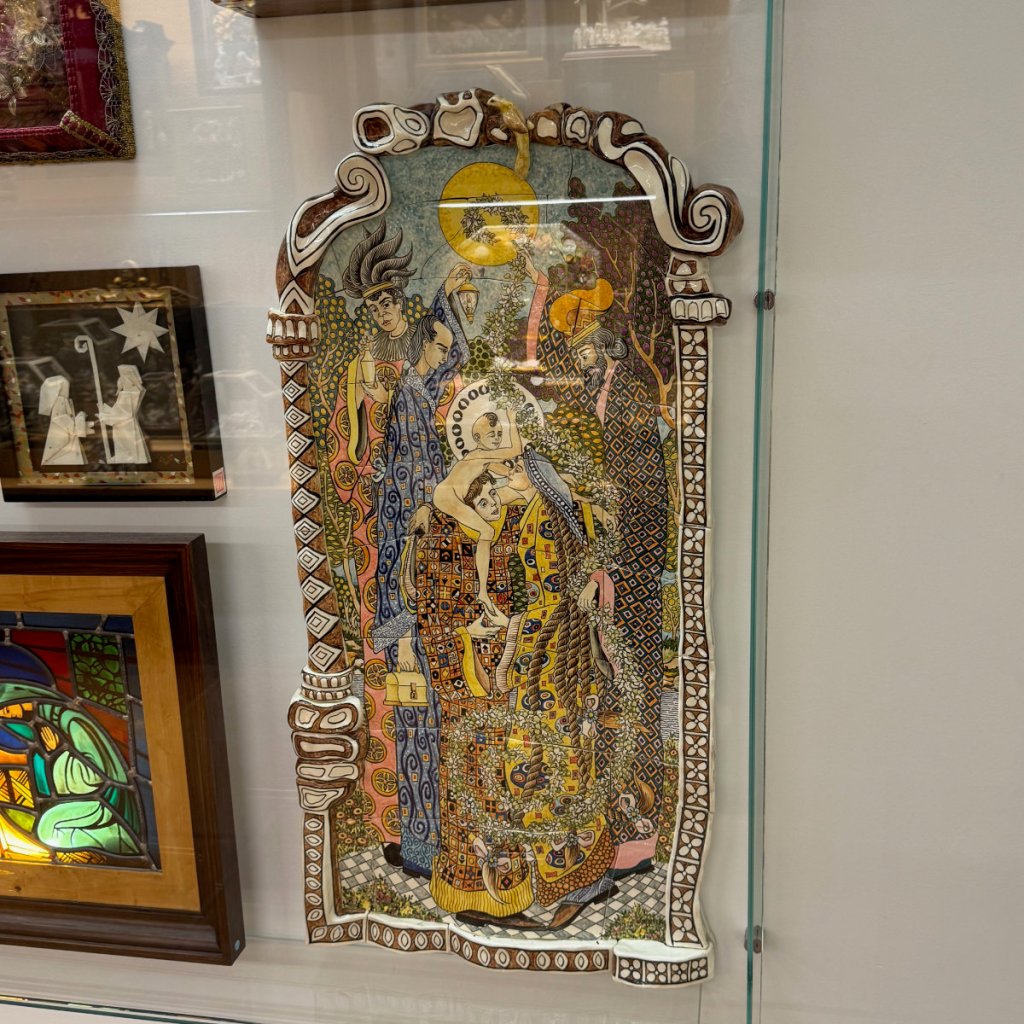
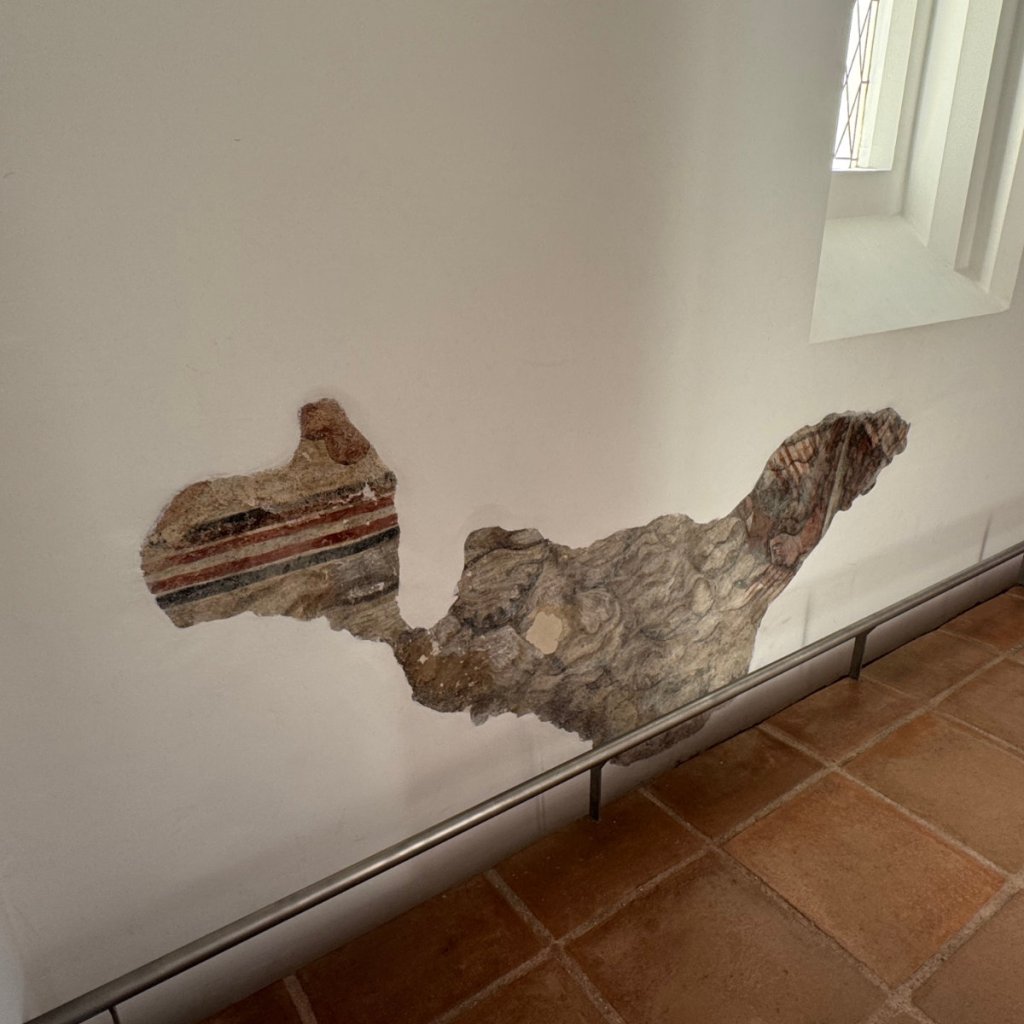
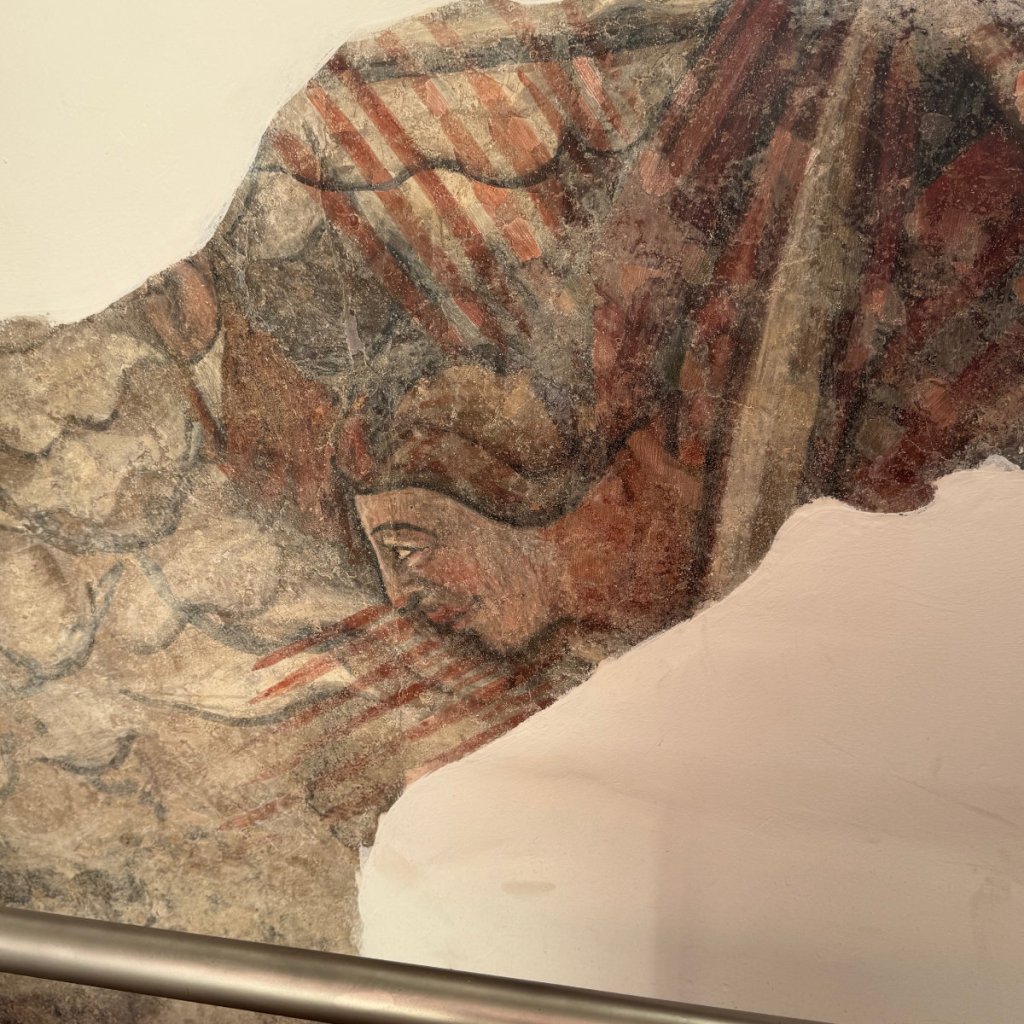
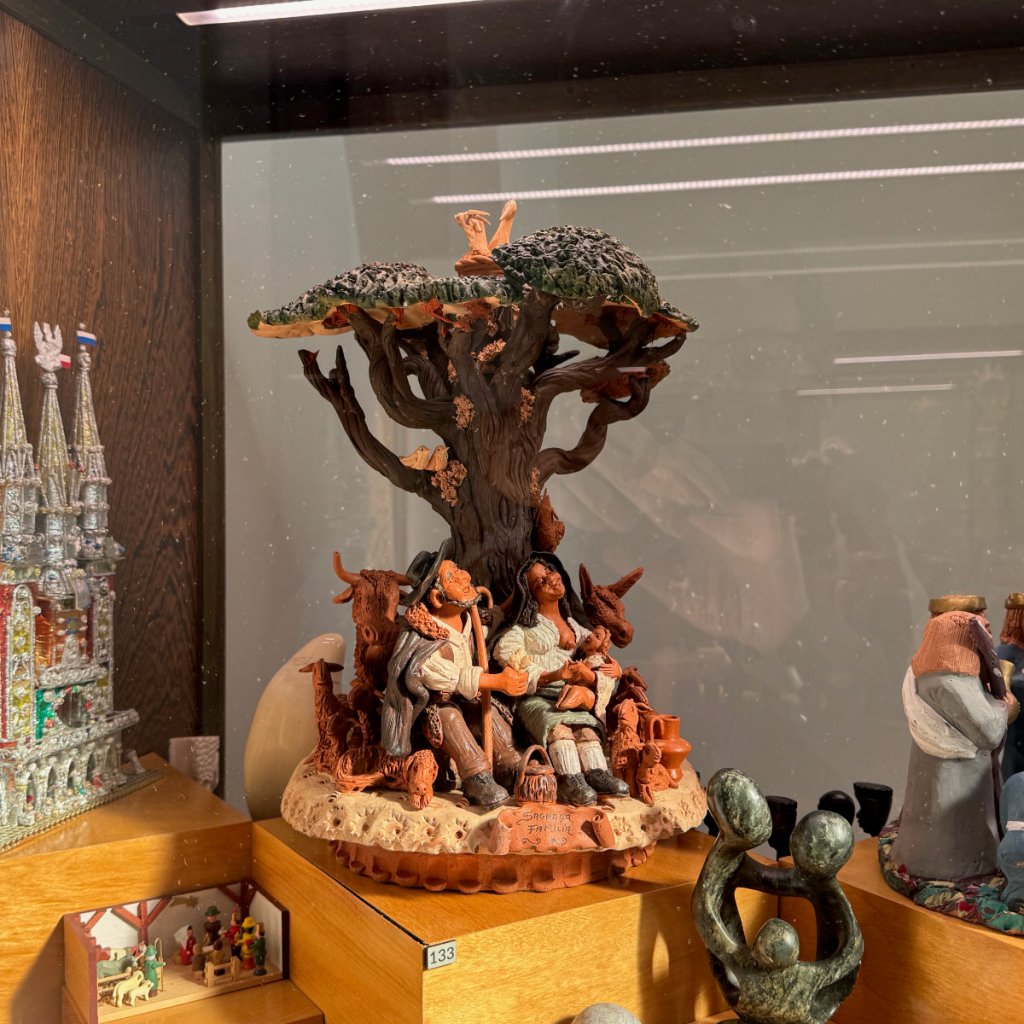
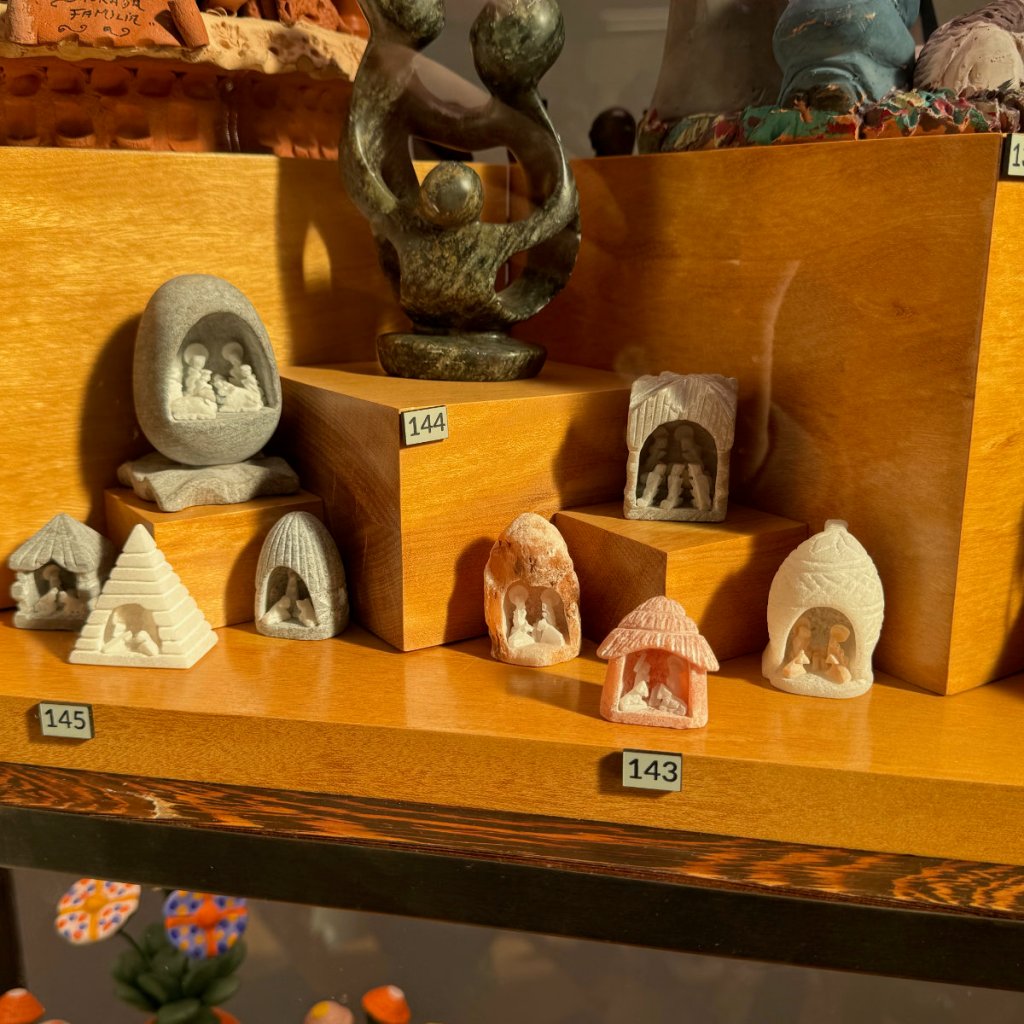
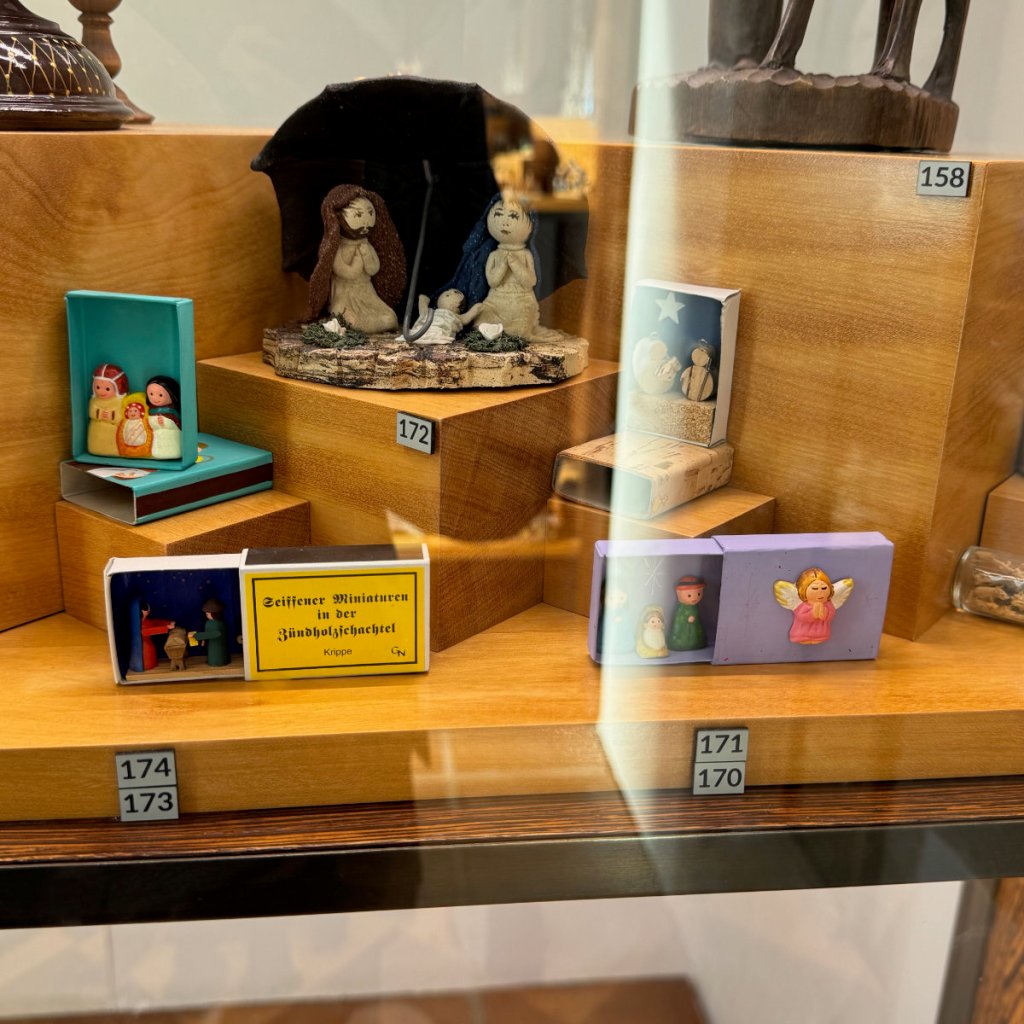
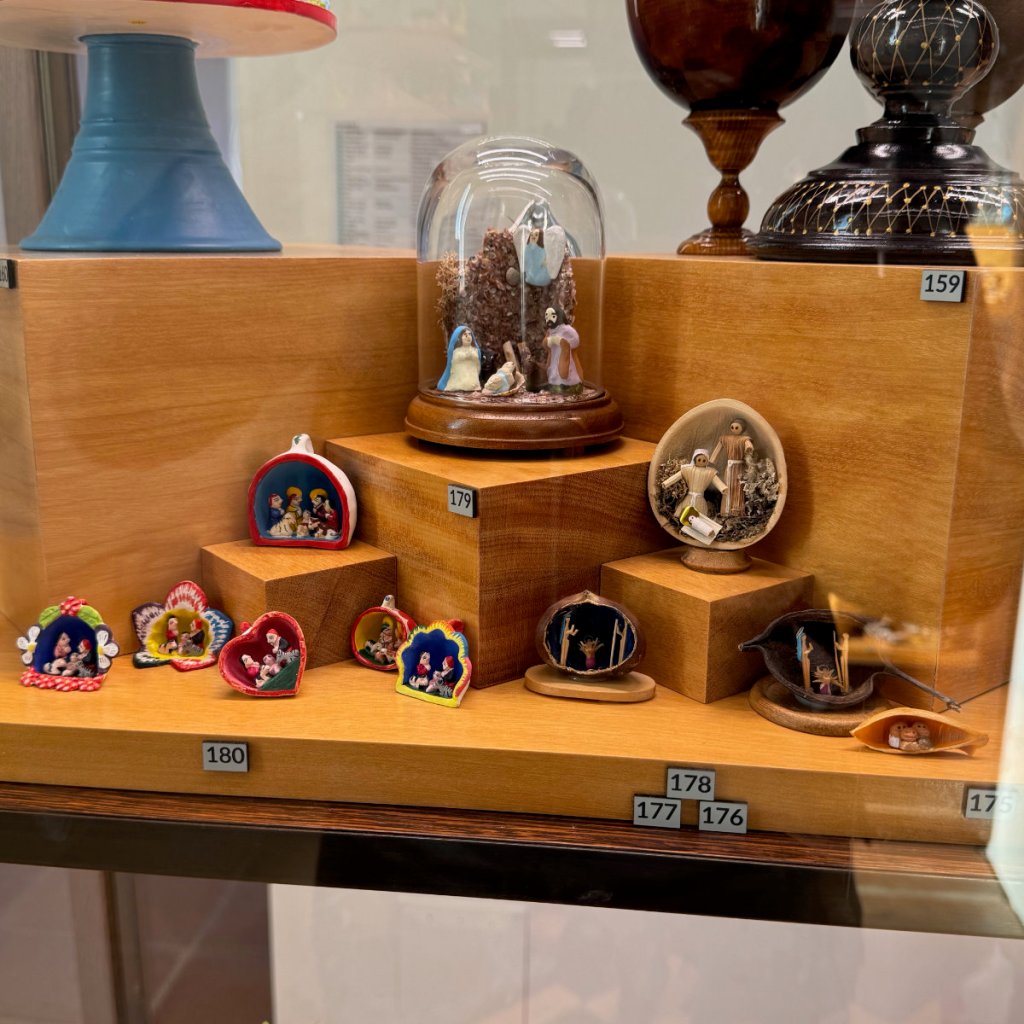
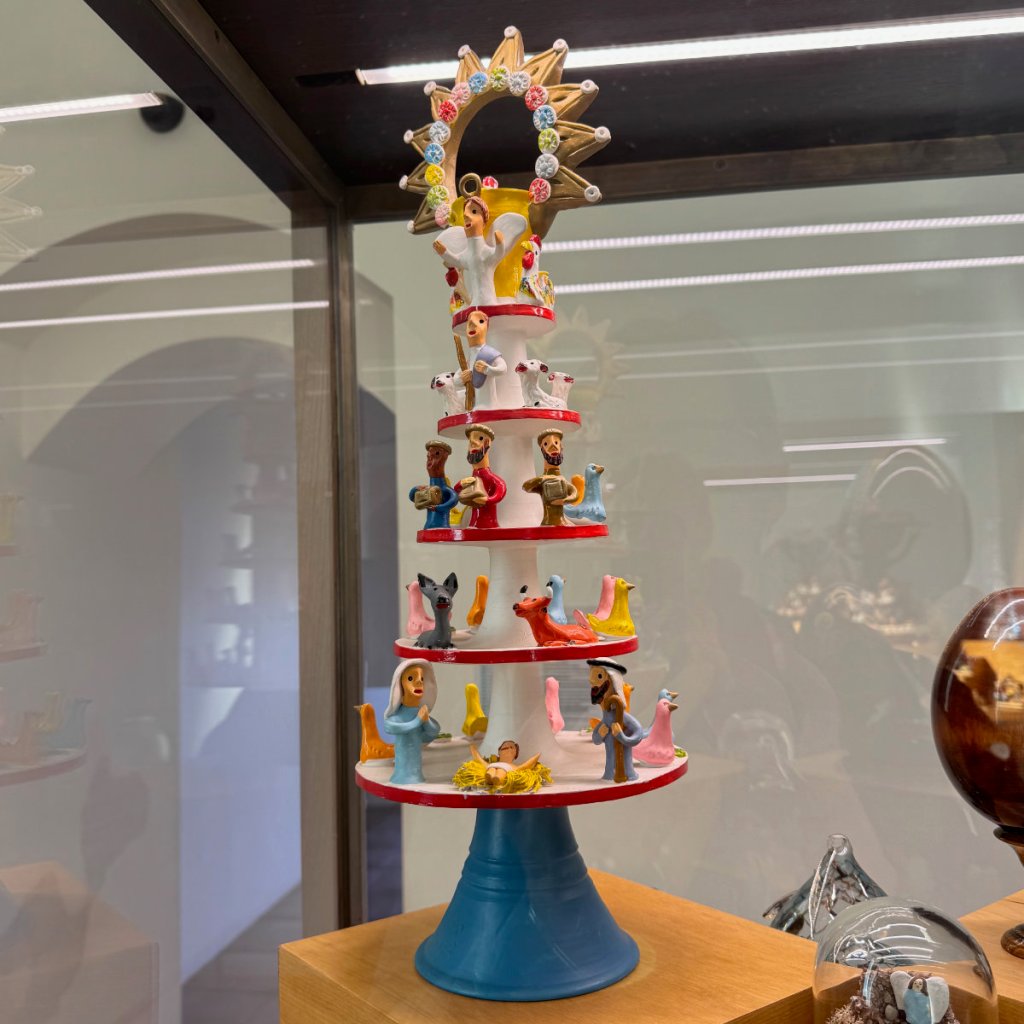
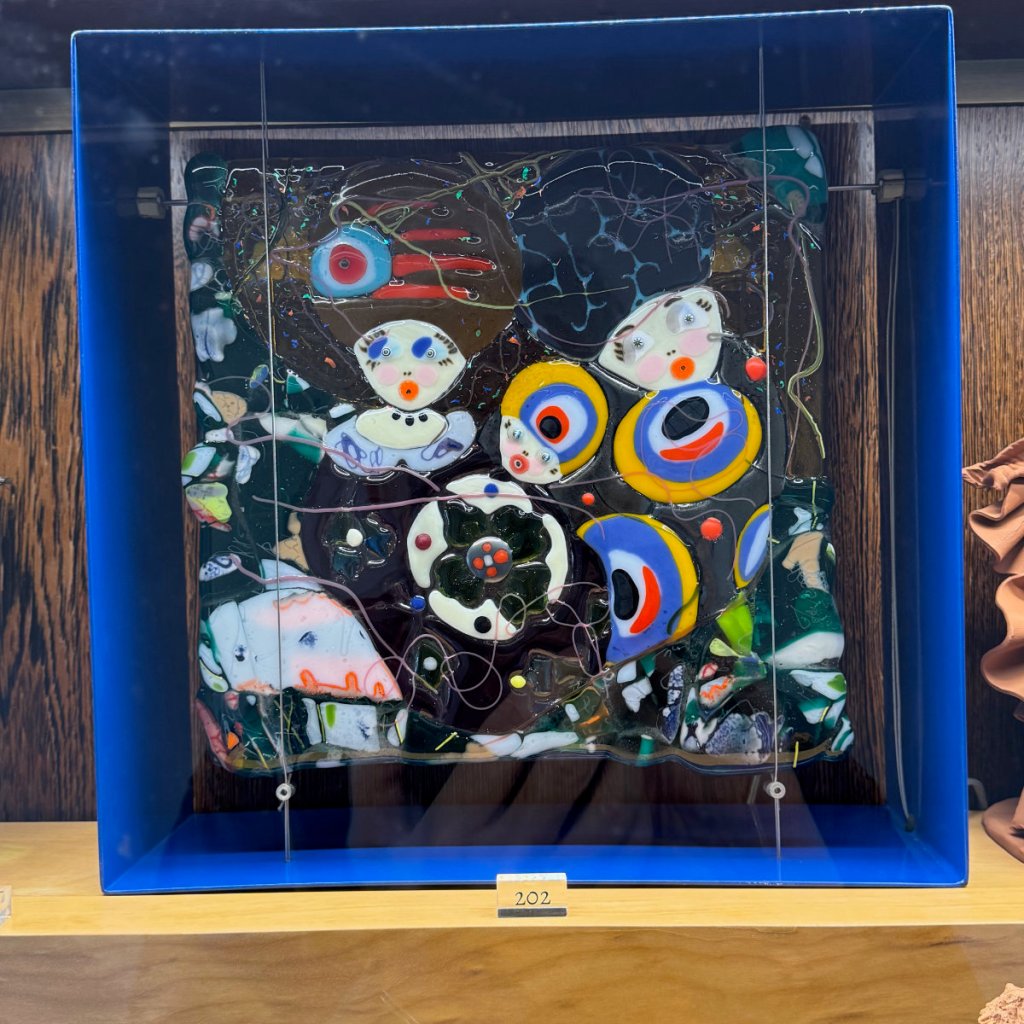
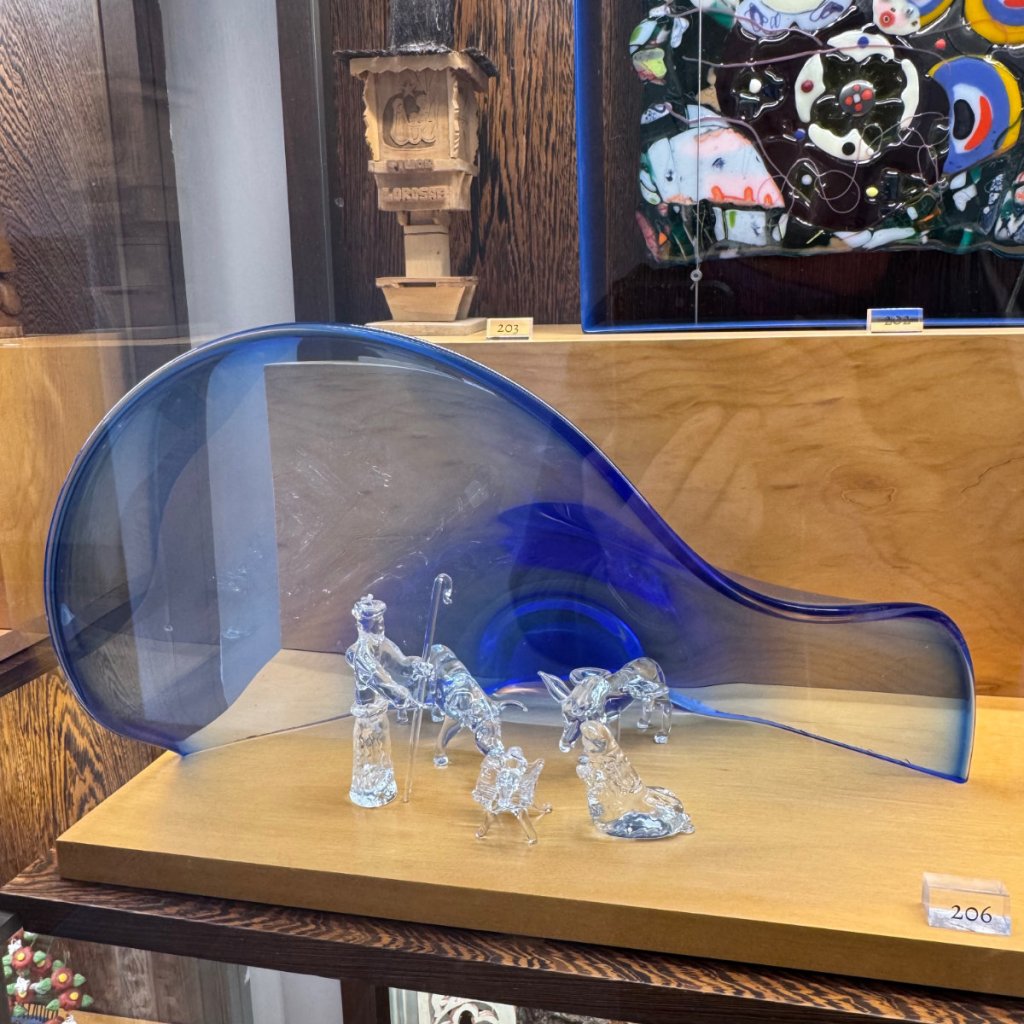
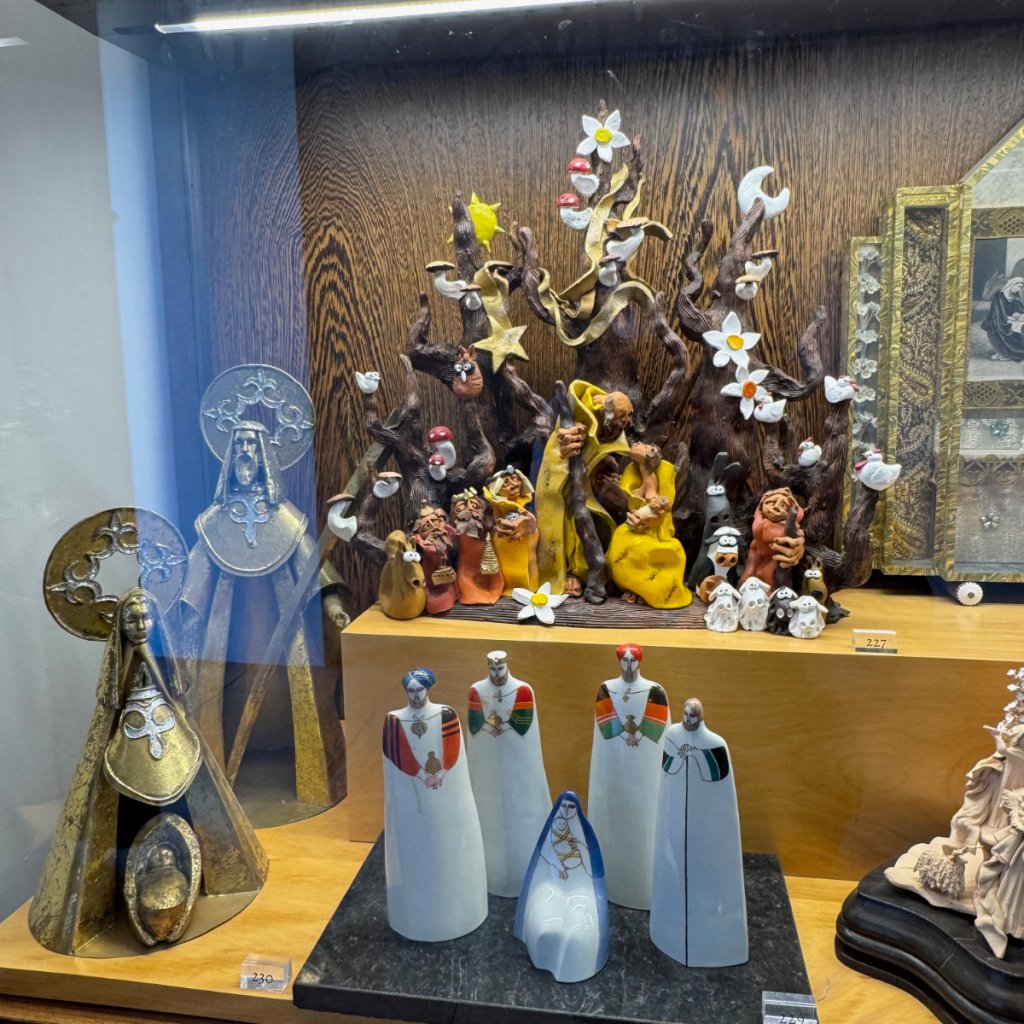
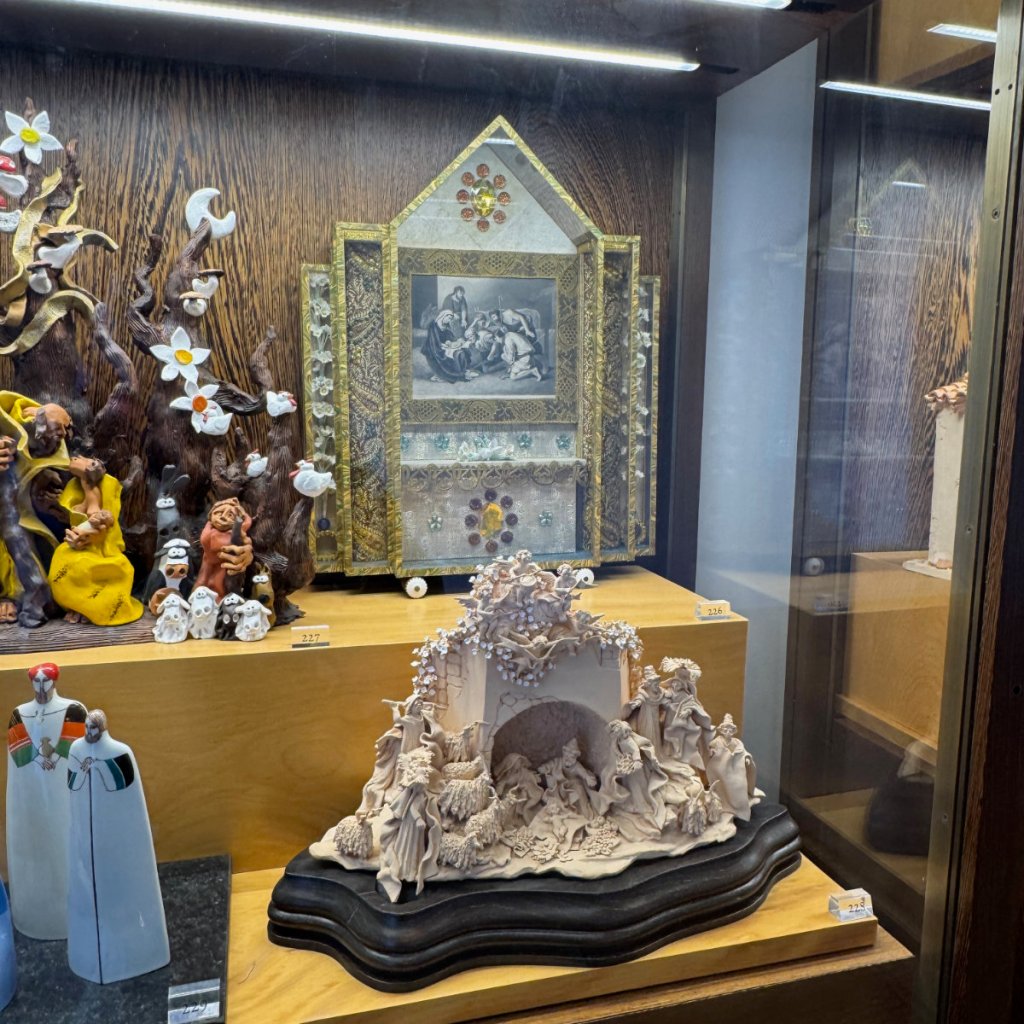
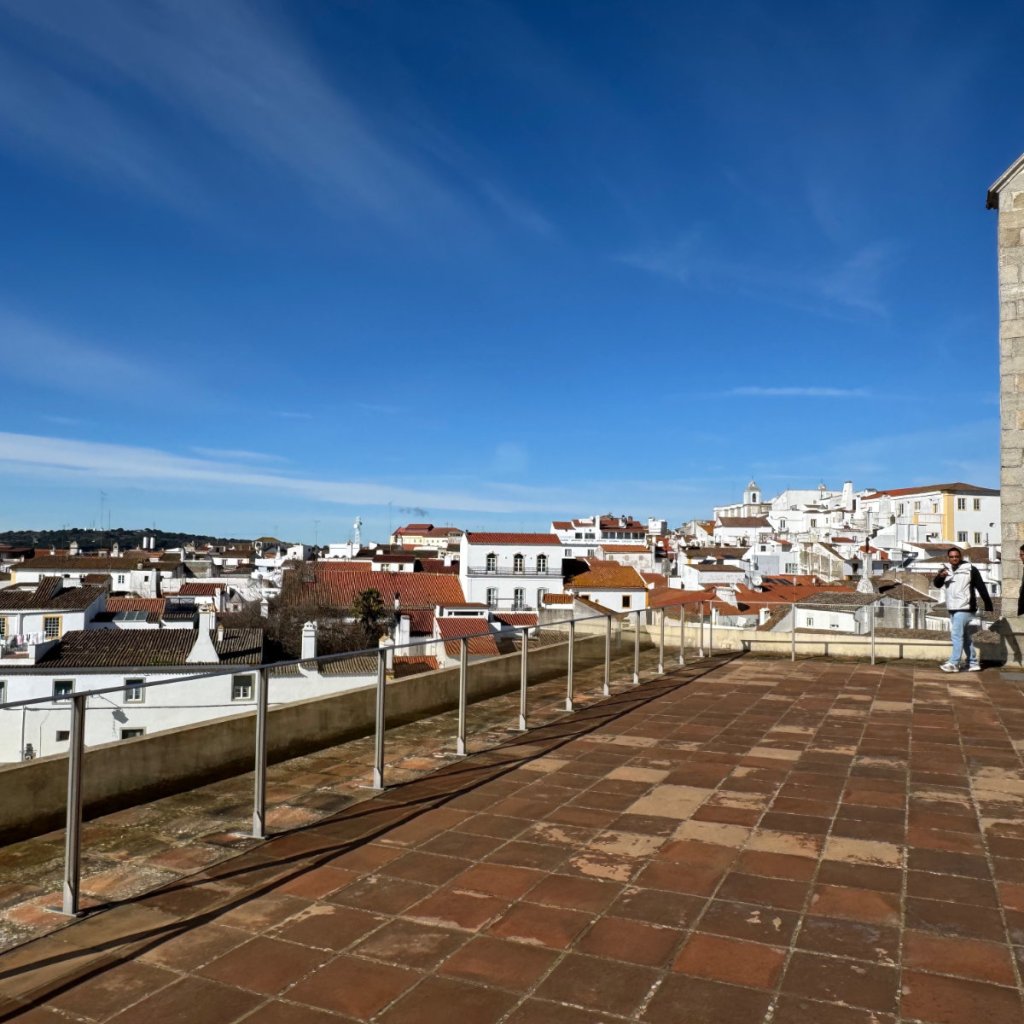
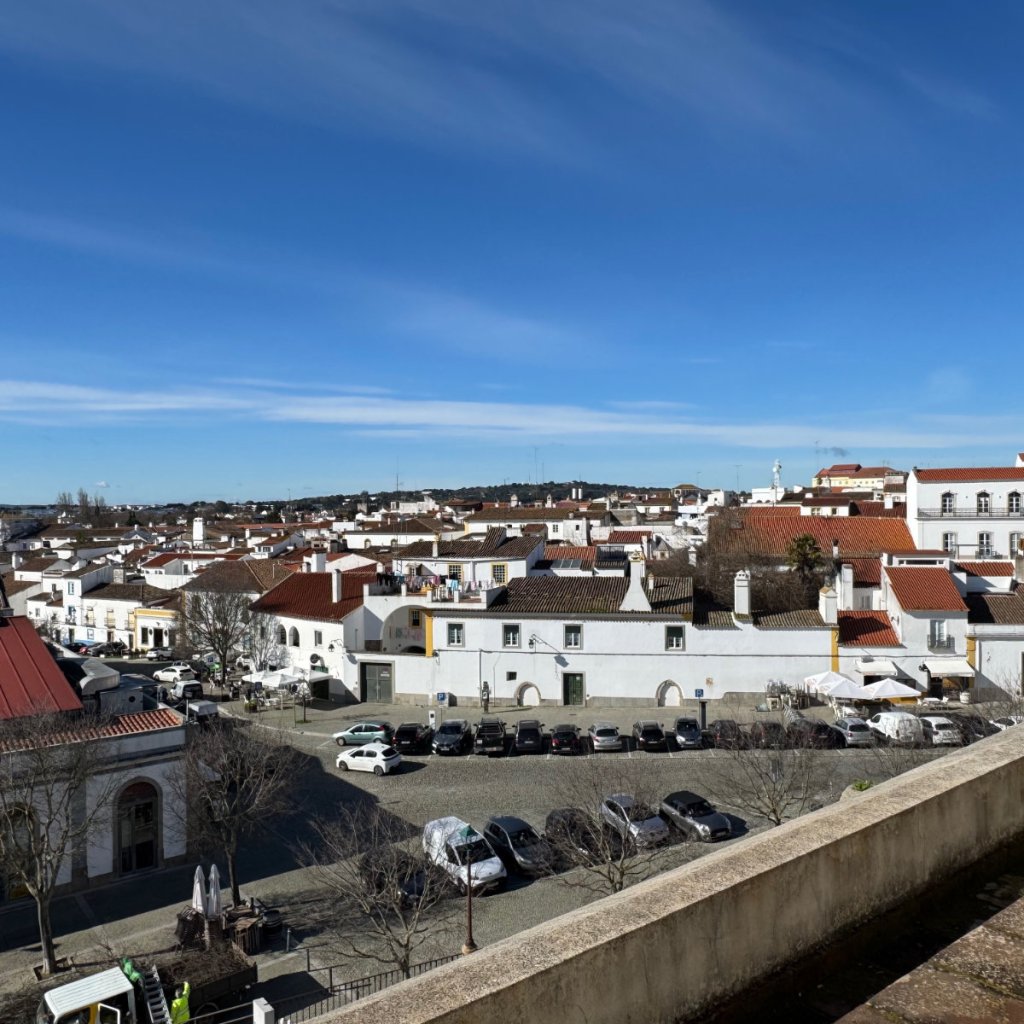
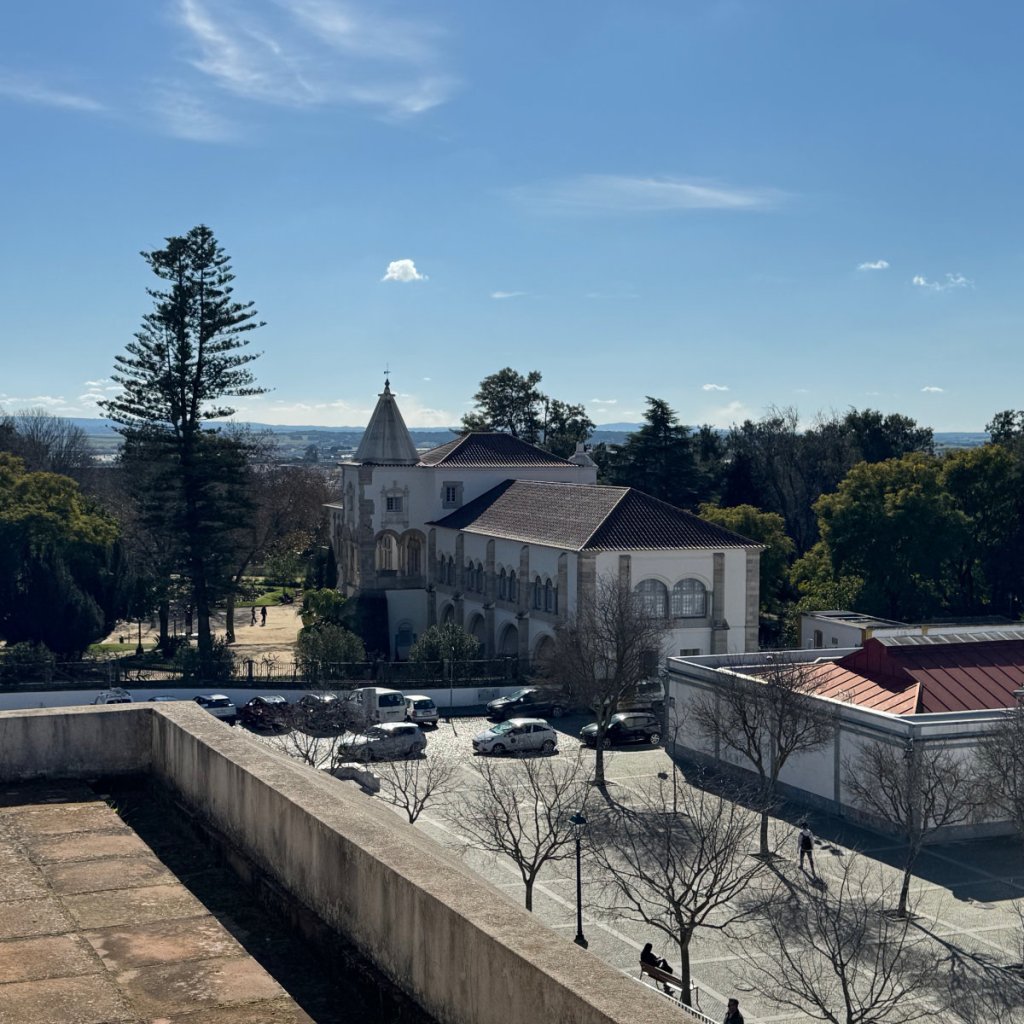
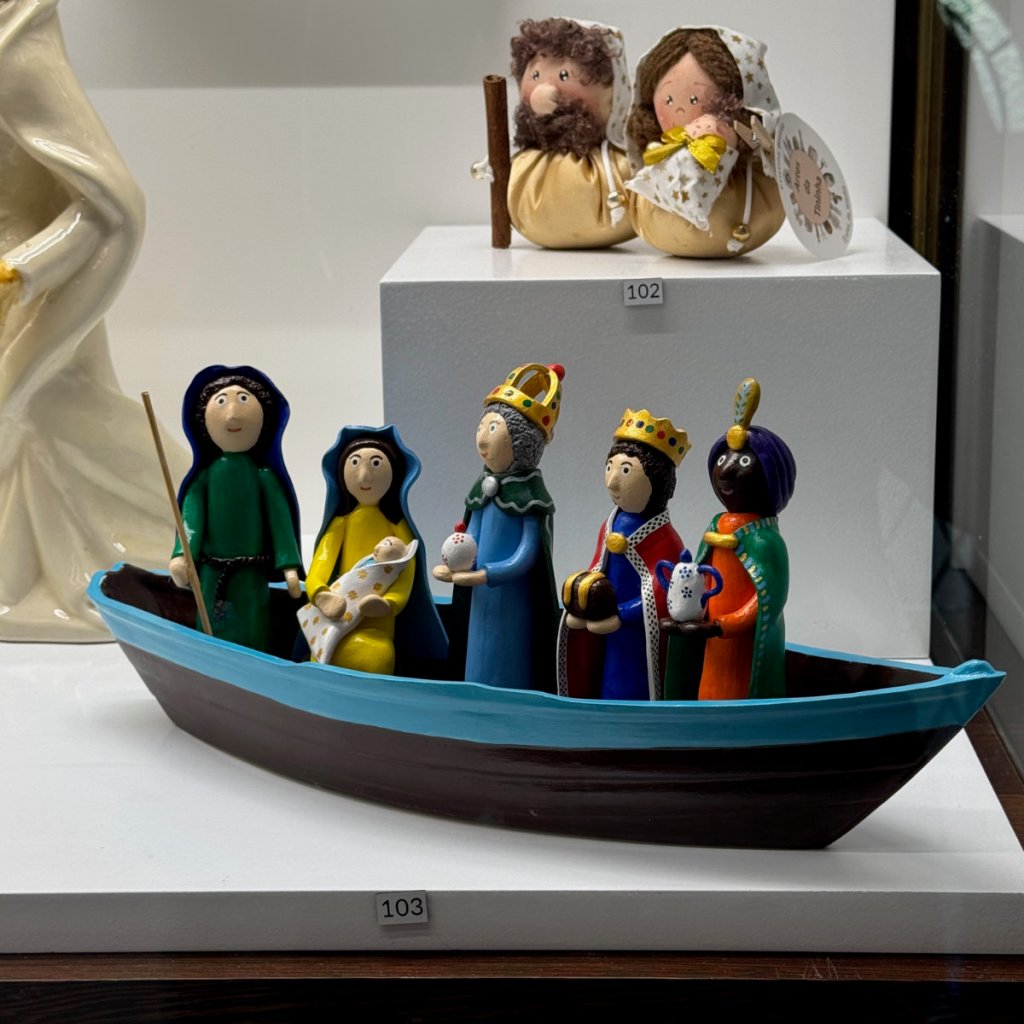
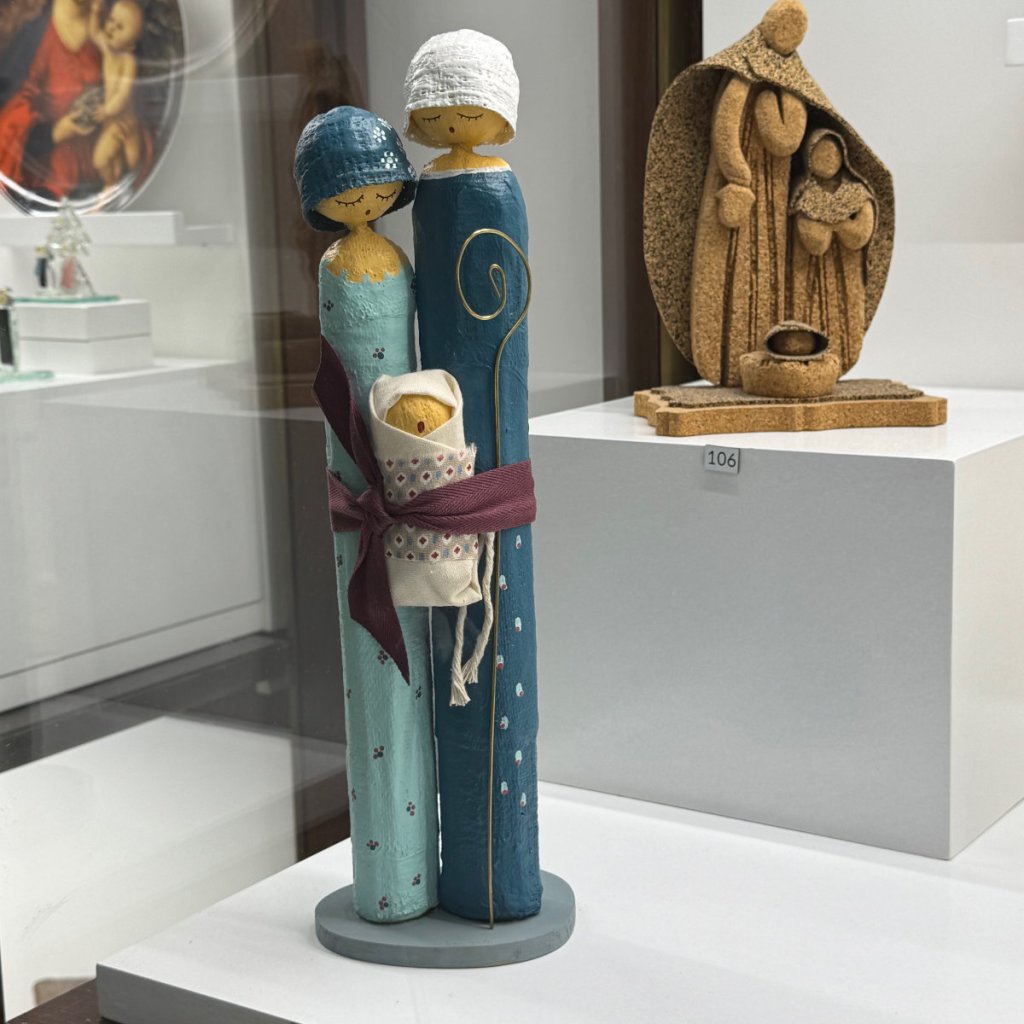
Moving from one gallery to another meant going outside which provided some lovely views of the area. The church is located at the bottom of the hill, once enjoyed Portuguese royal patronage and was pillaged and rebuilt. Walking into it for the first time, I had the sense of being in a “modern” and “ancient” building at the same time. Bits of original Franciscan frescoes were revealed behind the more modern plaster and paint. It was well worth the visit and I will return!
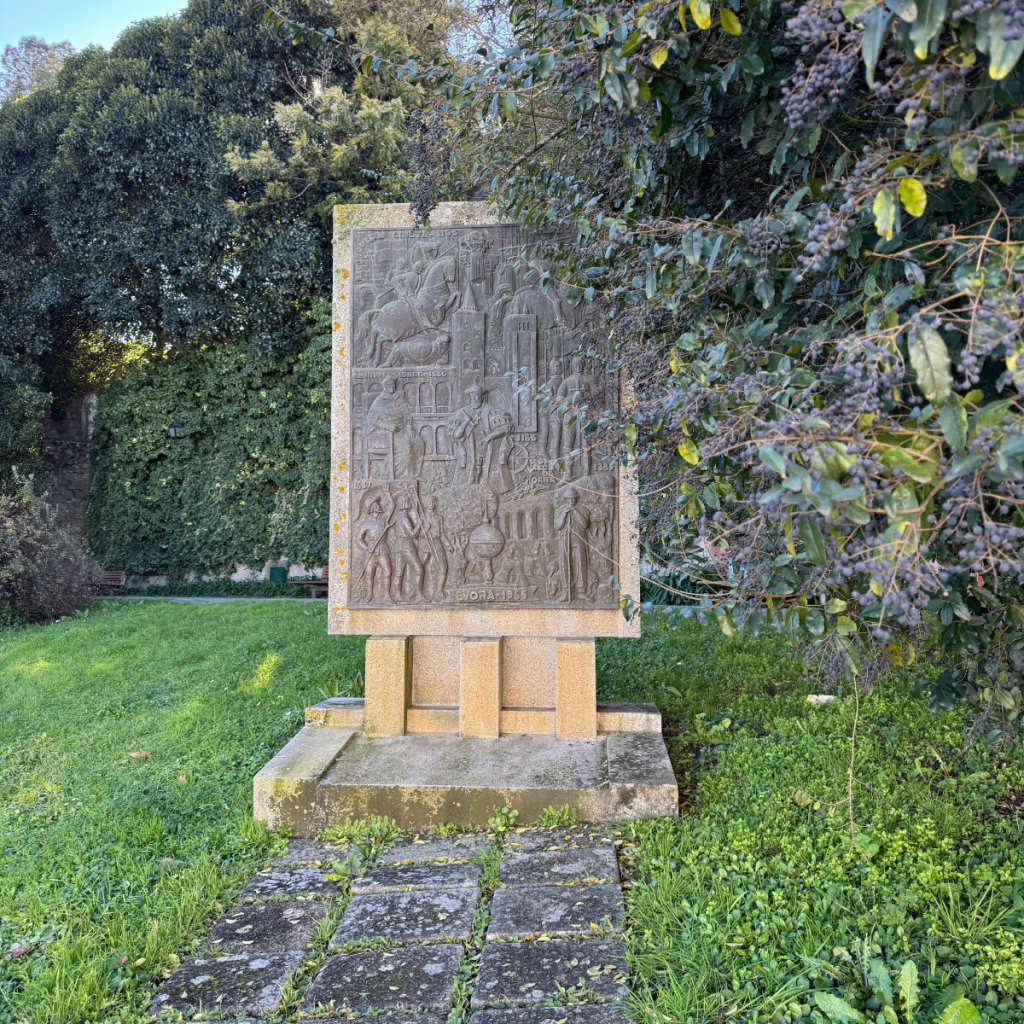
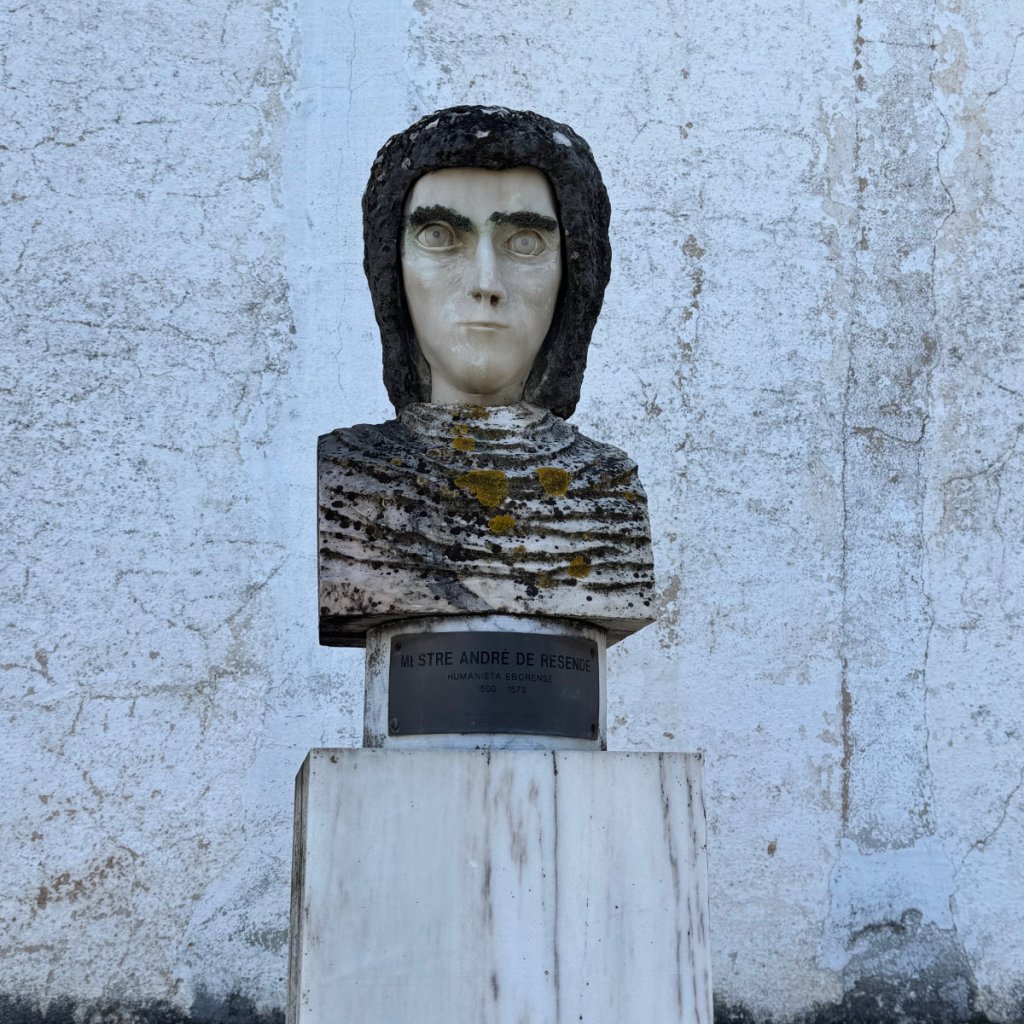
It was a beautiful sunny day and I was ready for some outdoor time! It was a short walk to the Jardim Publico.
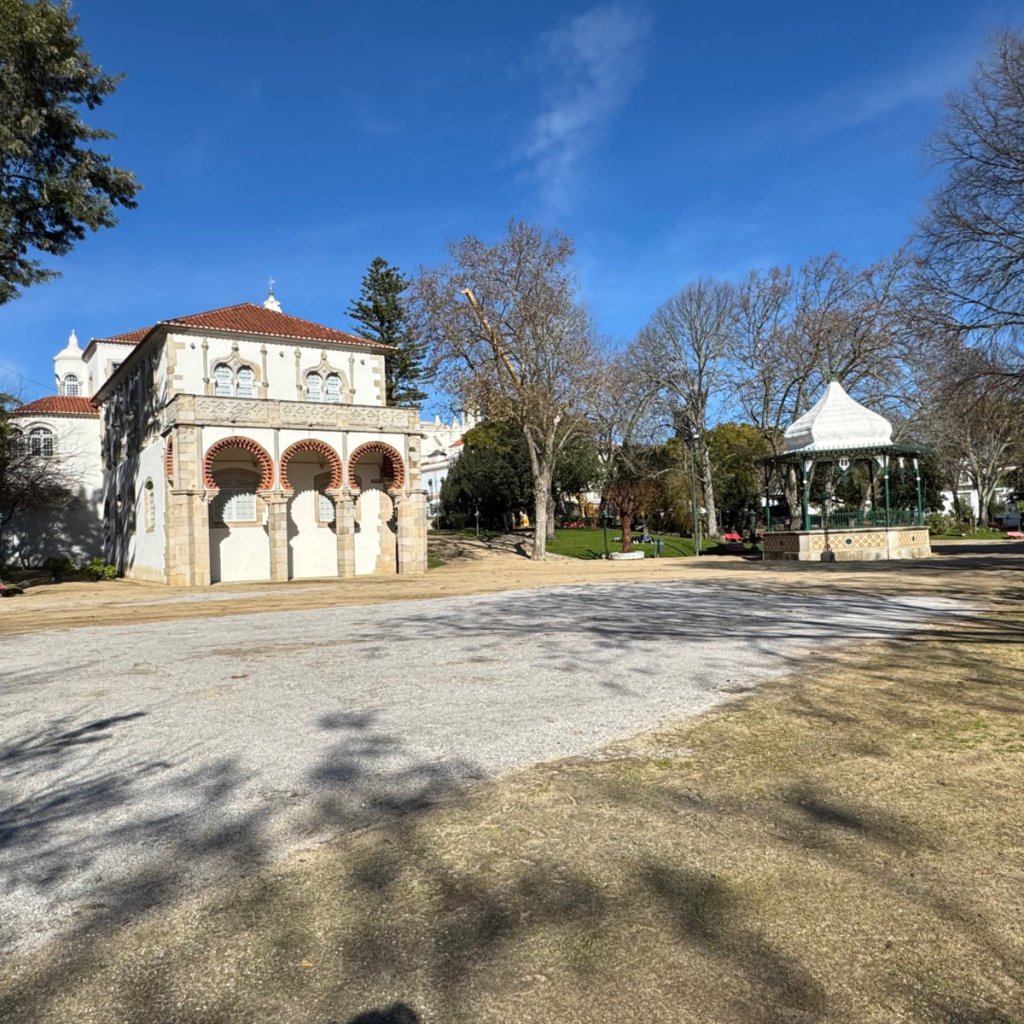
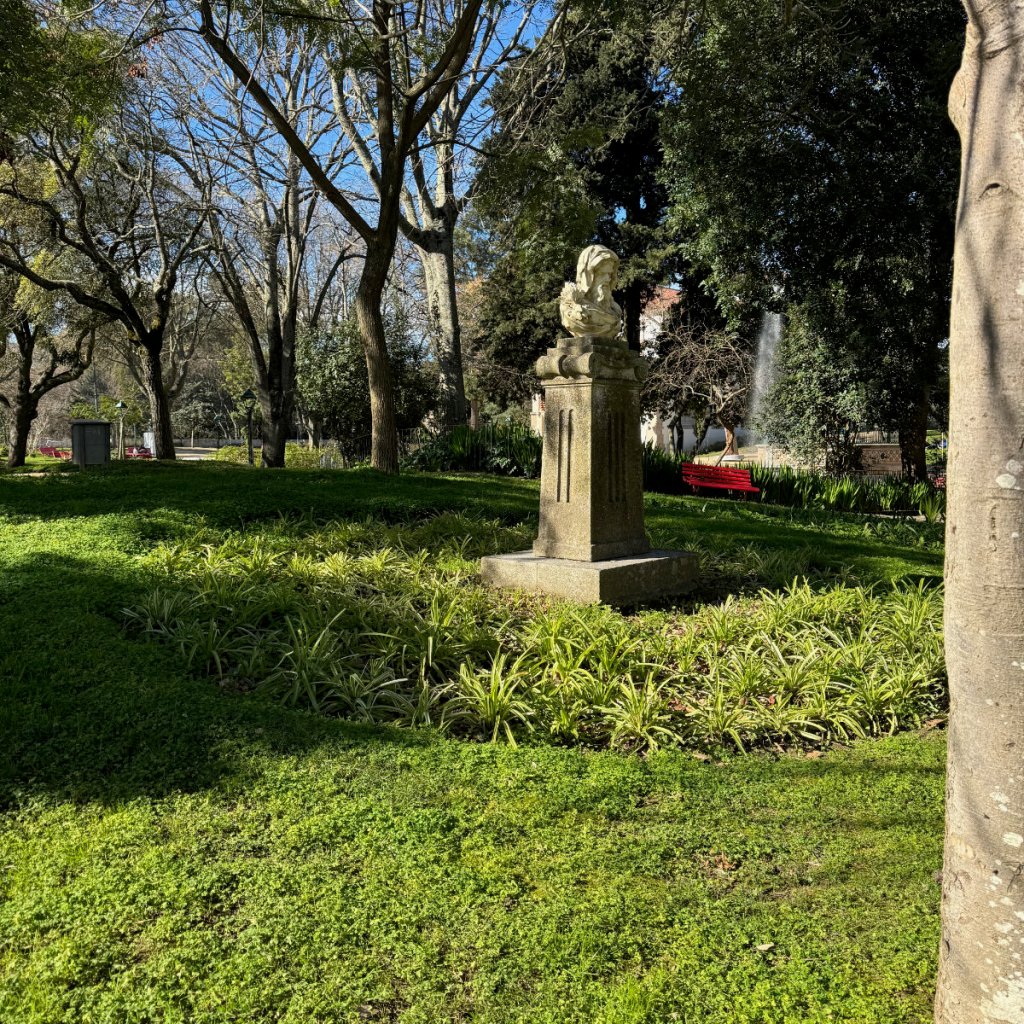
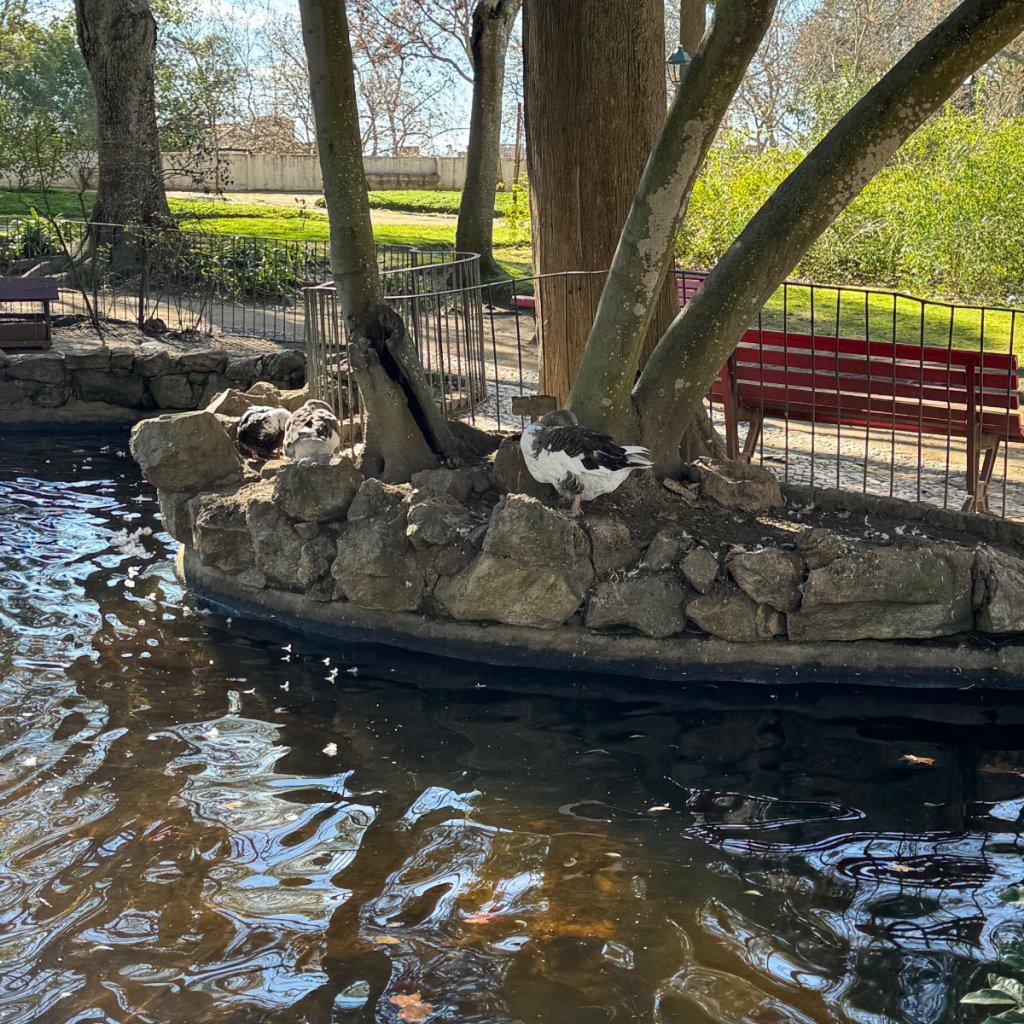
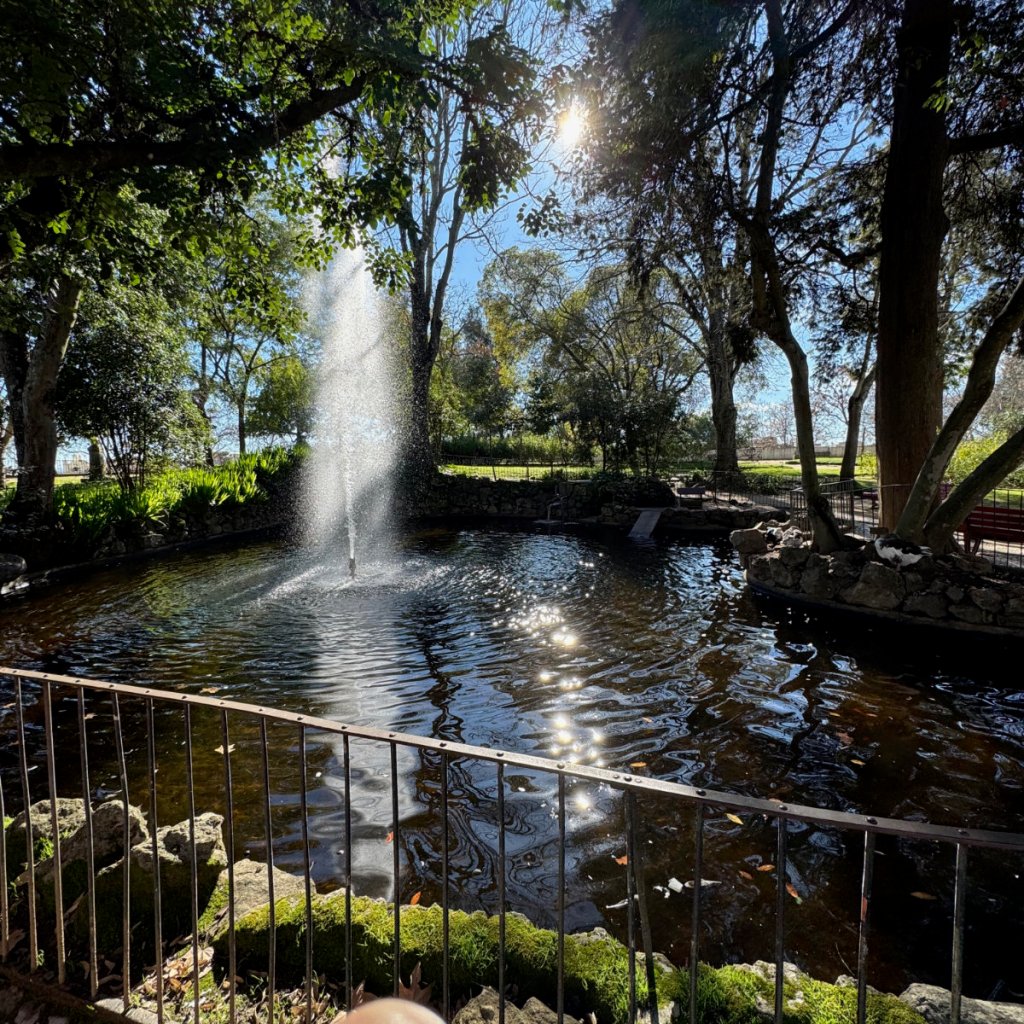
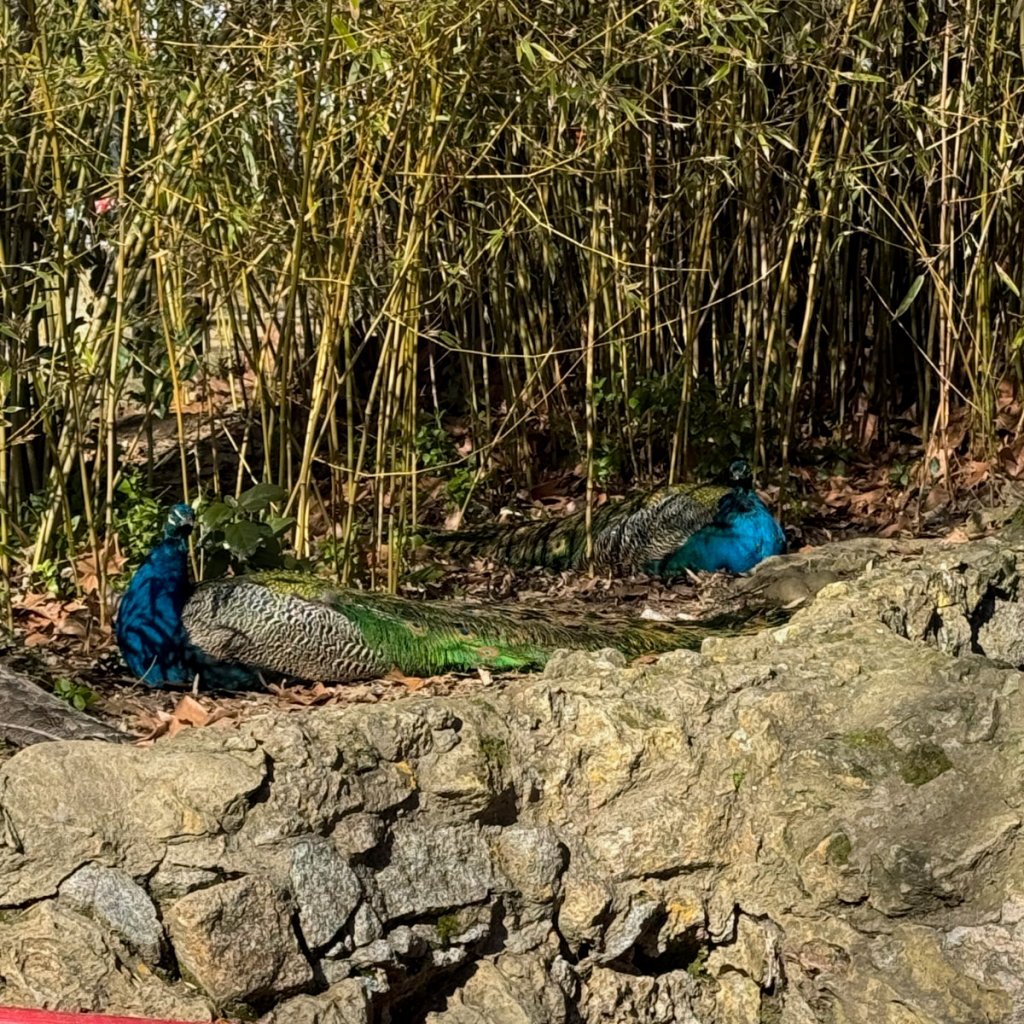
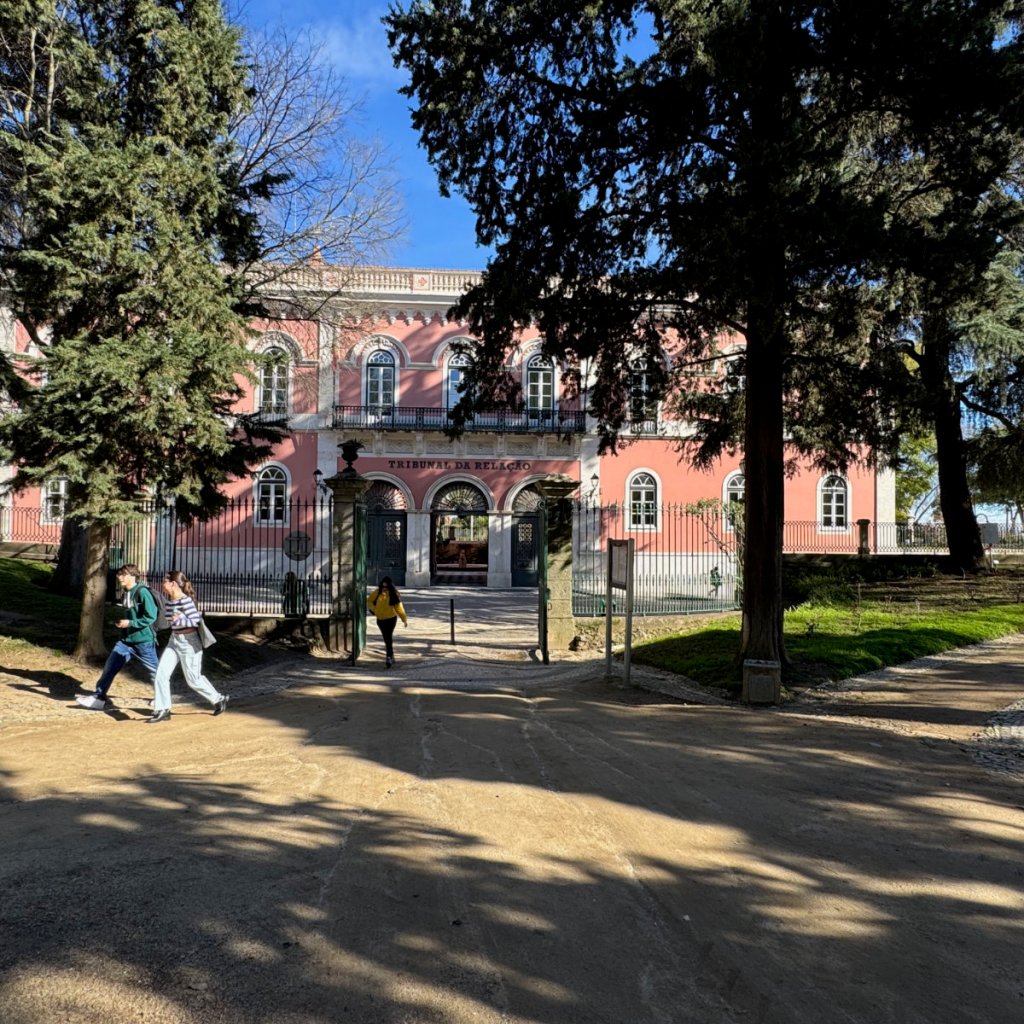
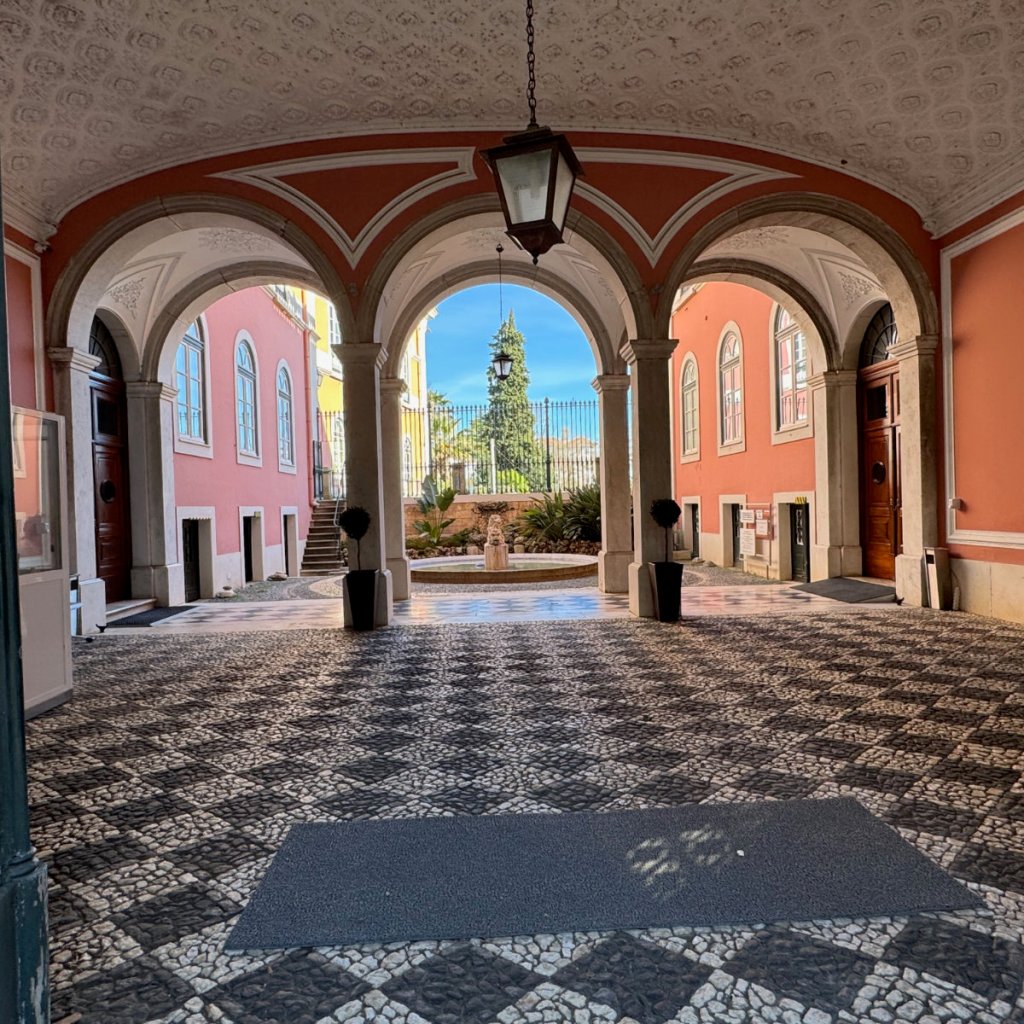
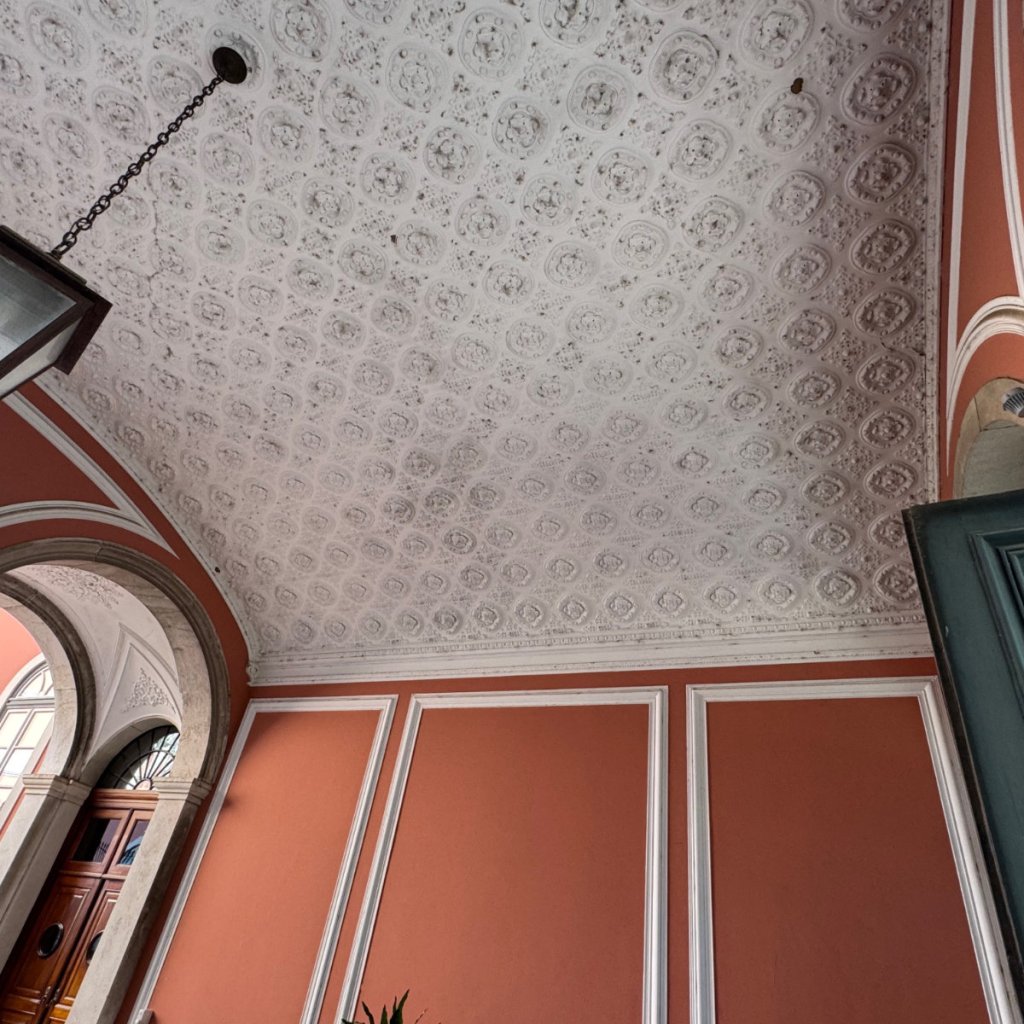
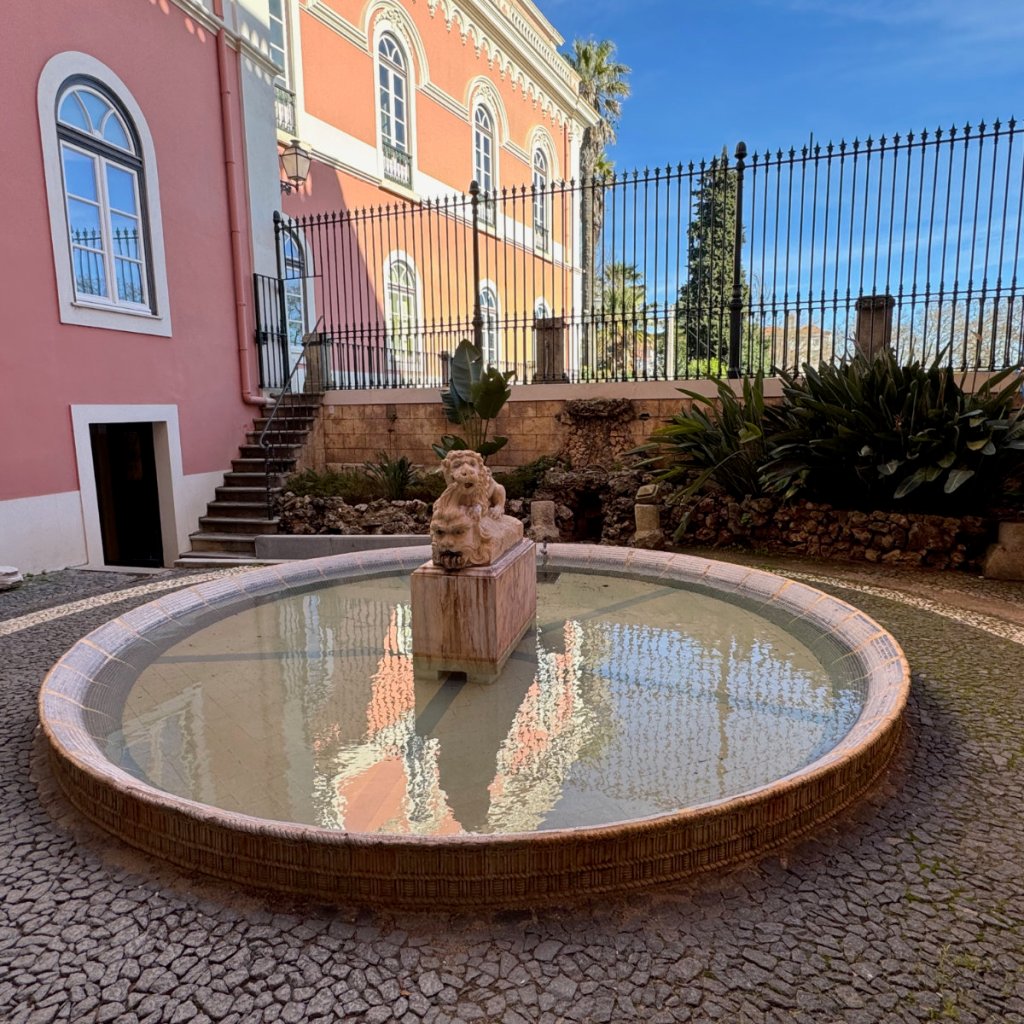
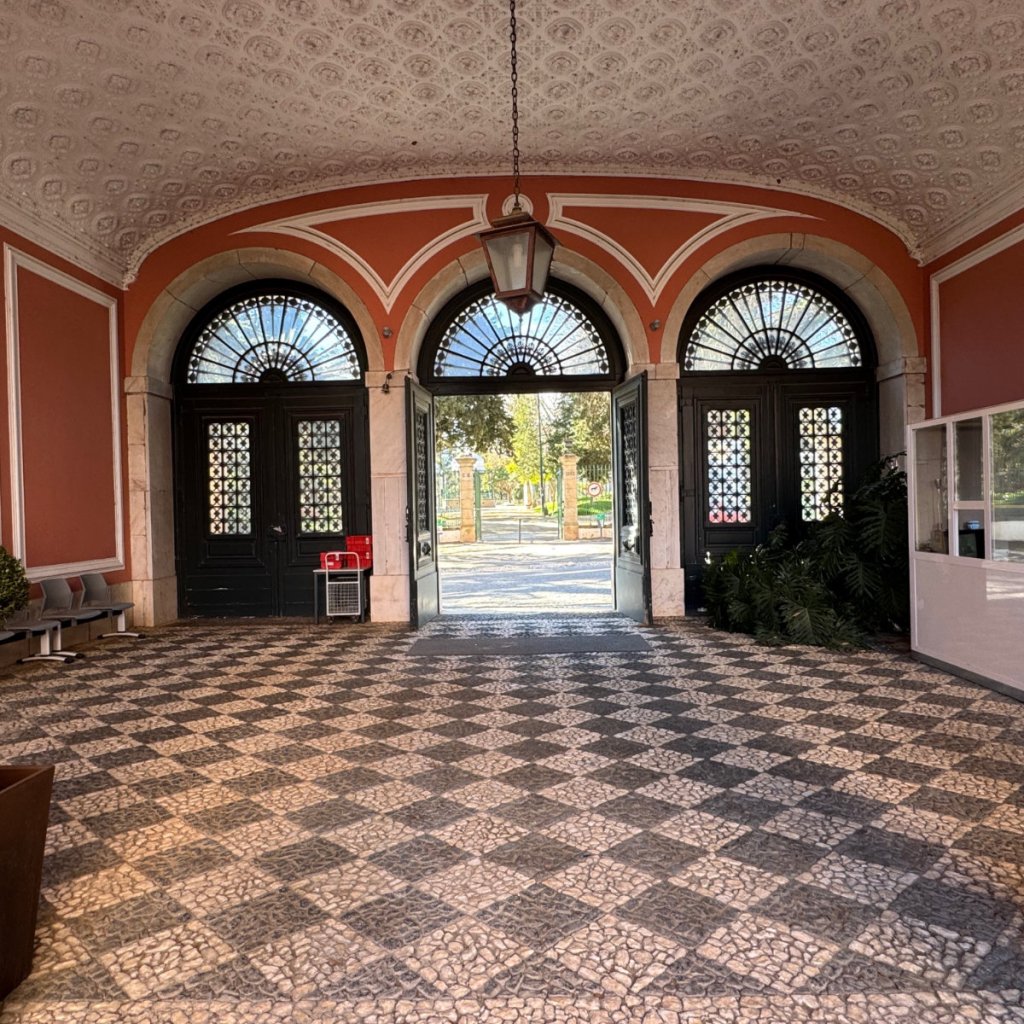
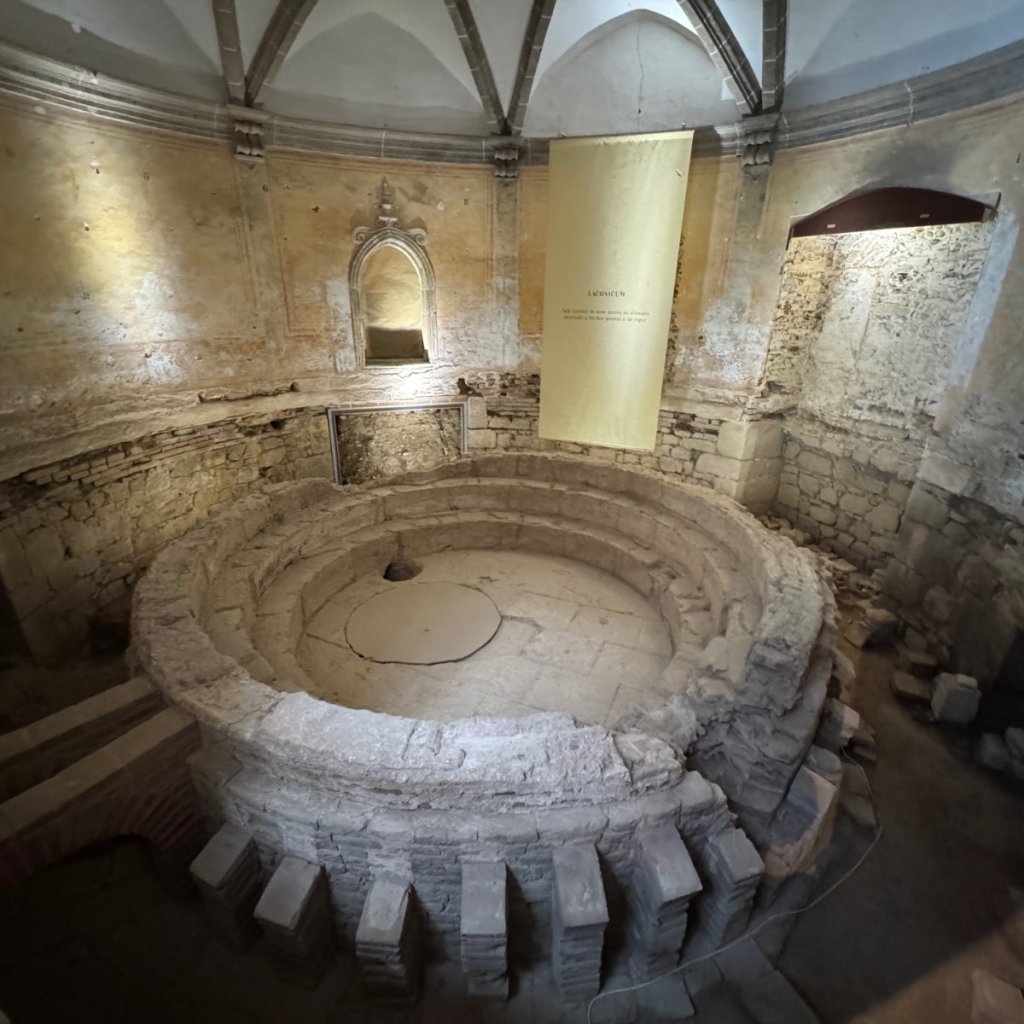
And then I decided to trudge up the hill and look for the Roman Baths. Finally found them in the modern city hall! There was an artist’s misconception of the roman temple alongside the excavated baths.
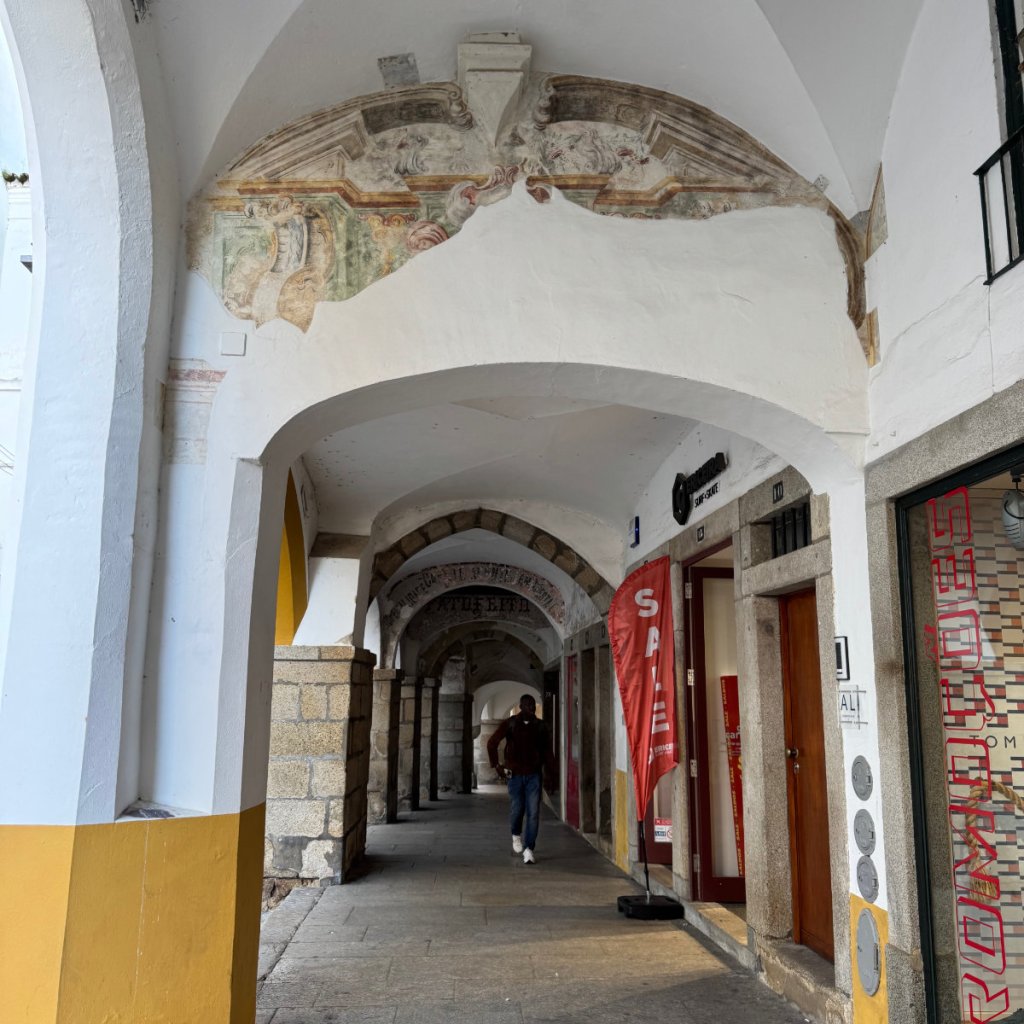
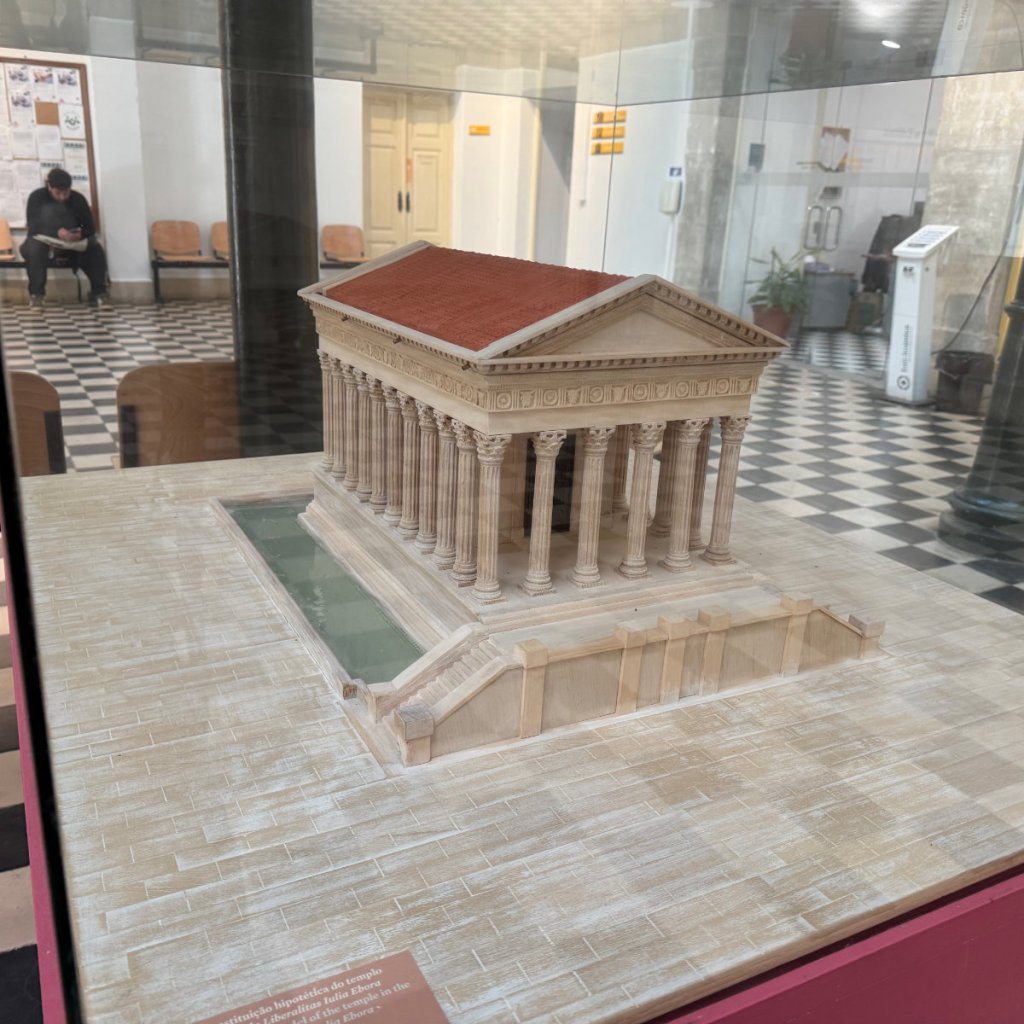
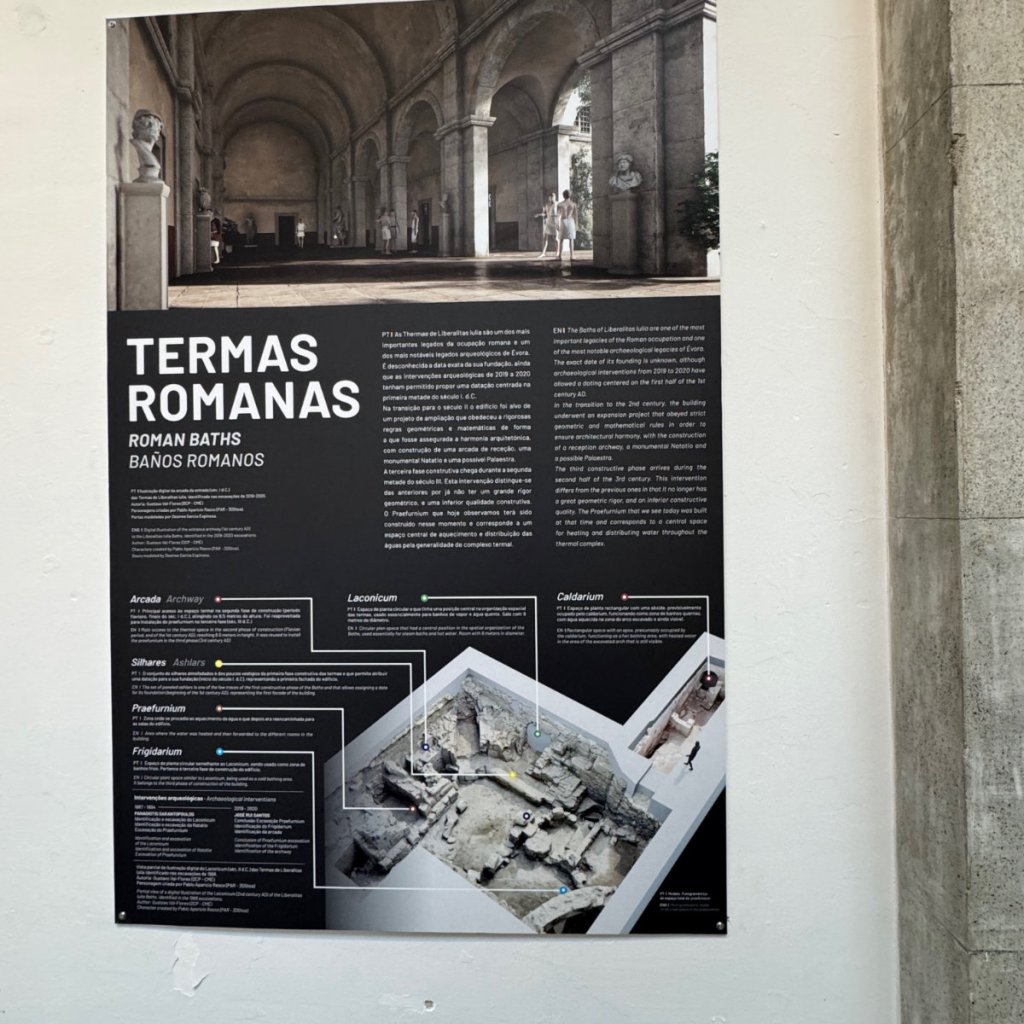
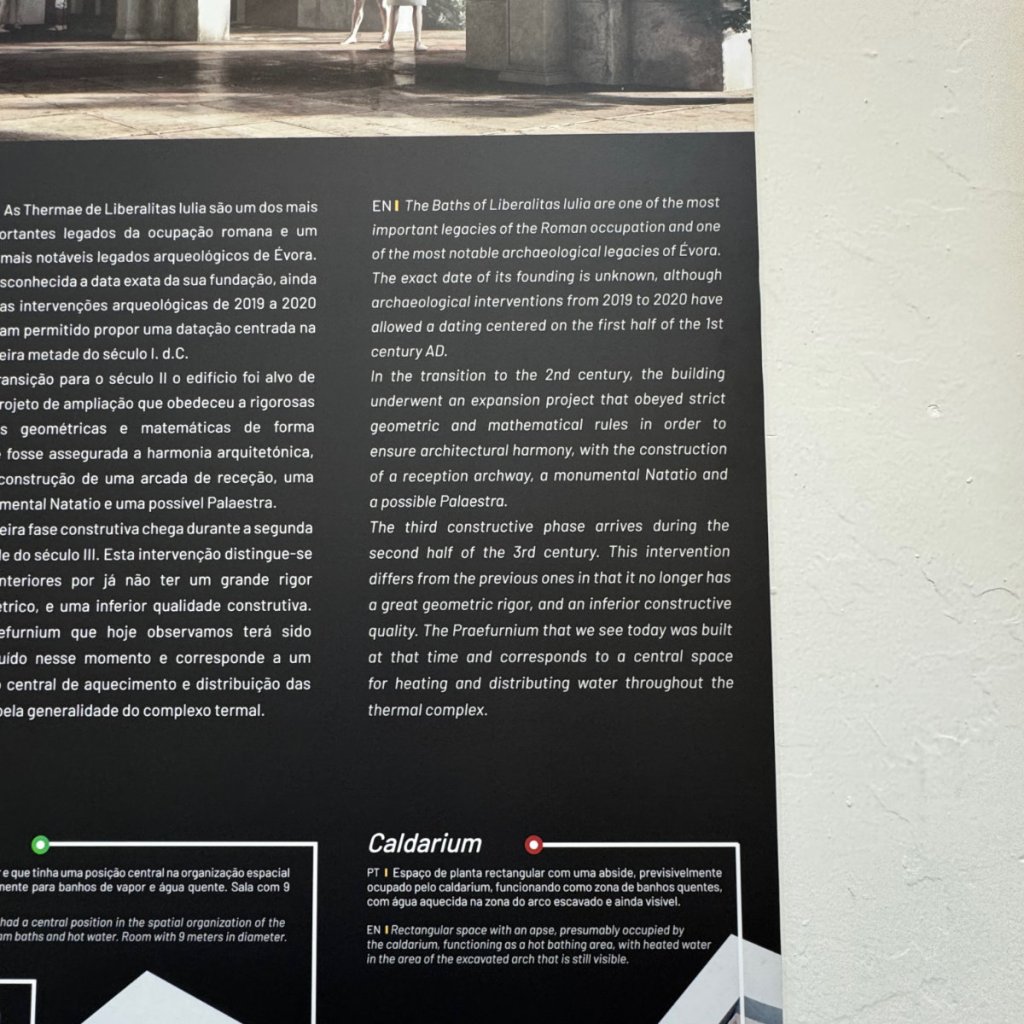
My final “discovery” of the day, the Aqueduct. It isn’t Roman, it is a water conduit constructed in 1532 probably on to of a Roman aqueduct. I didn’t follow it to its source. However, I did find where it ends in the city-in someones backyard.
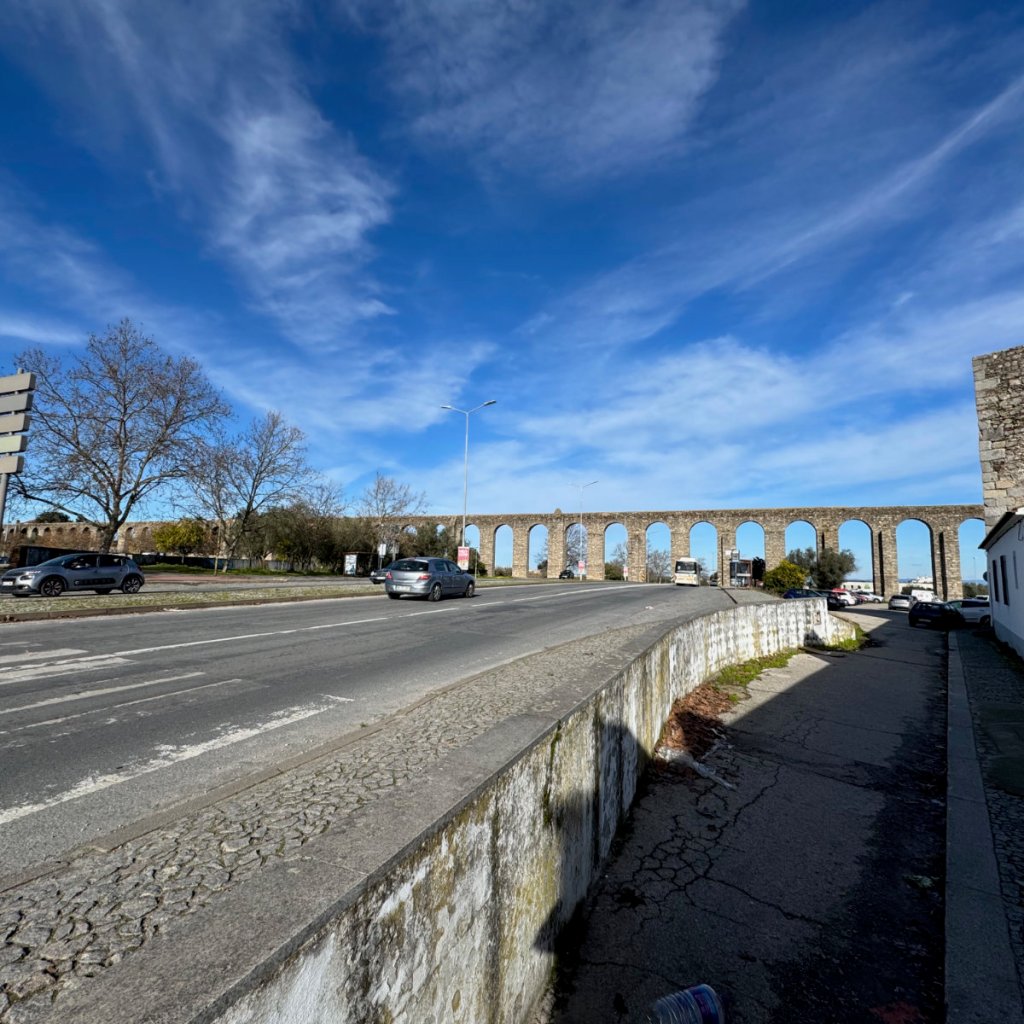
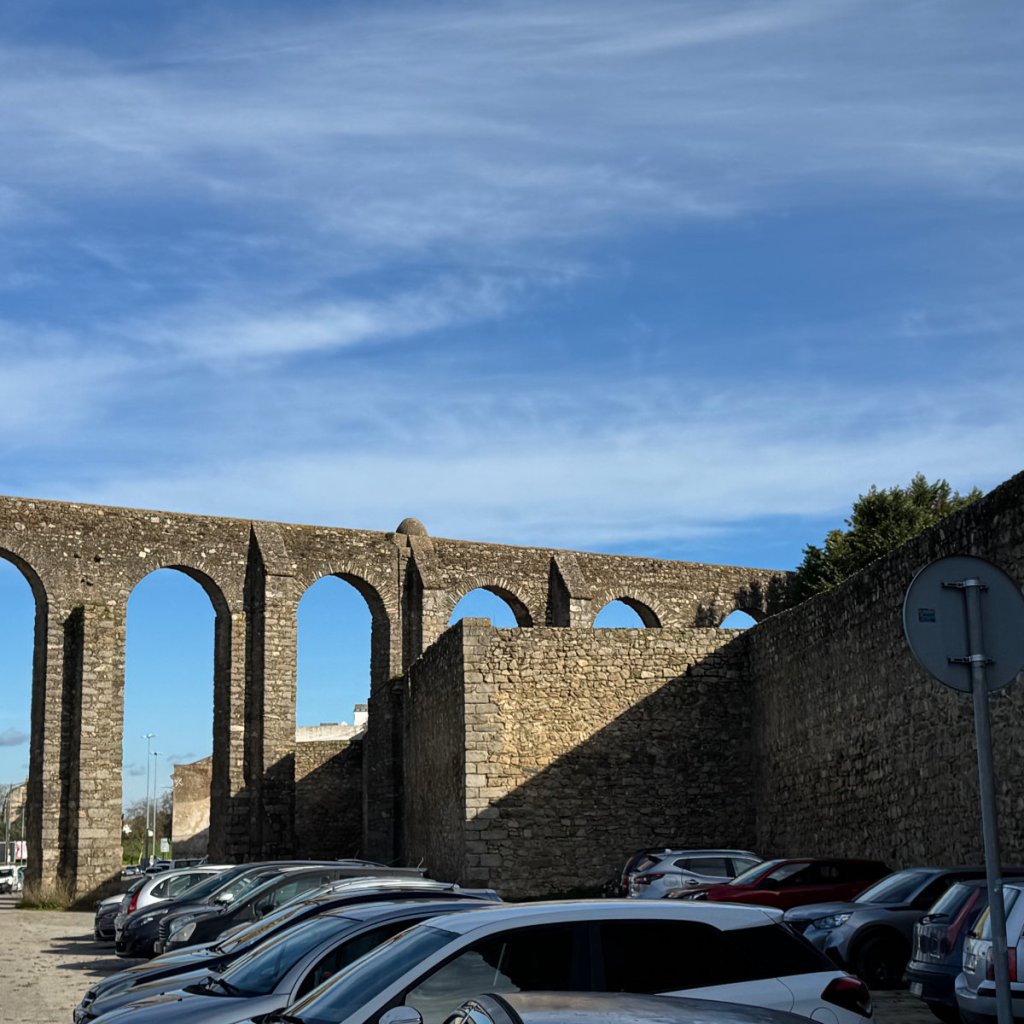
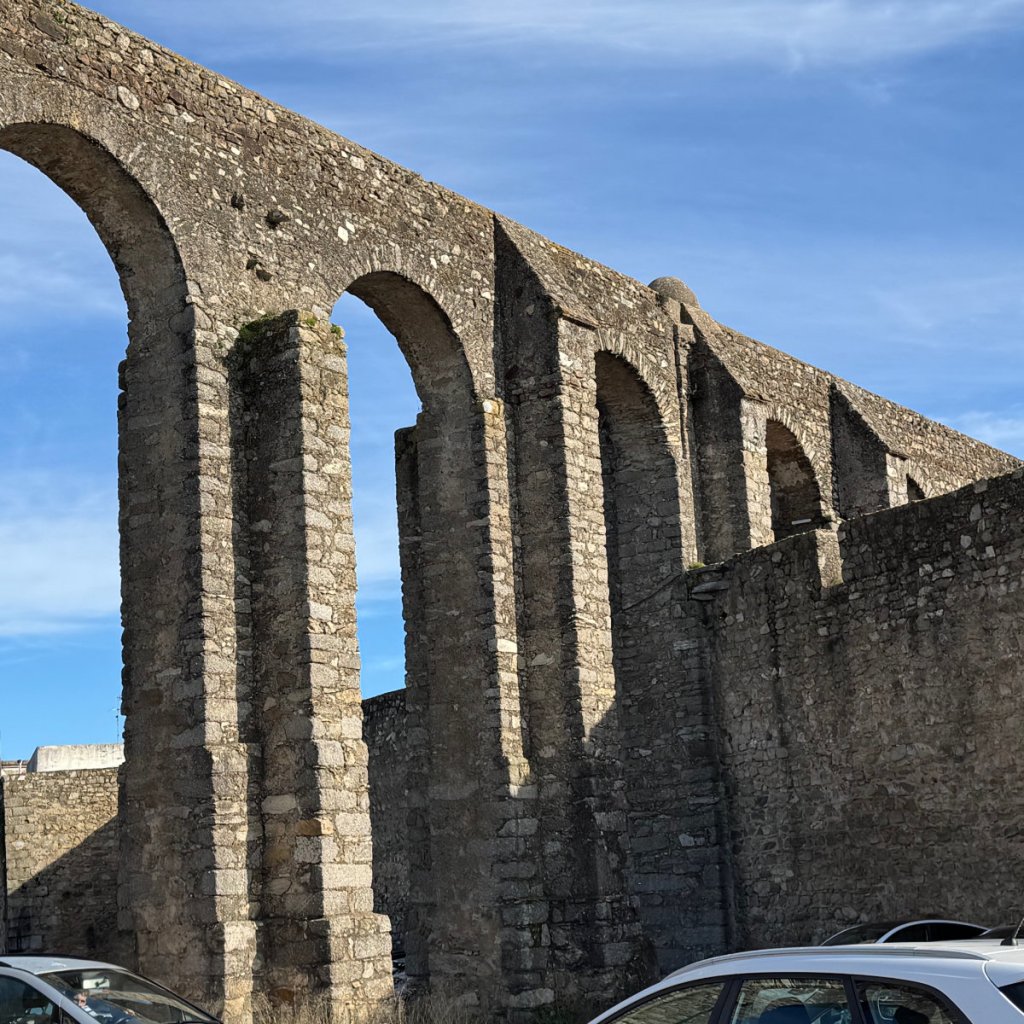
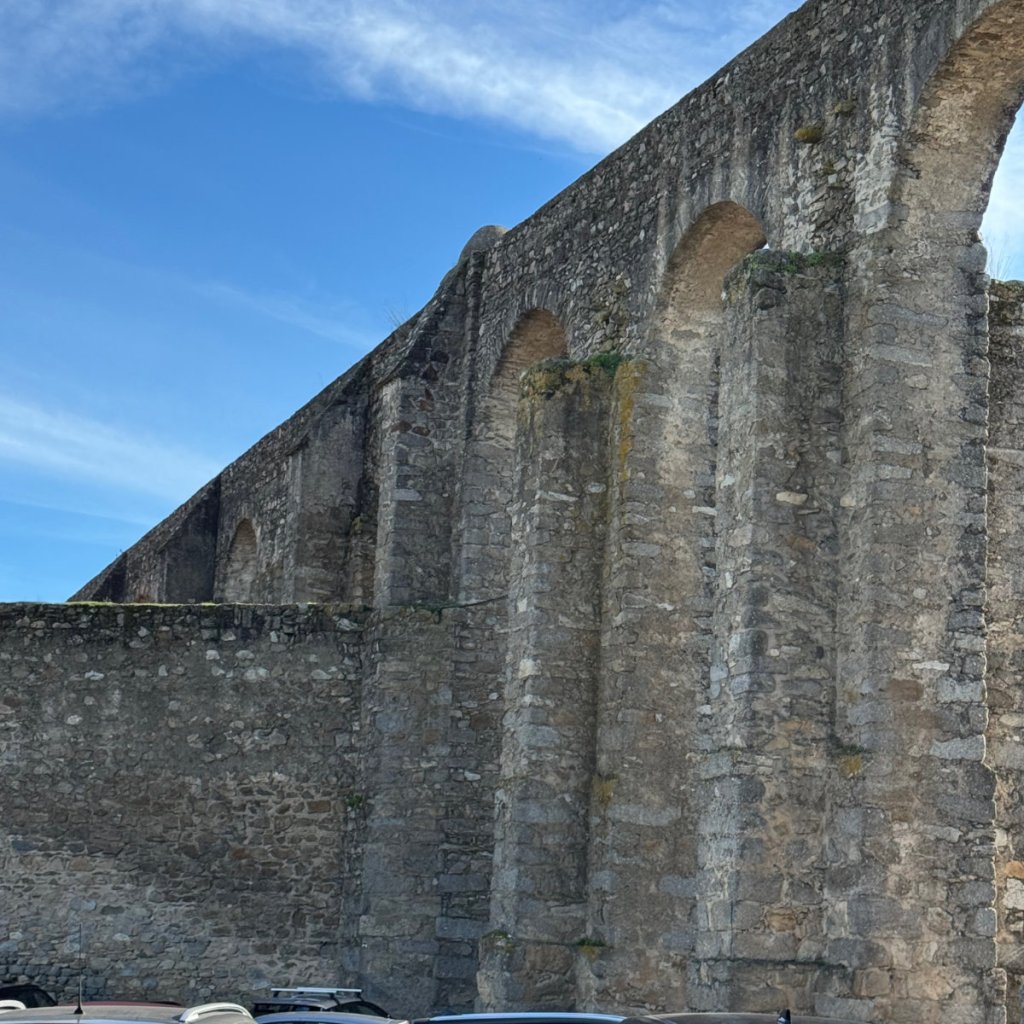
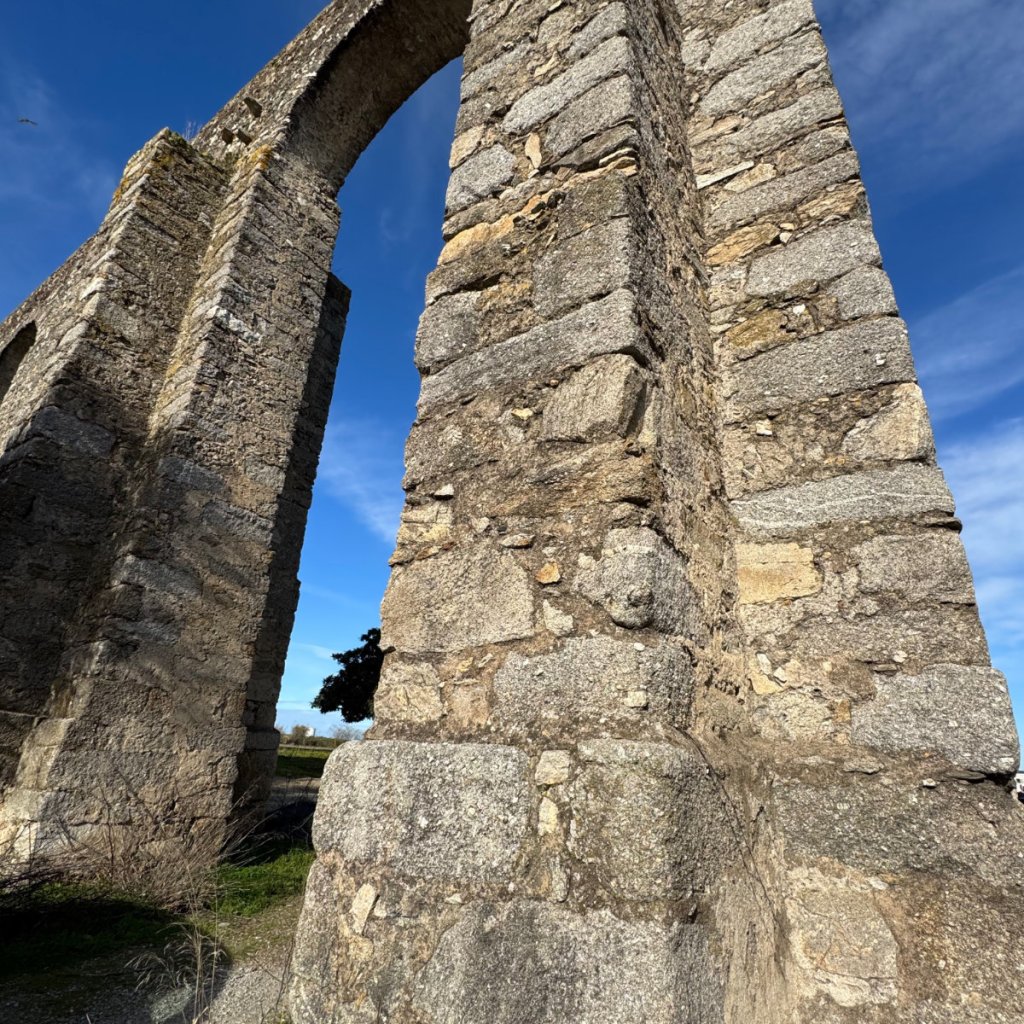
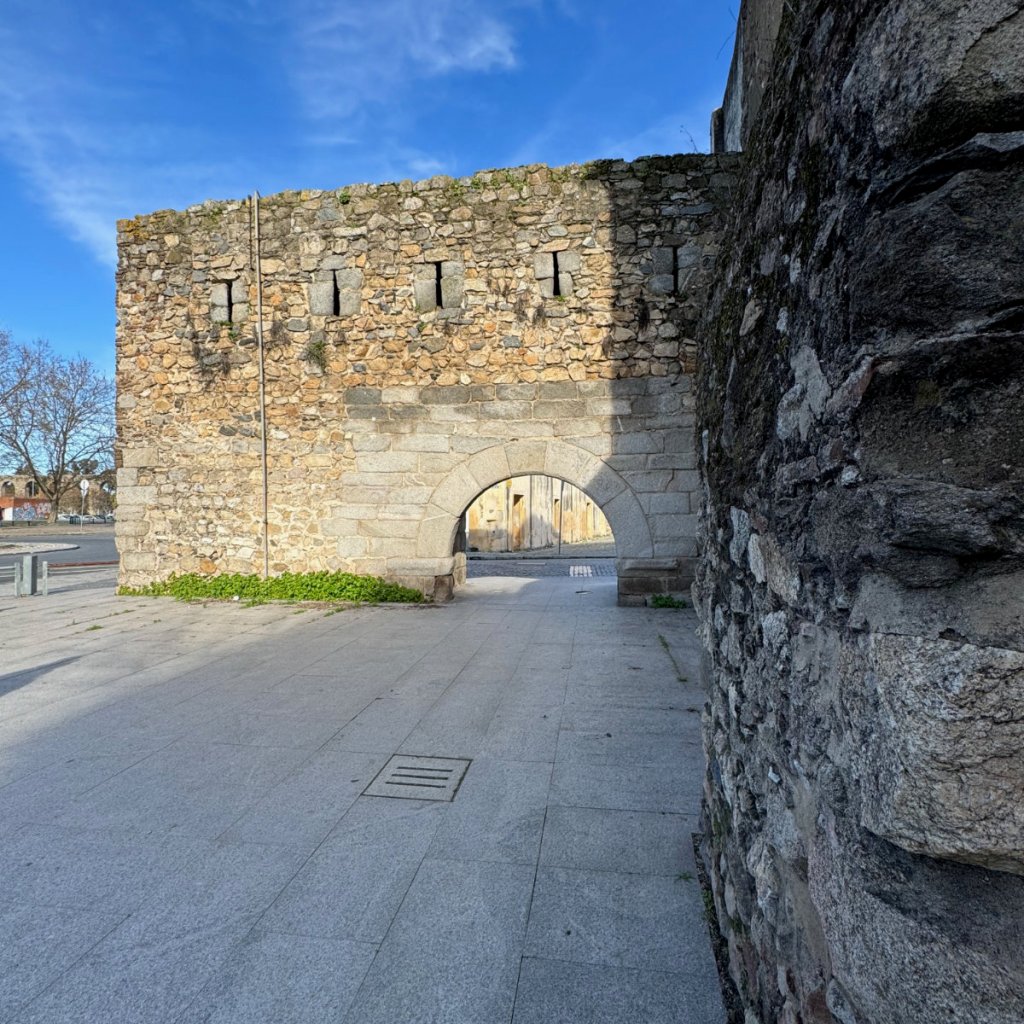
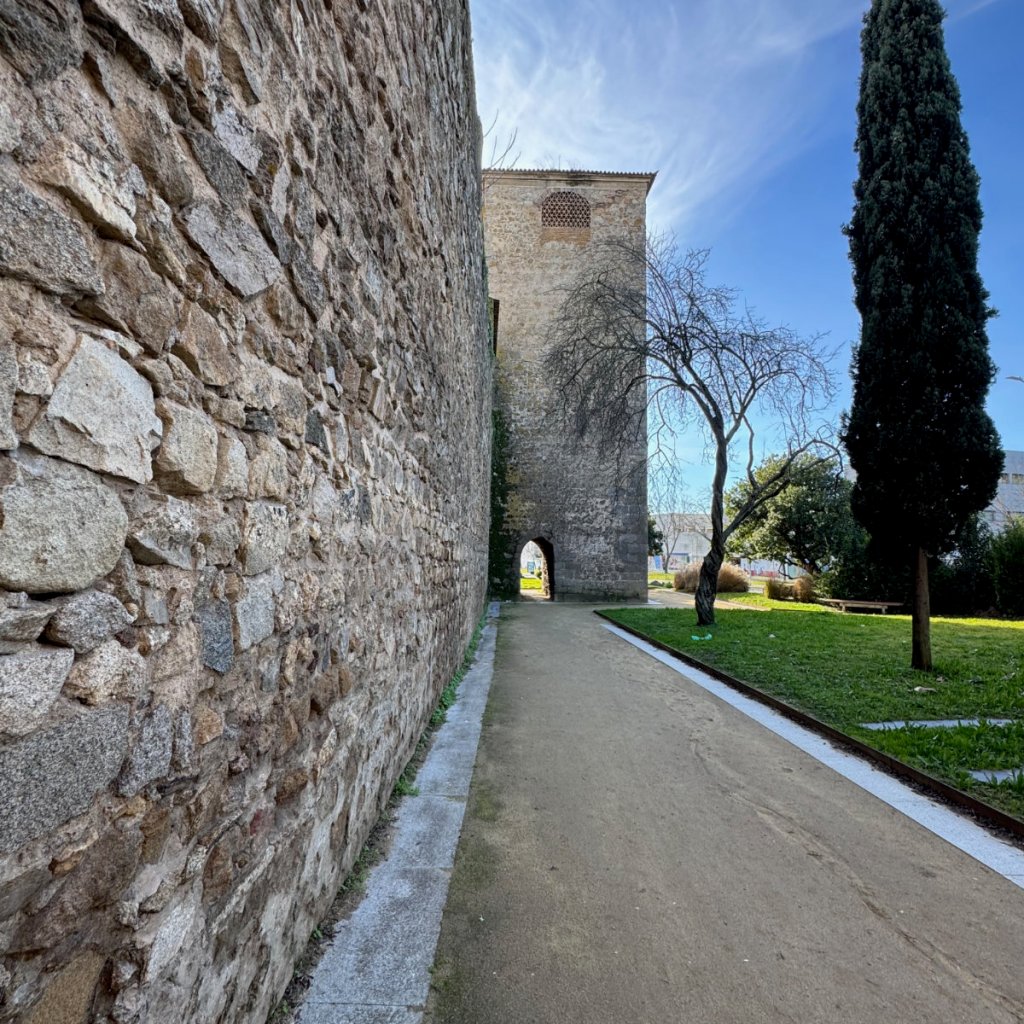
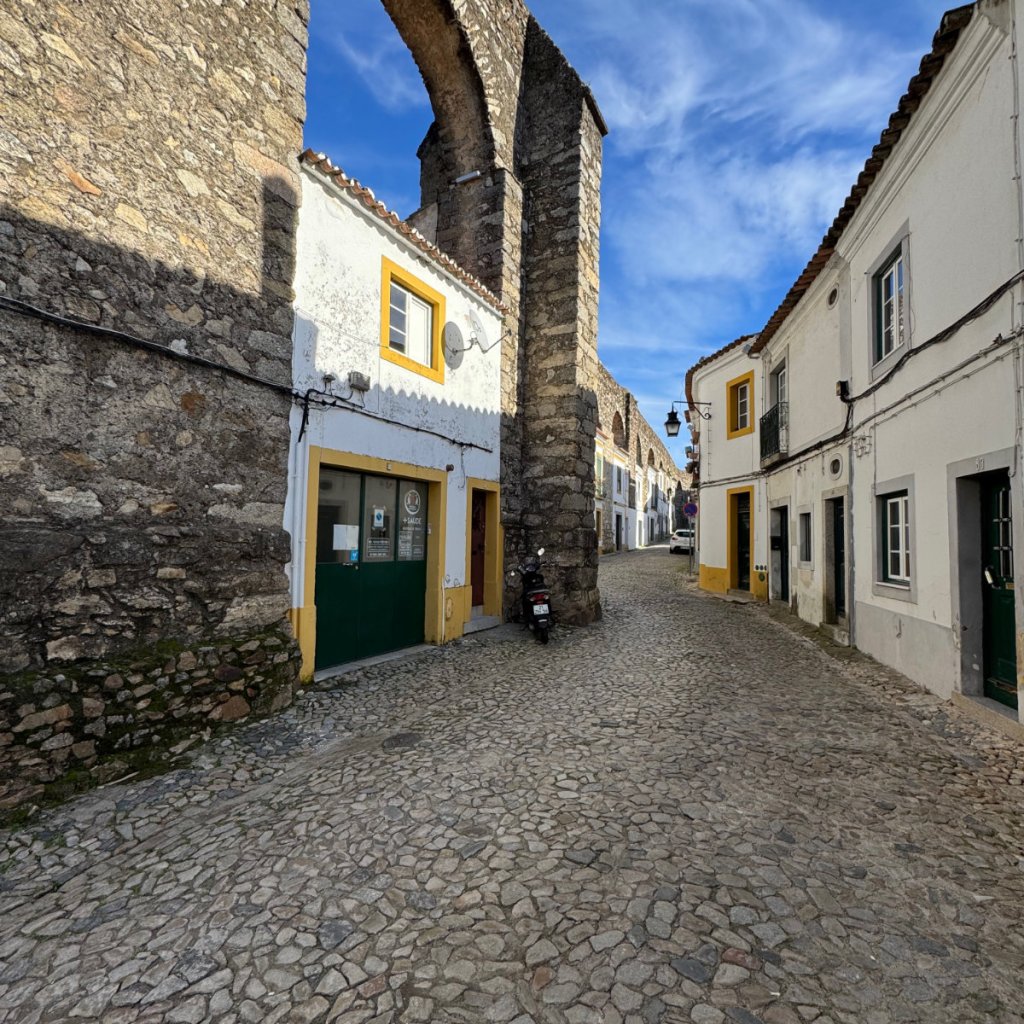
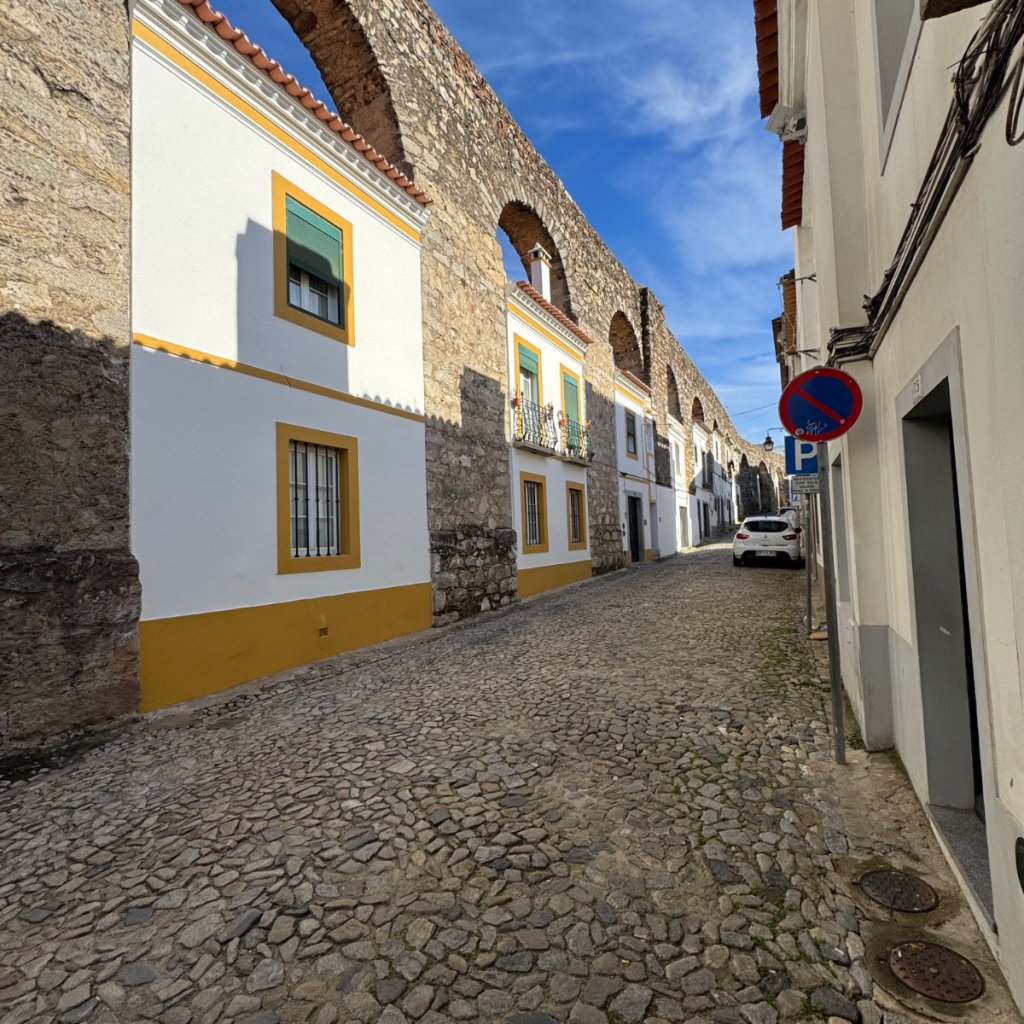
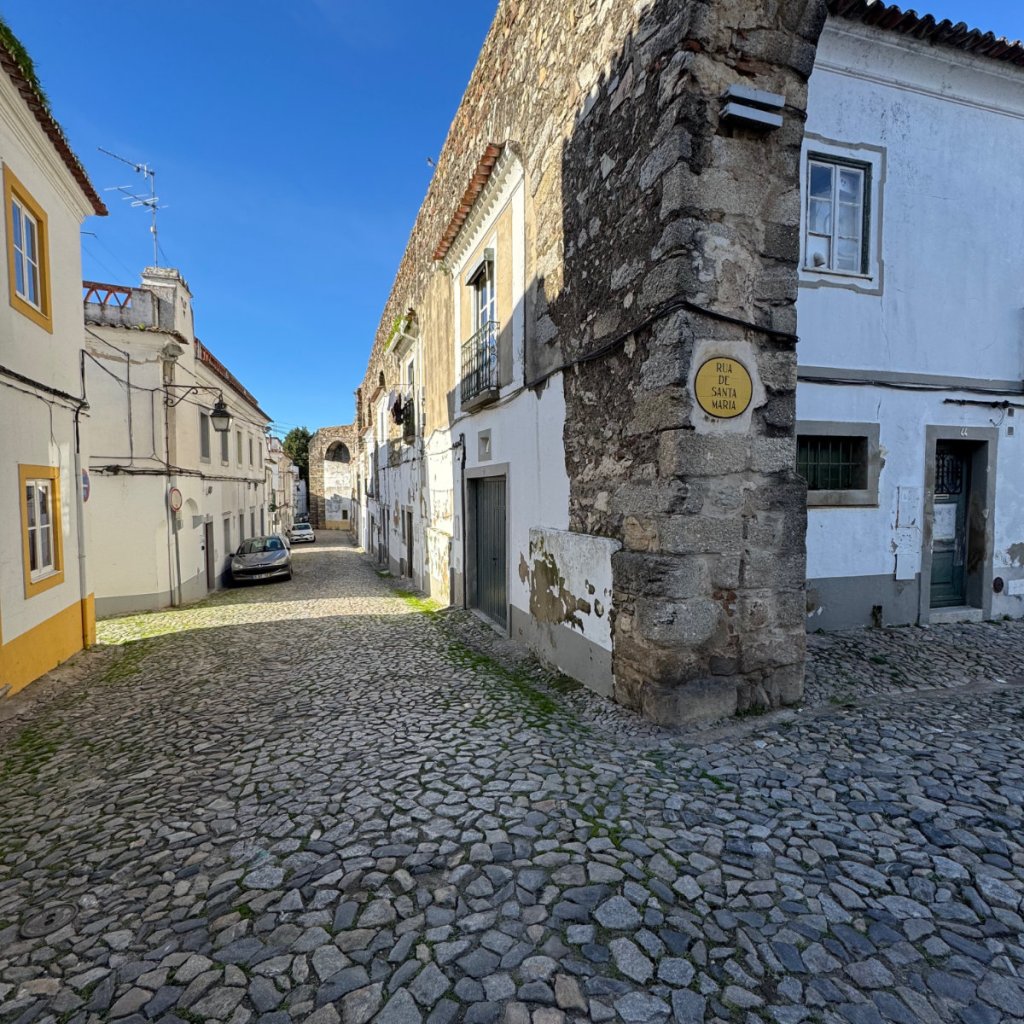
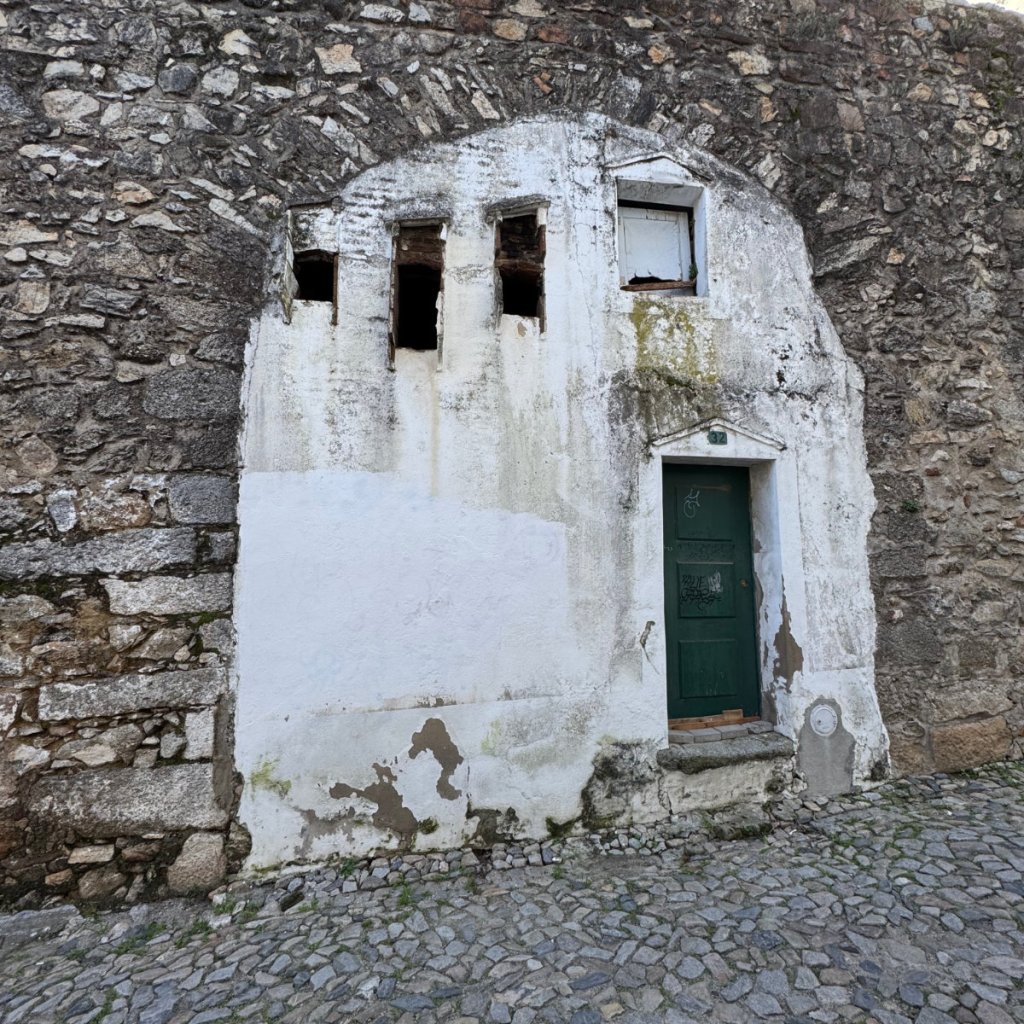
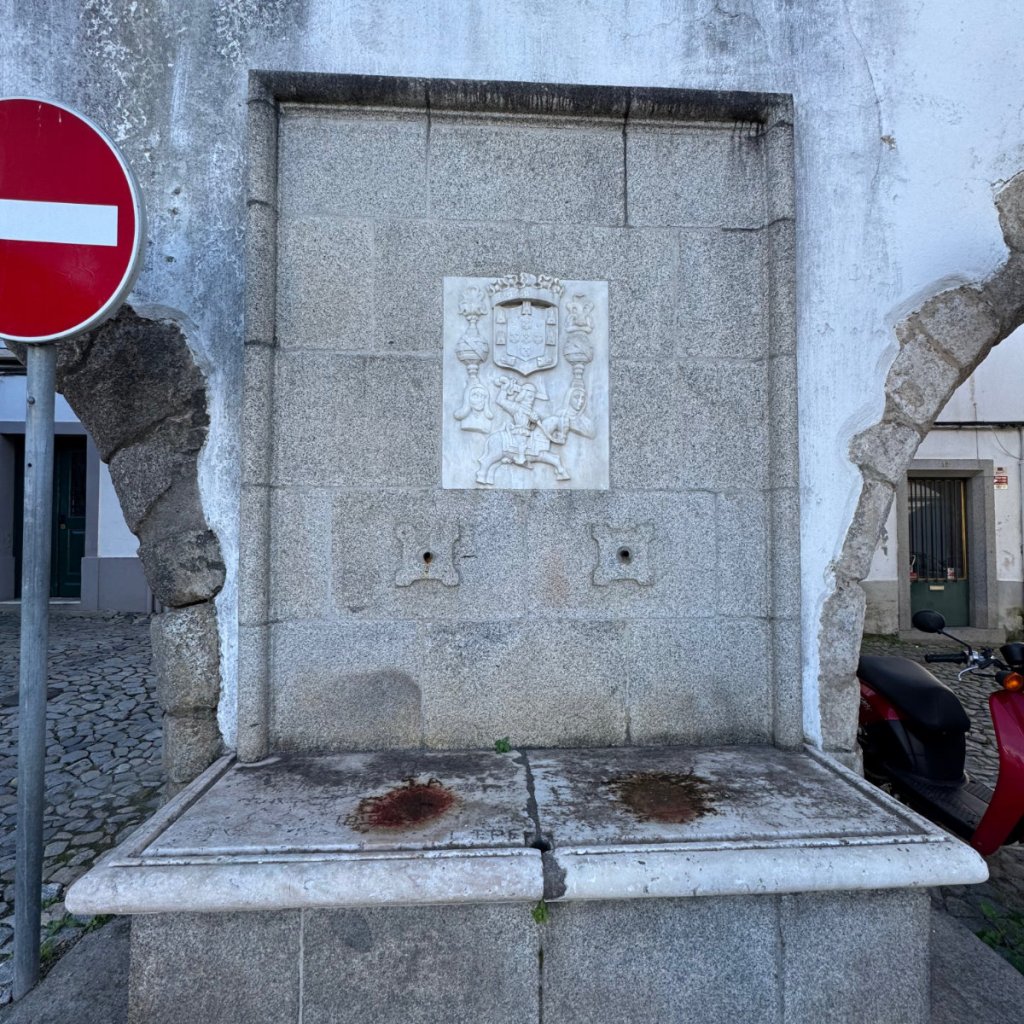
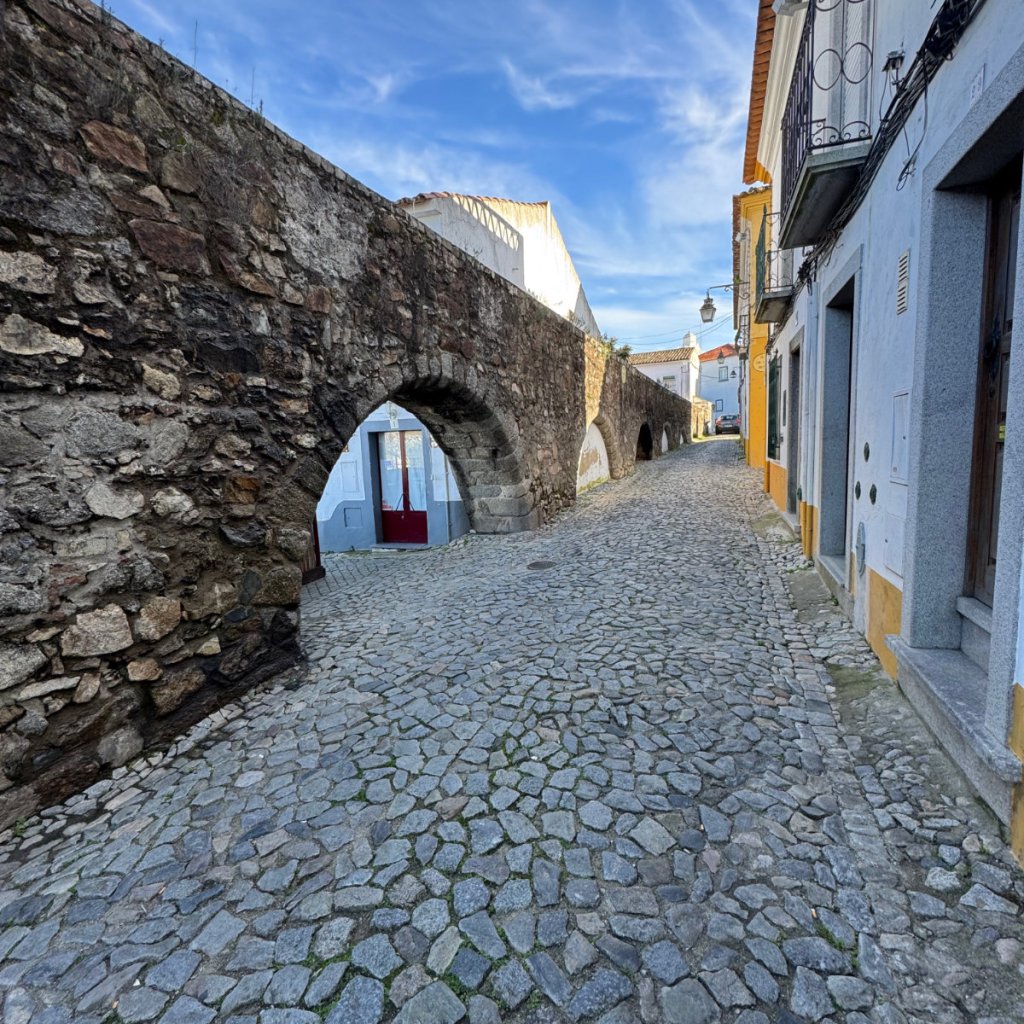
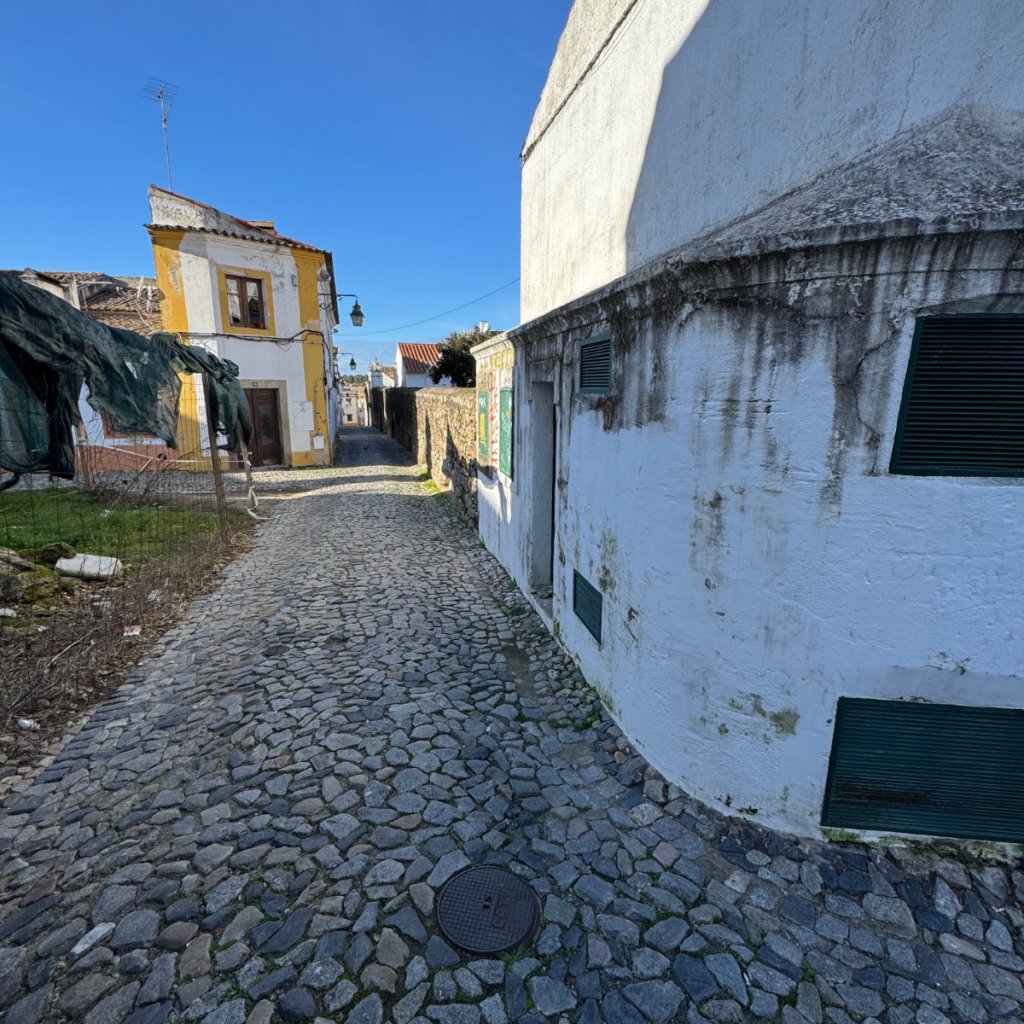
The sun was moving closer to the western horizon and my feet were telling me it was time to head for the hotel and dinner!
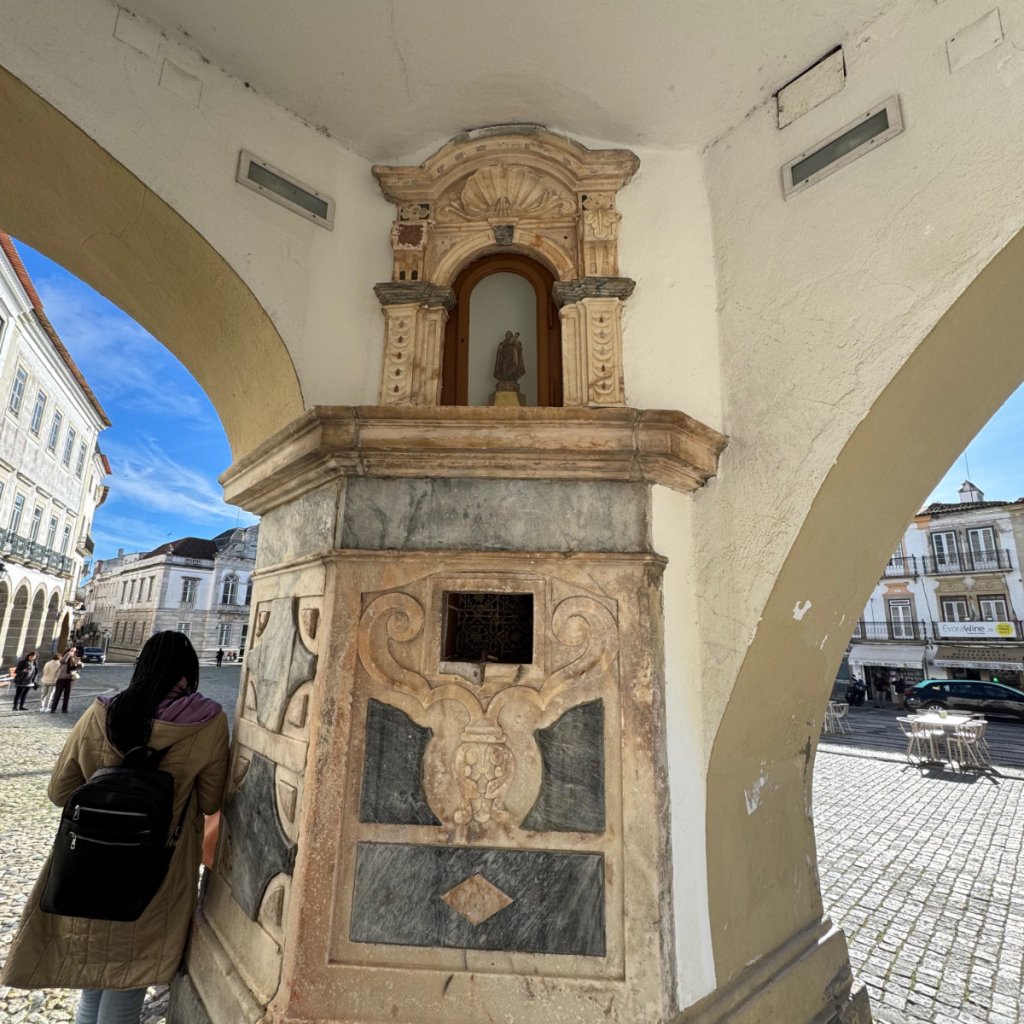
My next post will be my trip home to Estoi on Tuesday. Until then!

 Five Feet, Nine Inches Above Ground
Leave a reply to canadianboystravel Cancel reply